






 Portuguese
  Spanish


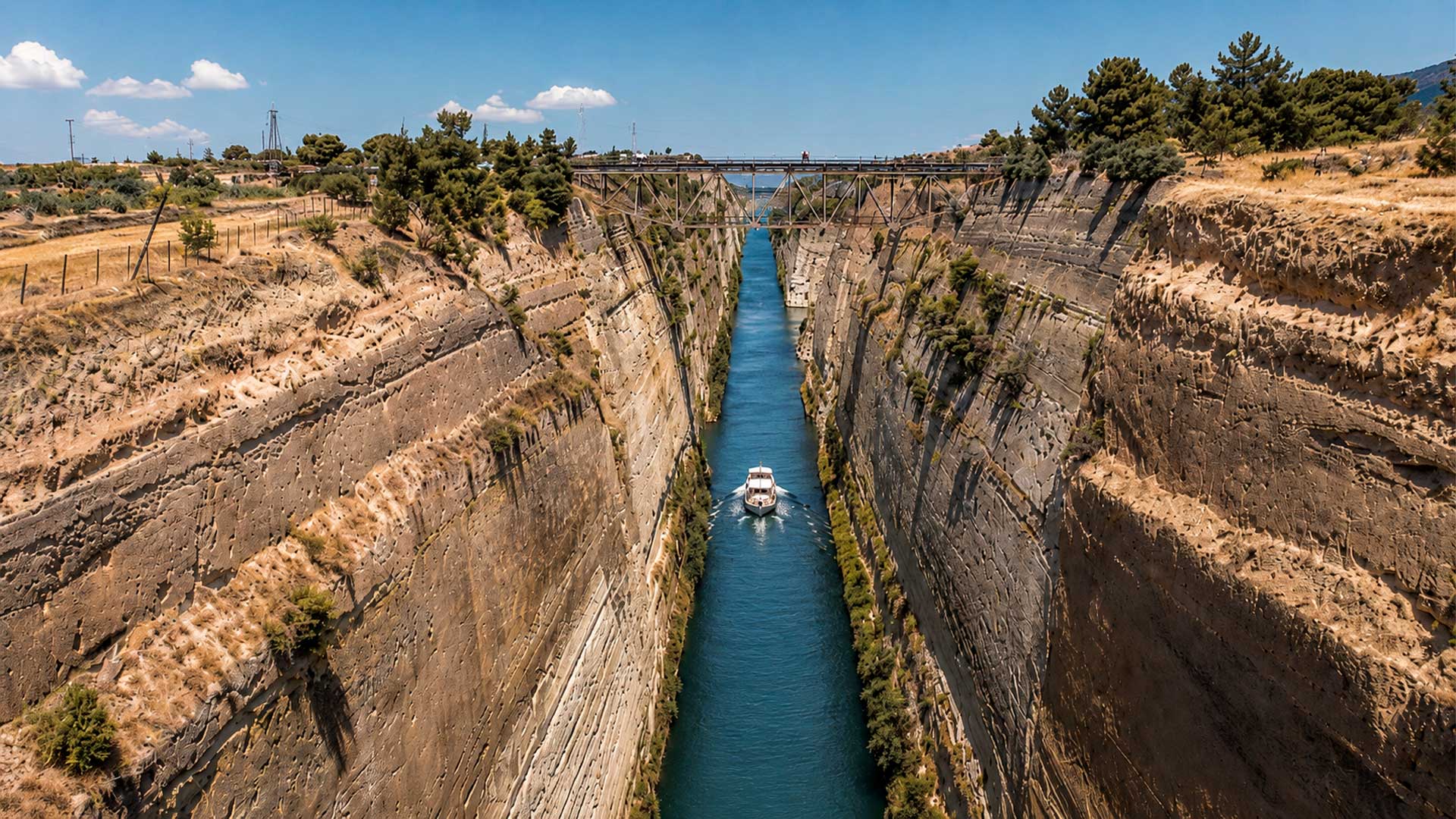

Corinth Canal shortens navigation between Greek seas, impresses with engineering, and shows how an idea from Antiquity only became reality in the 19th century
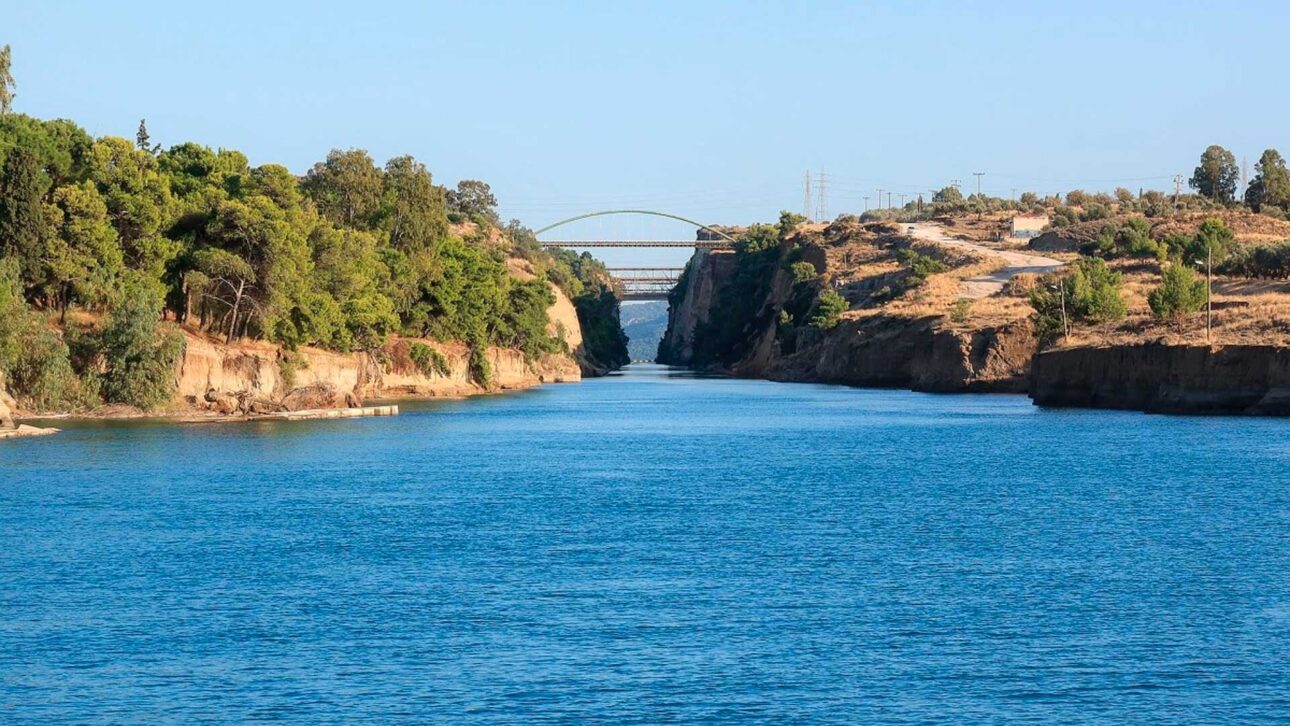
The Corinth Canal in Greece is one of those works that seem simple on the map but reveal a gigantic history when seen up close. The water corridor crosses the isthmus that connects the Peloponnese to the rest of Greek territory and connects the Gulf of Corinth to the Saronic Gulf, opening a direct passage between the Ionian Sea and the Aegean Sea.
The work is just over 6.3 kilometers long, with almost vertical walls and a width so limited that many modern ships simply cannot pass. Even so, it remains one of the most curious symbols of engineering in the Mediterranean.
As published by idealista/news on June 17, 2026, the canal was only inaugurated in the 19th century, but its origin dates back to plans imagined since Antiquity. The idea crossed governments, empires, and centuries until it came off the drawing board in 1893.
-
Employee buys a ticket that a customer left behind, discovers a million-dollar prize, tries to claim the fortune, is fired after 20 years, and ends up in a legal dispute with the company.

-
China returned almost 20 Brazilian ships with soybeans and is now back to buying from the USA, but stocks above 9 million tons raise suspicions of a political move, not a commercial necessity.

-
Japan will have a bullet train that levitates at 500 km/h and will cross 90% of the route through tunnels; the project promises trips in just 67 minutes but faces billion-dollar challenges and unprecedented environmental obstacles.
-
Few people know, but the smallest city in Rio holds a tunnel that was once the largest in the world, covering only 95.35 km², housing a railway work of 2,233 meters, and is also known for the historic title of the 4th best climate in the world.



The problem was ancient and involved a long detour around the Peloponnese
Before the opening of the Corinth Canal, vessels wanting to travel between the seas of the region had to go around the Peloponnese. This route lengthened the journey and passed through areas known for difficult navigation conditions.
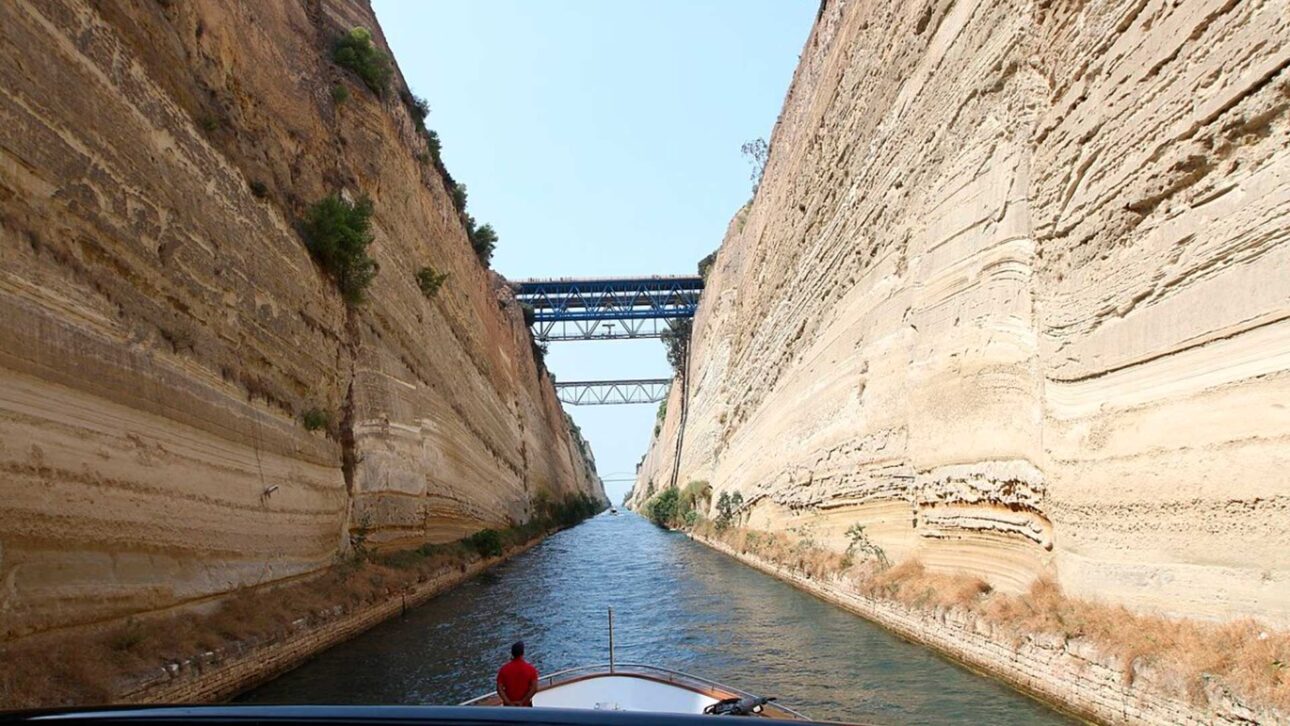
The major point of tension was avoiding the detour around the peninsula, especially in areas like Cape Maleas, historically associated with strong winds and unpredictable seas. Therefore, opening a passage through the isthmus became a strategic ambition long before modern engineering existed.
According to Britannica, the canal crosses the Isthmus of Corinth and was opened in 1893, with about 6.3 kilometers in length, a depth of approximately 8 meters, and a width that varies from about 21 meters at the bottom to 25 meters at the surface. These numbers explain why it impresses visually, but also why it has become limited for today’s large cargo ships.
The first solution was not to dig the earth, but to drag boats over a road


The idea of cutting the isthmus already appeared in Antiquity, when rulers realized that this narrow strip of land could change regional navigation. However, turning this plan into a canal was a technical task far beyond the resources available at the time.
According to the American School of Classical Studies at Athens, Corinth occupied a strategic point between two seas, and the ancient Diolkos functioned as a paved road used to transport vessels over land. In practice, small boats were removed from the water and moved across the isthmus, avoiding navigation around the Peloponnese.
This solution shows that the problem was already real many centuries ago. Since it was not possible to open a deep and safe canal, the ancient Greeks created an ingenious alternative to save time and reduce risks.
The Diolkos also helps to understand why the Corinth Canal was not a sudden idea of the 19th century. It was, in fact, the modern version of a need perceived since the ancient world.
Nero tried to start the work, but the project died before advancing
Among the names associated with the dream of opening the canal is the Roman emperor Nero. In the year 67 AD, the works actually began, with thousands of workers mobilized to excavate the terrain.
The attempt, however, was interrupted after the emperor’s death. Without political continuity and without sufficient technology to safely overcome the terrain, the project remained stalled for centuries.
This detail helps explain why the work is often called a project that took almost 2 thousand years to become reality. The idea existed, there was economic and strategic interest, but technical conditions, funding, and stability were lacking to complete the cut.
Only in the 19th century, after Greece’s independence from the Ottoman Empire, did the plan regain strength. Europe was experiencing a phase of great infrastructure works, and artificial canals came to symbolize economic power, advanced engineering, and control of trade routes.
The modern construction advanced between 1881 and 1893
The modern excavation of the Corinth Canal began in 1881 and was completed in 1893. The work cut the rock in an almost straight line, creating a narrow corridor between high walls that today form one of the most well-known images of Greek infrastructure.
According to the company responsible for the Corinth Canal, the structure is 6,346 meters long, 24.6 meters wide at sea level, about 21.3 meters at the bottom, and has a depth between 7.5 and 8 meters. It is a lock-free passage, meaning that boats cross at the same sea level.
The result was spectacular from a visual standpoint. The canal looks like a crack opened in the rock, with vessels passing between high and narrow walls, attracting tourists, photographers, and travelers interested in engineering.
But the same feature that makes the work impressive also became its biggest hindrance. The reduced width limits its use by larger ships, especially modern cargo ships, large cruise ships, and vessels with a greater draft.
The work shortened routes but became too small for modern ships
When it was inaugurated, the Corinth Canal represented an important change for regional navigation. It allowed for the reduction of the route for smaller vessels and avoided the need to go around the Peloponnese on certain routes.
Over the decades, however, the naval industry changed rapidly. Commercial ships became larger, wider, and heavier, while the canal remained with dimensions typical of the 19th century.
Therefore, unlike the Suez Canal or the Panama Canal, the Corinth Canal did not establish itself as a major artery of global maritime trade. Today, its function is much more linked to tourism, smaller boats, and regional navigation.
Even so, its historical relevance has not diminished. The canal remains a clear demonstration of how engineering can change the geography of a region, effectively transforming the Peloponnese into an area separated by water from the rest of the Greek mainland.
Slope instability became a constant challenge to keep the canal open
The beauty of the canal also hides a structural difficulty. Since the passage was opened in rock, with high and steep slopes, material falls and instability on the walls have always been concerns for navigation.
As reported by the Greek newspaper eKathimerini in April 2024, the canal underwent restoration work after landslides, including slope stabilization services and structure cleaning. The project mentioned by the newspaper involved an investment of 32 million euros and was divided into stages to increase navigation safety.
This type of intervention shows that the Corinth Canal is not just a historical attraction. It continues to require technical maintenance, monitoring, and engineering work to remain usable.
The region’s own geology helps explain this fragility. Such a narrow and deep cut, exposed to weather, water, and the natural movement of the slopes, requires constant care to avoid interruptions.
The submersible bridges increase curiosity around the crossing
Among the most curious details of the Corinth Canal are the submersible bridges installed at the ends. Instead of lifting like a common bridge, they descend below the water when a vessel needs to pass.
After the boat crosses the section, the bridge re-emerges and releases land traffic again. It is an unusual system that reinforces the unique character of the work and often attracts the attention of tourists.
This detail, combined with the vertical walls and narrow path, has made the canal a tourist attraction in itself. Many people visit the region just to watch vessels crossing the passage cut into the rock.
In the end, the Corinth Canal is a mixture of ancient ambition, modern engineering, and practical limitation. It did not become the “giant shortcut” for the world’s large ships, but it remains one of the most fascinating works in the Mediterranean.
What do you find most impressive about this work, the idea having been born so many centuries ago, the narrow cut into the rock, or the fact that it still functions despite so many limitations? Leave your opinion in the comments and tell us if you already knew the history of the Corinth Canal.


