Portuguese
  Spanish


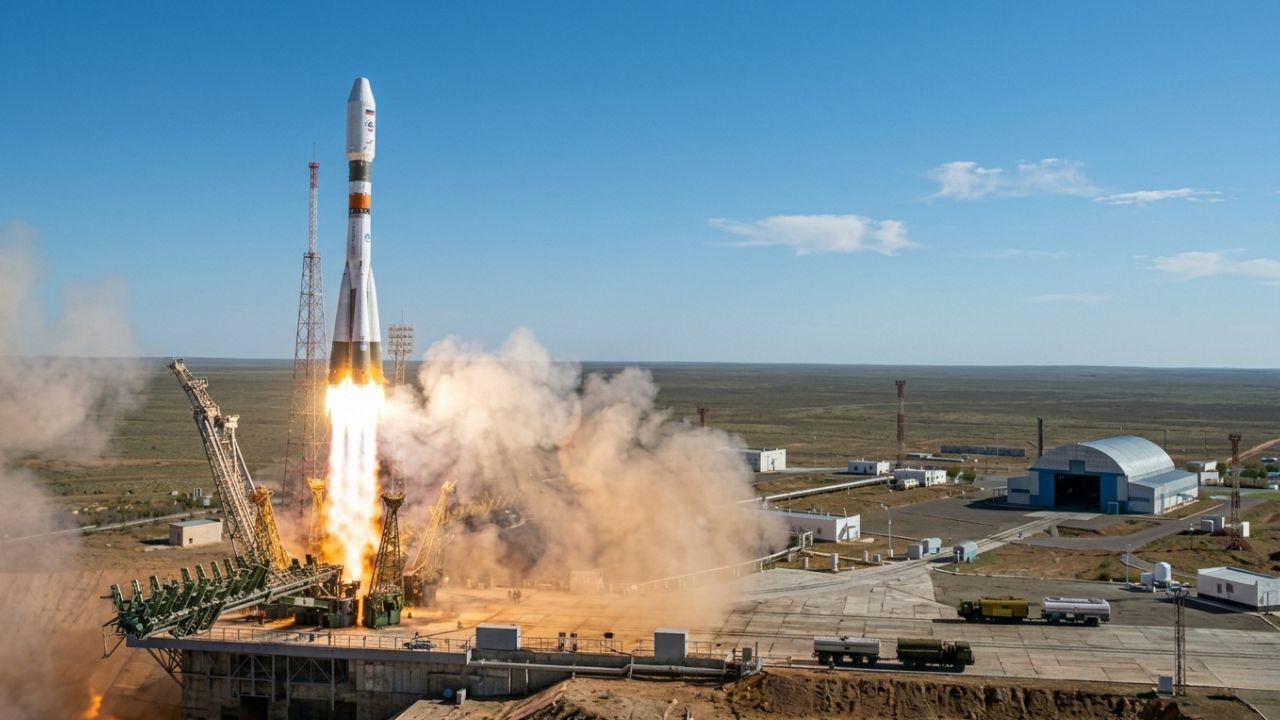

The Soviet N1 rocket exploded 23 seconds after liftoff in 1969, destroyed the platform at Baikonur, and definitively compromised the USSR’s lunar race.
According to Space Daily, at 11:18 PM on July 3, 1969, the Soviet rocket N1 launched from the Baikonur Cosmodrome as the Soviet Union’s greatest attempt to respond to the Apollo program. Standing 105 meters tall, almost the size of the American Saturn V, it carried not only a capsule equipped with an emergency escape system but also the political pressure of a space race that was nearing its conclusion. The flight lasted only 23 seconds.
According to RussianSpaceWeb, the failure began within the first few seconds. About 10.5 seconds after liftoff, at approximately 100 meters altitude, fragments began to fall from the rear section of the first stage. An engine failed, the automatic system reacted in a cascade, and the rocket lost its ability to sustain flight. Instead of heading into space, the N1 tilted in the air and fell back onto its own launch platform.
Explosion of the N1 destroyed the platform and devastated the Soviet plan for the Moon
According to RussianSpaceWeb, the impact occurred with about 2,000 tons of propellant still in the tanks. The explosion was so devastating that the platform was practically annihilated, and the accident came to be regarded as one of the greatest catastrophes in the history of space exploration. The very scale of the disaster showed that the Soviet Union had concentrated much more than a technical test on that mission.
-
Artist’s 15-Meter Lighthouse in the Mojave Desert, 160 km from the Sea, Intrigues Visitors with 19 km Range After Years of Bureaucracy

-
Bluetti AC70 Solar-Powered Station: Powers Fridge and Wi-Fi During Blackouts, Delivers 1,000W, 3,000 Charge Cycles, Priced at $900

-
Enormous Black Hole Phoenix A* Challenges Scientific Understanding with Mass of 100 Billion Suns, Surpassing Famous TON 618 in One of the Largest Known Galaxy Clusters
-
Say Goodbye to Storing Wine in a Regular Fridge: Midea’s Climate-Controlled Cellar Holds 34 Bottles, Maintains 5-18°C, and Uses Only Half a kWh Daily


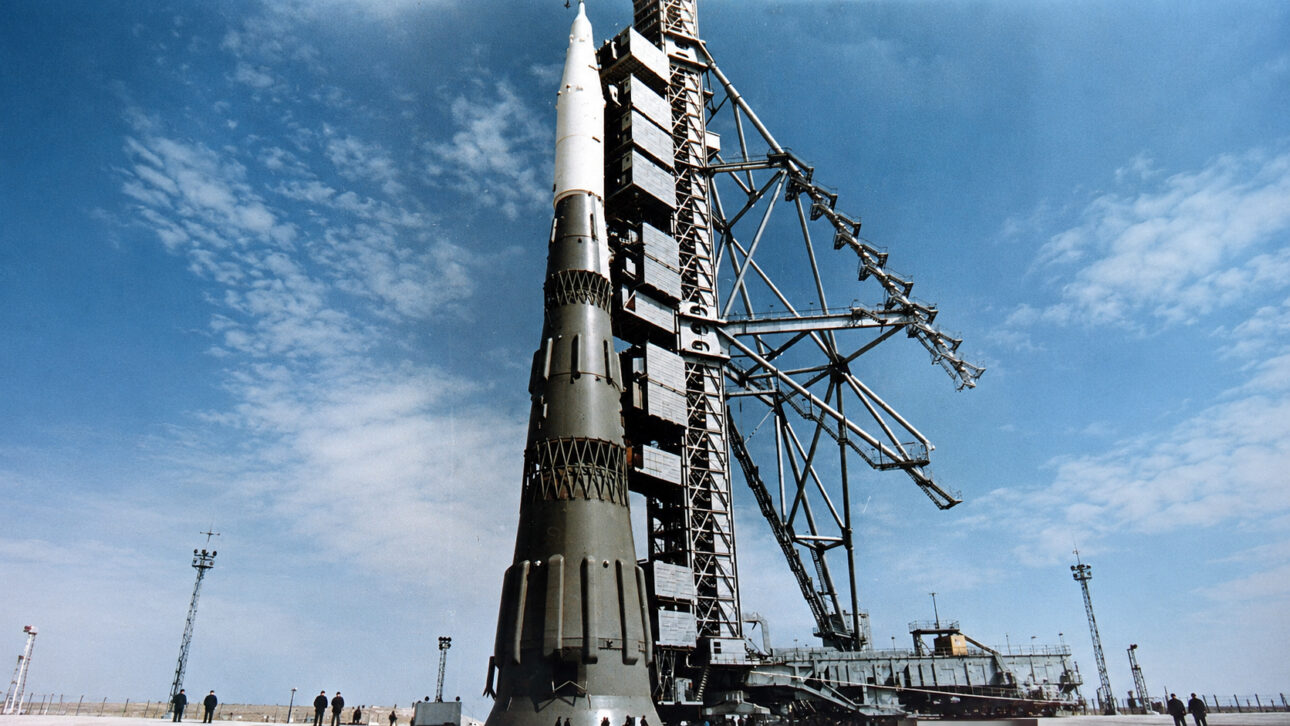
The moment made everything even more symbolic. The collapse of the N1 occurred just 17 days before the Apollo 11 landing on the Moon, which turned the accident into an almost definitive blow to any Soviet chance of a quick reaction in the manned lunar program. After that, the race did not officially disappear immediately, but the political and technological balance was clearly leaning towards the United States.
The capsule’s escape system managed to function, which prevented the total loss of the payload section at the moment of impact. Even so, the destruction of the platform and the magnitude of the explosion deeply compromised the operational continuity of the program.
The big mistake of the N1 was trying to fly without complete tests of the first stage
According to Space Daily, the most serious problem of the N1 program was not simply the number of engines, but the fact that the 30 NK-15 engines of the first stage had never been tested together on the ground as a complete system before an actual launch. This choice radically differentiated the Soviet project from the path followed by the Americans with the Saturn V.
The United States conducted extensive static tests of the first stage engine set, identifying problems before the flight. Meanwhile, the Soviet Union, pressured by deadlines, cost, and the political urgency of the lunar race, decided to proceed without this level of validation. In practice, the launch became the first real test of a gigantic system that had not yet been fully proven.
This decision haunted the program until the end. The N1 was too powerful to rely on partial success and too complex to be validated only in separate parts. The absence of integrated testing turned each launch into an extreme gamble.
KORD system tried to save the Soviet rocket, but aggravated the collapse
According to RussianSpaceWeb, to compensate for the lack of complete tests, the Soviets relied on KORD, an electronic system responsible for monitoring the engines and automatically shutting down those that showed failures. The logic seemed efficient on paper: if an engine went out of standard, the system would react to preserve the rocket’s balance.
The problem is that, in an environment of extreme vibration, noise, and interference, KORD could interpret anomalous signals excessively and compromise the vehicle’s total thrust. Instead of just containing failures, the system started to participate in the overall instability of the launch.
In the case of the flight on July 3, 1969, this vulnerability was laid bare. The initial failure of one engine was not isolated. The system entered a chain reaction, and the rocket lost the ability to continue ascending with stability.
Four launches, four explosions, and a program stuck in its own delay
According to Space Daily, the N1 flew four times between February 1969 and November 1972, and all four launches ended in explosion. The failure in July 1969 was the most famous because it destroyed the platform and occurred on the eve of Apollo 11, but it was not an isolated accident in an otherwise successful program. It was part of a sequence of collapses.
According to RussianSpaceWeb, the subsequent flights did show some technical evolution compared to the previous ones, but they continued to fail before the first stage fully completed its mission. This shows that the program was learning, but learning too slowly for the political urgency it carried.
The N1 was trying to mature in flight what should have matured on the ground. In a race where the United States was advancing with a much more solid schedule and much more robust testing infrastructure, this technical delay was practically fatal.
The feud between Korolev and Glushko weakened the Soviet lunar program from the start
According to Space Daily, behind the technical failures of the N1 there was also a historical conflict between two central figures of Soviet engineering, Sergei Korolev and Valentin Glushko. Korolev wanted a manned lunar rocket with a propulsion philosophy different from that advocated by Glushko, who insisted on hypergolic propellants that Korolev considered unsuitable for a manned mission to the Moon.
The rift between the two was so deep that Korolev ended up turning to Nikolai Kuznetsov, a brilliant aircraft engine designer, to develop the engines for the N1. The choice resulted in technically sophisticated thrusters, but within a program that did not have the same degree of systemic maturity required by a lunar rocket of that size.
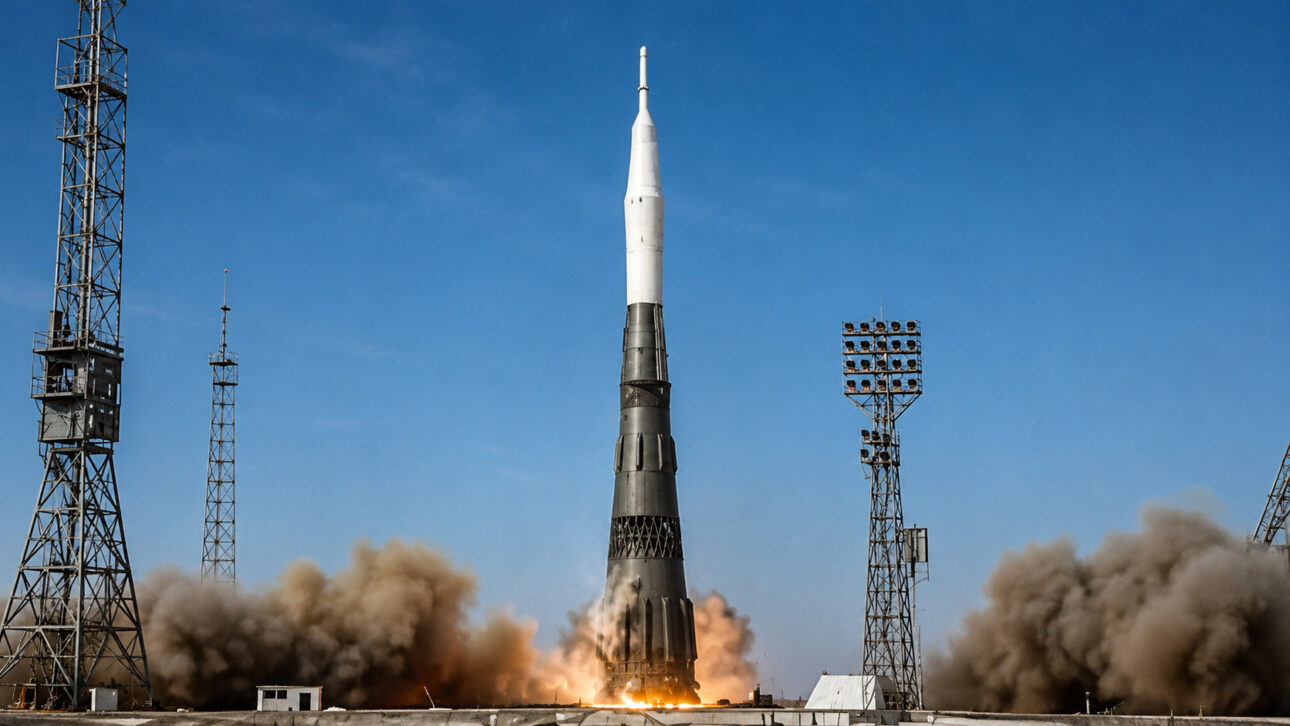
This internal division weighed heavily. The Soviet lunar program did not fail because of a single engine or a single launch, but also because it was born amid rivalries, rushed decisions, and a less cohesive development architecture than the American program.
The explosion betrayed the Soviet secret and helped reveal the USSR’s lunar race
According to Space Daily, the Soviet Union treated the N1 program with an extreme level of secrecy. Officially, the manned lunar race with the United States practically did not exist for the public. But the destruction of the platform at Baikonur was too great to remain invisible.
The magnitude of the explosion and the observable damage ended up attracting the attention of Western intelligence and helped confirm that the Soviets were indeed trying to reach the Moon with their own large-scale rocket. The catastrophe itself ended up exposing the extent of the effort that Moscow was trying to hide.
While the platform took a long time to be recovered, the United States advanced without pause. Apollo 11 landed on the Moon, Apollo 12 repeated the feat, and the global narrative of the space race was practically sealed.
NK-33 engines survived the N1 failure and ended up being used by Americans decades later
According to Space Daily, the most ironic chapter in the history of the N1 came after the program was canceled. When the project was terminated in 1974, the official order was to destroy engines and documentation. But some of the improved engines, especially the NK-33, were secretly preserved.
Decades later, these engines were analyzed by Western engineers, who were surprised by the technical level of the project. They ended up being purchased by American companies, rebranded, and used in modern launchers, showing that the failure of the N1 did not mean that all the engineering of the program was wrong or outdated.
This outcome summarized well the Soviet tragedy on the Moon. The rocket failed as a system, but part of its technology survived and only received broad recognition much later, already outside the context of the Cold War and the lunar race.
The N1 went down in history as the rocket that concentrated Soviet ambition and collapse
The N1 became a symbol of a gigantic ambition that did not have enough time to mature. It was the vehicle that could have taken the Soviet Union to the Moon, but ended up going down in history as one of the greatest failures of the space age.
The explosion of July 3, 1969 concentrated in a few seconds everything that was most extreme in the Soviet lunar program: political pressure, bold engineering, insufficient testing, internal rivalries, and an urgency that physics did not respect. A few days later, the Americans would set foot on the Moon.
In the end, the N1 was not just a rocket that exploded. It was the concrete image of the moment when the Soviet Union saw its response to Apollo fall back onto its own platform, before the lunar race could be rebalanced.