Portuguese
  Spanish


In 2026, Midea launched in Brazilian stores a line of climate-controlled wine cellars designed to retire the habit of pushing wine bottles to the back of the regular fridge for good. The models range from 8 to 34 bottles, maintain temperatures between 5 and 18 degrees, and have an energy consumption of about half a kWh per day, enough to transform a corner of the living room into a small wine cellar without burdening the electricity bill.
According to Midea, the brand’s climate-controlled wine cellar comes in versions suitable for those with half a dozen labels to those who already collect dozens of bottles, always with a control panel and glass door. According to Magazine Luiza, the 29-bottle model, with a compressor and two doors, is sold for about R$ 1,693, a price that places the product at an accessible level within the category. The proposal is simple and direct: give wine the right temperature, with low energy consumption, without sharing space with food leftovers and smells from the regular fridge.
The problem with leaving wine in the regular fridge
Storing wine in the regular fridge seems practical but comes at a cost. The home fridge is set to preserve food at around 4 degrees, too cold for most labels and which stiffens the drink’s aromas. Moreover, the door opens and closes all day, and each opening causes thermal variation, precisely what the drink dislikes the most.
There’s also the issue of odors. Inside the regular fridge, the cork acts like a sponge and can absorb the smell of cheeses, cold cuts, and seasonings, contaminating the liquid over weeks. The motor’s vibration and lack of adequate humidity complete the list of problems: over time, the cork dries out, lets air in, and the wine oxidizes prematurely.
-
Six Helicopters to Drop 550 Tons of Poison on Island Near Antarctica to Eradicate Mice Threatening Albatrosses and 19 Seabird Species.

-
Russia Unveils Poseidon: A 20-Meter Nuclear Torpedo-Drone with 10,000 km Range, 185 km/h Speed, and 100-Ton Capacity Threatening Coastal Cities with Radioactive Waves
-
Brazilian Innovator Converts Old Car into Electric Vehicle Using Laptop Batteries and Forklift Motor, Achieves Nearly 90 km/h in Urban Settings

-
Samsung Unveils Smart Oven with Built-In Camera, AI Food Recognition, and Real-Time Monitoring via Smartphone.




This is where the climate-controlled wine cellar comes in as a solution. Instead of fighting for space on the milk shelf, the wine gets its own environment, with a stable climate designed for the drink. The brand’s promise is this: say goodbye to the regular fridge and treat each bottle as it deserves.
What changes with Midea’s climate-controlled wine cellar
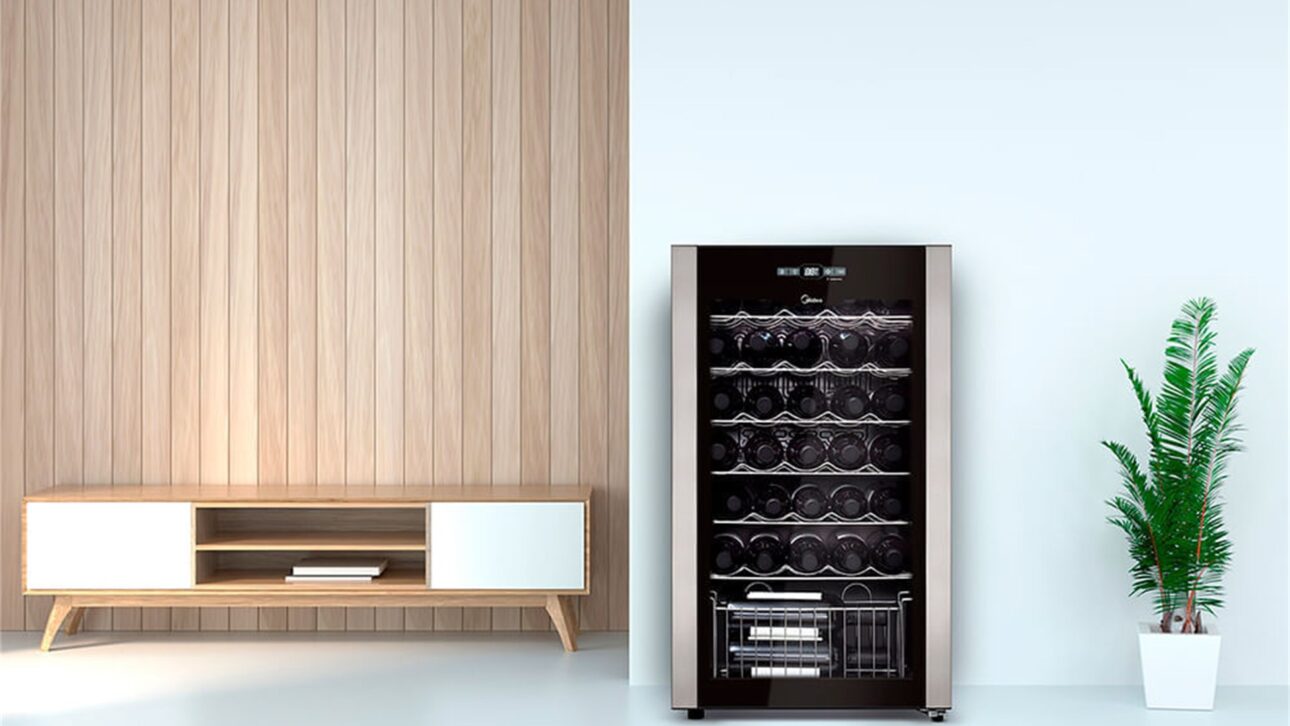
The most evident difference of the climate-controlled wine cellar appears right in the temperature. While the common refrigerator works in a fixed and cold range, the climate-controlled wine cellar allows you to adjust the exact value on the panel, respecting what each label requires. A full-bodied red, a light white, and a sparkling wine stop competing for the same aggressive cold.
The glass door is another detail that changes the routine. Besides the aesthetic appeal, with the bottles on display like in a small store, the treated glass helps block part of the light that degrades the beverage. The internal shelves, in turn, accommodate the bottles lying down, a position that keeps the cork moist and preserves the seal for much longer.
There is also the gain in coexistence. Without the bottle occupying the common refrigerator, there is more space for food, and the beverage stops absorbing unwanted odors. The appliance operates silently, with a low noise level, allowing it to be installed in the living room, gourmet area, or integrated into the kitchen without disturbing.
Temperature from 5 to 18 degrees: each wine at its point
The heart of the climate-controlled wine cellar is the temperature control, and here Midea works in a range from 5 to 18 degrees. This range covers practically all styles served daily, from well-chilled sparkling wine to cellar-point red. Just adjust the number on the panel and let the appliance do the rest.
In practice, the range works like this: sparkling wines and light whites require the coldest part, between 5 and 10 degrees; full-bodied whites and rosés do well around 10 to 12 degrees; reds prefer something between 14 and 18 degrees. With the climate-controlled wine cellar, this ideal point stops being a guess and becomes a precise adjustment, maintained stably hour after hour.
This stability is the great asset. Unlike the common refrigerator, where the cold fluctuates with each door opening, the appliance holds the programmed value and reduces thermal stress on the beverage. Less thermal variation means a beverage that evolves more predictably and reaches the glass the way the producer envisioned.
Energy consumption: about half a kWh per day
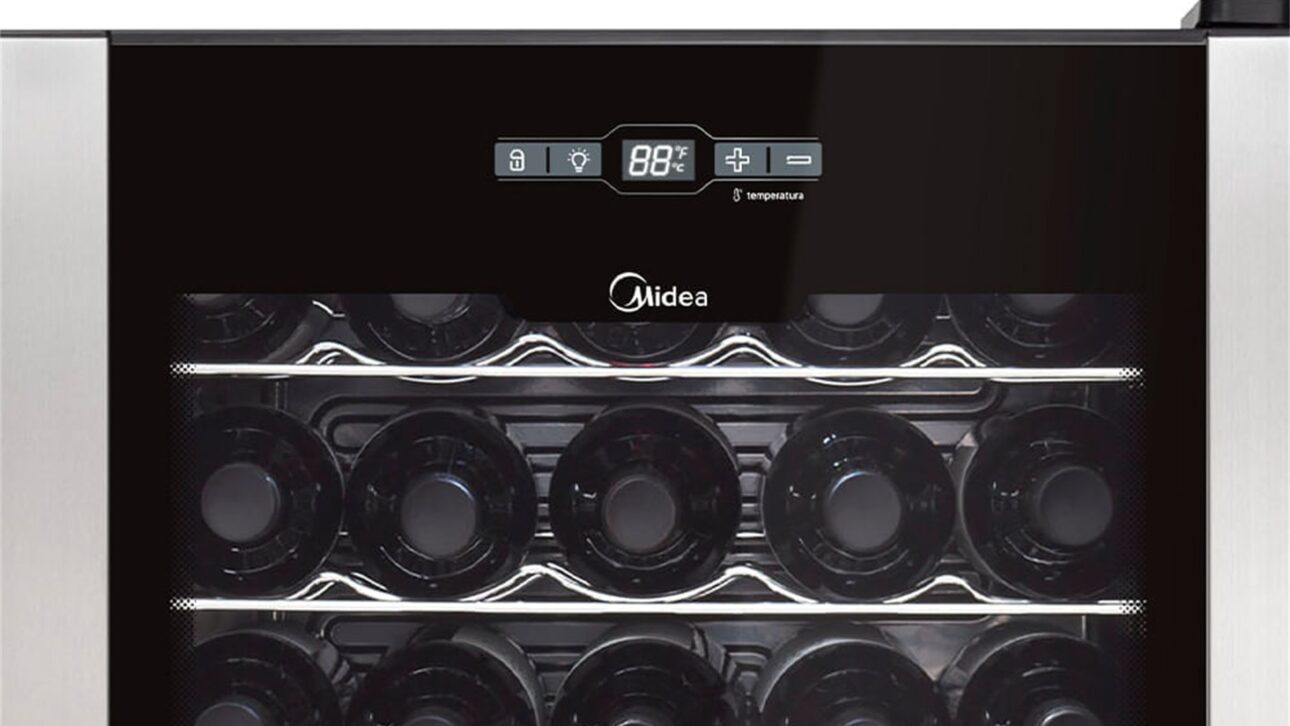
Many people hesitate to buy a climate-controlled wine cellar for fear of the electricity bill, but the cost is more modest than it seems. The climate-controlled wine cellar has an energy consumption of about 0.5 kWh per day, equivalent to keeping a few lights on for a few hours. In a month, this represents around 15 kWh, a small impact on most households.
This lean energy consumption comes from the efficient motor, which operates in a range of 90 to 120 W, and the thermal insulation that keeps the cold inside the cabinet. Since the compressor doesn’t need to run all the time to maintain the cold, the cost is spread throughout the day instead of spiking.
It’s worth the comparison: a common medium-sized refrigerator usually consumes much more than that, and still stores the bottle at the wrong temperature. By moving the bottles to the wine cellar, the extra energy consumption is low and comes with a real gain in quality. In the end, energy consumption ceases to be an argument against and becomes a point in favor of the climate-controlled wine cellar.
Technical specifications: from 8 to 34 bottles, motor and shelves
The 2026 line of the brand’s climate-controlled wine cellar starts with compact models of 8 bottles and reaches the top with the 34-bottle model, passing through intermediate versions such as the 24 and 29-bottle models. This variety allows you to choose the wine cellar according to the size of the collection and the available space at home.
At the heart of the appliance is a motor that operates in the range of 90 to 120 W, responsible for keeping the cold stable with low energy consumption. The refrigeration uses eco-friendly gas, aligned with current environmental requirements, and the set has been calibrated to operate silently, with little vibration to avoid disturbing the beverage.
On the outside, the glass door gives the appearance of a wine cellar and protects the bottles from light. Inside, the internal shelves, generally accompanied by a basket in larger models, accommodate the bottles lying down. The panel, digital in the more complete versions, concentrates the temperature control and also has a lock to prevent accidental activation, useful in homes with children. It’s a lean technical specification but consistent with the proposal of the climate-controlled wine cellar.
Price and where to buy the Midea climate-controlled wine cellar
The price varies according to capacity, but there is a clear reference point: the 29-bottle model, the WBA291, with a compressor and two glass doors, costs around R$ 1,693 at retail. It’s a competitive price for those who want to move from a common refrigerator to a true climate-controlled wine cellar, with precise control and low energy consumption.
The smaller models, of 8 bottles, tend to cost much less and serve as an entry point for those starting to store wine more carefully. Meanwhile, the 24 and 34-bottle versions cater to those who take their collection seriously and want ample space. In all cases, the brand usually offers installment plans, which spread out the investment in the equipment.
The climate-controlled wine cellar is sold on the brand’s official website and at major retailers, such as Magazine Luiza, where the 29-bottle model appears at the mentioned price. It’s worth comparing offers and checking the voltage, as some models are dual voltage and others come in 127 or 220 volts. Checking the capacity, energy consumption, and temperature range before making a purchase helps in choosing the right wine cellar.
Is the Midea climate-controlled wine cellar worth it?
For those who enjoy wine and still rely on a regular refrigerator, the answer tends to be yes. The climate-controlled wine cellar delivers on the essentials: stable temperature from 5 to 18 degrees, low energy consumption of about half a kWh per day, and capacity ranging from 8 to 34 bottles. Add to that the glass door, internal shelves, and an entry price of around R$ 1,693 for the 29-bottle model.
It’s not a product for those who drink a bottle a month and don’t care about preserving labels. But for those who buy labels frequently, entertain friends, or are building a collection, the climate-controlled wine cellar solves the problem of incorrect temperature and odors from a regular refrigerator, without a shock on the electricity bill.
In the end, the Midea climate-controlled wine cellar represents a change of habit more than a luxury: it’s giving the beverage the treatment it should already have. If a well-stored bottle makes for a better toast, does it still make sense to leave the wine competing for space with food in a regular refrigerator?