Portuguese
  Spanish


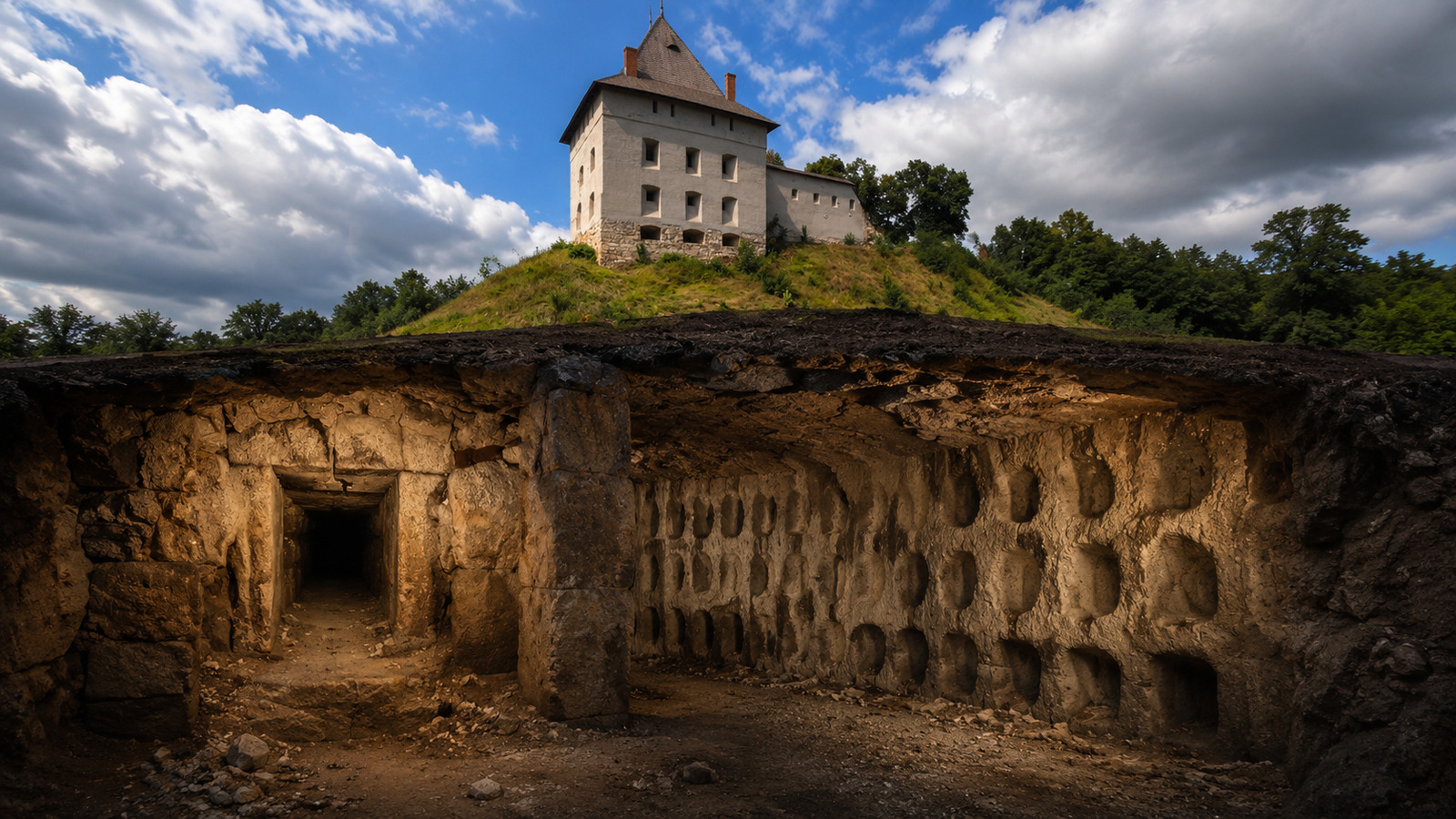

Underground chamber in the Galicia Castle, in western Ukraine, was accessed in 2025 after centuries isolated, revealing soot, reinforced walls, ventilation shafts, and signs of defensive use linked to the 17th-century siege
A secret chamber in the Galicia Castle, in western Ukraine, was reached by archaeologists in 2025 after remaining isolated for over 300 years. The space, linked to a ventilation shaft buried after a siege in the 17th century, had walls with soot and reinforced structure, signs indicating possible defensive use.

Secret chamber was isolated after damage in the 17th century
The Galicia Castle, also known as Starasta Castle, gathers layers from different periods of local history.
The construction began as a wooden fortress in the 12th century, was renovated in the 14th century by Casimir III the Great, and redesigned in the early 17th century by architect Francisco Corazzini.
-
She spent 73 years breathing inside an iron lung, survived the aftereffects of polio, and became the last woman in the United States dependent on the equipment before dying at 78 years old.

-
Brazilian students created a $1 filter using pine bark, cotton, and 3D-printed parts to clean cassava wastewater, reduce the toxicity of a hazardous waste, and transform contaminated water into biofertilizer.

-
Astronaut from Artemis II steps down after mission to the Moon and decision surprises after a record of 406,771 km, a historic 10-day journey, and an unprecedented achievement for Canada.

-
A fossil kept for years in a small museum in Montreal concealed 450-million-year-old soft tissue, a discovery that has only happened once before in history.


The underground part now investigated would have been sealed after the great damage suffered by the fortress during the Polish-Turkish War of 1676.
The destruction likely blocked the ventilation shaft leading to the secret chamber, leaving the space out of reach for centuries.
Access was only possible after careful excavation. The shaft was too narrow for direct entry, which forced archaeologists from the National Academy of Sciences of Ukraine to manually remove over 5,200 cubic feet of debris.

Manual removal preserved structure and archaeological remains
The work required caution because heavy machinery could compromise the integrity of the discovery.
Vladimir Oleynik, general director of the Ancient Galich National Reserve, told Heritage Daily that that part of the castle has been completely isolated since the explosion.
According to him, manual removal was necessary to preserve the archaeological integrity, protect the artifacts, and maintain the chamber’s structure.
The decision also allowed researchers to examine the space without destroying important traces.
Inside the room, archaeologists found features compatible with a casemate, a type of fortified environment historically used to store or test weapons.
The soot-blackened walls and the ventilation shaft reinforce the hypothesis of use related to smoke and defense.


Soot and reinforced walls point to defensive use
Although the hypothesis of military use is considered strong, experts are still analyzing other possibilities.
The chamber may also have served as a vault, prison, treasury, archive, or judicial deposit, functions mentioned by researchers examining the traces found.
The soot on the walls and the robustness of the structure, however, draw attention for suggesting activities involving fire, smoke, or armaments.
The ventilation shaft may have functioned to dissipate smoke within the underground environment.
Archaeologists are still studying the artifacts associated with the chamber to more precisely define how the space was used.
This step is important because each object can help differentiate a defense area from a deposit, archive, or confinement location.
Excavations indicate other vaults under the castle
The initial discovery led to the expansion of the excavation in August 2025, especially in the area of the entrance tower. According to ZAXID.NET, archaeologist Yuriy Lukomskyi indicated that the tower may contain six vaults in total.
The first crypt is 6 meters deep and connects to two others. Below them, ventilation shafts go even deeper, where there may be three more crypts not yet explored by the team.
During the work, fragments of stove tiles from the 17th and 18th centuries were also found. These materials indicate continuous use or later renovations after the original siege, helping to reconstruct the relationship between rooms, tunnels, and underground structures of the castle.
Local stories about secret tunnels also surround the site. A small opening in the chamber walls may lead to other passages, keeping open new stages of investigation under the visible ruins of the ancient fortress.
This article was prepared based on information from Heritage Daily and ZAXID.NET, with data, numbers, and statements preserved according to the consulted material.