






 Portuguese
  Spanish


Hidden among the mountains of Virginia, a structure of unusual proportions combines reservoirs, tunnels, and reversible machines to respond to fluctuations in the power grid, using gravity and water as central elements of a system capable of storing and releasing energy on a large scale.
One of the largest energy storage structures on the planet is installed among the mountains in the state of Virginia, United States, where two reservoirs connected by tunnels and high-power equipment store electricity in the form of elevated water.
Known as the Bath County Pumped Storage Station, the facility reaches a generation capacity of 3,003 megawatts and absorbs available energy from the grid to return it when consumption increases, operating as a gigantic hydraulic battery integrated into the electrical system.
Unlike lithium-ion batteries used in cell phones and electric vehicles, the complex does not rely on chemical reactions but on the elevation difference between two artificial reservoirs to store energy and make it available during periods of higher demand.
-
Goodbye traditional coffee maker: Philips surprises and offers in Brazil an automatic version with 20 hot and cold drinks, a ceramic grinder with 12 settings, one-touch milk froth, cleaning in up to 15 seconds, personalized profiles, and a system up to 40% quieter.

-
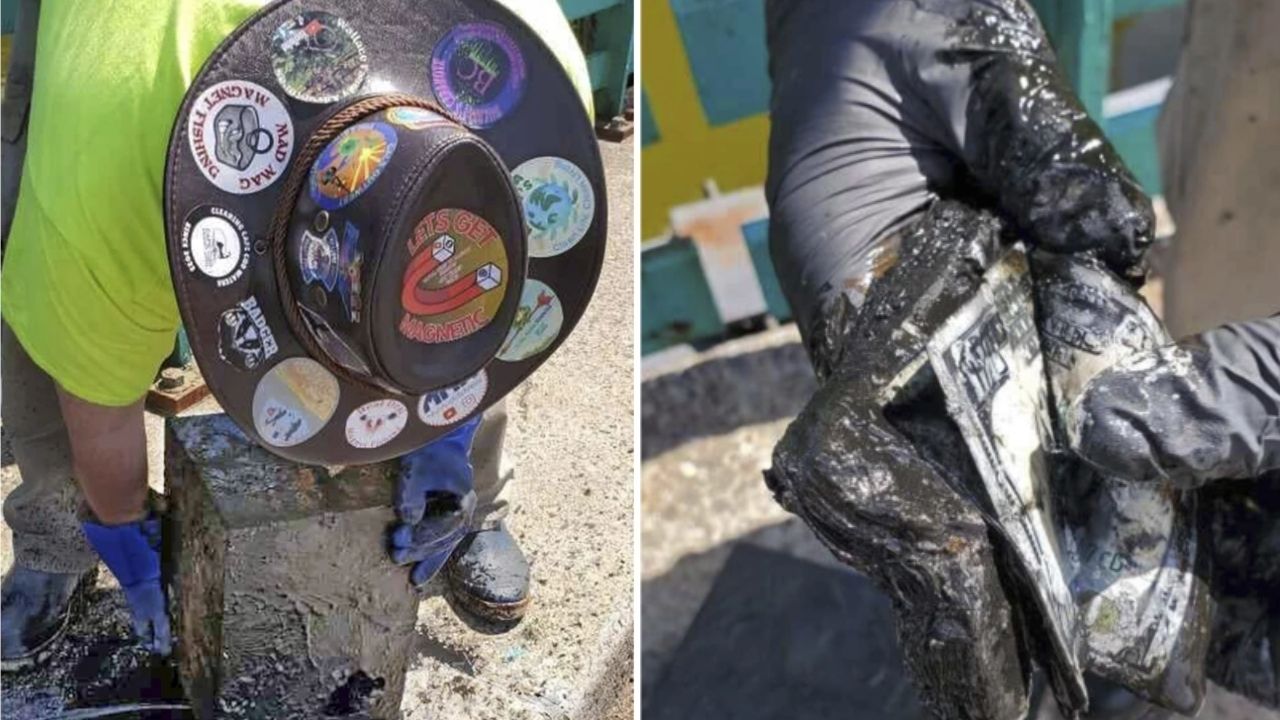
A couple was magnet fishing in a New York lake when they pulled up a slimy safe containing up to $100,000 in $100 bills. They called the police and were told they could keep the money after no owner was identified.

-
Daughter accepted her father’s request to reopen a guava paste factory that had been shut down in the countryside of Rio de Janeiro, found the structure in need of improvements, recovered the family’s traditional recipe, and transformed Sítio Taipabas into a rural tourism business with guided tours, tastings, and artisanal production.
-
The government of Dubai launched “bread for all,” a vending machine that operates 24 hours a day, seven days a week, and distributes freshly baked bread for free to those in need, and also accepts donations from those who want to help feed the city.



When there is a surplus of electricity, electric motors activate pumps that carry large volumes of water to the upper reservoir; during peak demand times, the flow reverses, passes through the turbines, and transforms potential energy back into electricity.
Six reversible turbines move the water battery
According to Dominion Energy, the company responsible for the operation, the plant comprises six reversible units that function both as pumps and turbines, allowing for rapid switching of operation modes according to the needs of the power grid balance.
This configuration offers a quick response to variations between generation and consumption because the same equipment used to elevate the water also operates in reverse, converting the descent from the upper reservoir into electricity production for the system.
The size of Bath County helps explain its position among the largest water batteries in operation, as the upper dam measures approximately 140 meters in height and about 670 meters in length, requiring an enormous volume of materials.
According to Dominion Energy, the construction of this dam used approximately 13.8 million cubic meters of earth and rock, while the lower reservoir is supported by another structure about 41 meters high and 732 meters long.
Reservoirs store energy through gravity
Stored at the highest point of the complex, the water represents a reserve of potential energy that can be activated whenever the operator identifies a significant increase in demand, reducing the gap between available electricity and recorded consumption.
At this moment, the accumulated volume descends through large conduits until it reaches the reversible turbines, which start operating as generators; after the journey, the water remains in the lower reservoir until a new period of lower consumption allows it to be pumped back.
Repeated countless times, this cycle has made pumped-storage hydroelectricity an important technology for stabilizing power grids, as it shifts energy use between different times without creating additional electricity during the storage process.
With the expansion of renewable sources, especially solar and wind, installations of this type have gained operational relevance, as production can vary according to weather conditions and does not always coincide with periods when consumption reaches higher levels.
In situations of surplus, part of the available electricity can power the water pumping; when generation decreases or demand unexpectedly grows, the system returns energy to the grid through the turbines installed between the two reservoirs.
In the case of Bath County, the installed capacity of 3,003 megawatts places the plant among the largest structures of this type ever built, offering large amounts of electricity in short intervals and flexibility to follow system fluctuations.
Mountainous terrain supports hydroelectric storage
The location between mountains results from a technical requirement, because reversible hydroelectric storage depends on a gradient capable of giving speed and pressure to the water during descent, a condition necessary to move the turbines efficiently.
Besides the favorable terrain, the area needs to accommodate large-capacity reservoirs and infrastructure to receive tunnels, conduits, and electromechanical equipment, forming an integrated set that supports both pumping and energy generation.
Behind the dams, kilometers of underground galleries, automated control systems, and large machines coordinate the shift between operating modes, adjusting the water flow according to the needs identified in the power grid.
Although it is compared to a conventional battery, Bath County stores energy differently: instead of concentrating electricity in chemical cells, it uses gravity to transform the energy used in pumping into gravitational potential energy.
When the flow is reversed, this potential energy returns to the form of electricity through the turbines, preserving the basic function of a battery, which is to receive energy at a certain time and make it available to the system later.
3,003 MW structure helps stabilize the grid
Known as pumped-storage hydroelectricity, the concept remains among the highest capacity solutions for storing energy on a grid scale, even with the growth of technologies based on chemical batteries and other storage systems.
According to Dominion Energy, the combination of reservoirs, dams, and reversible equipment allows the plant to go beyond generation, contributing to balancing supply and demand, managing different energy sources, and responding to significant fluctuations in the system.
Seen from above, the facility draws attention with reservoirs separated by a large elevation; inside, tunnels, conduits, and machines reveal how engineering transformed the mountainous landscape into a colossal energy storage system.
Did you imagine that a structure capable of storing electricity on a gigantic scale could operate by lifting millions of liters of water between two mountains and releasing this volume again whenever the power grid needed a quick response?


