






 Portuguese
  Spanish


Imagine a concrete that seals its own cracks without anyone touching it. This is what the self-healing concrete created at Delft University does: dormant bacteria for up to 200 years produce limestone and repair cracks on their own, reducing maintenance, steel, and carbon emissions in construction.
The idea seems like science fiction, but it has already become a product. According to Delft University of Technology (TU Delft) in the Netherlands, researchers have created a self-healing concrete capable of repairing its own cracks with the help of microorganisms that, when in contact with water and oxygen, produce limestone and autonomously seal the cracks.
According to the Holland Circular Hotspot platform, this bio-based technology was developed and patented by the university itself and is now marketed for both new and old structures. The promise is bold: a concrete that lasts longer, requires less maintenance, and also reduces the environmental impact of one of the most used materials on the planet.
A concrete that heals itself

image: Delft University of Technology (TU Delft)
The principle behind the invention is as simple as it is ingenious. When a crack appears and water seeps in, the bacteria embedded in the material spring into action and transform nutrients into limestone, sealing the opening from within.
-
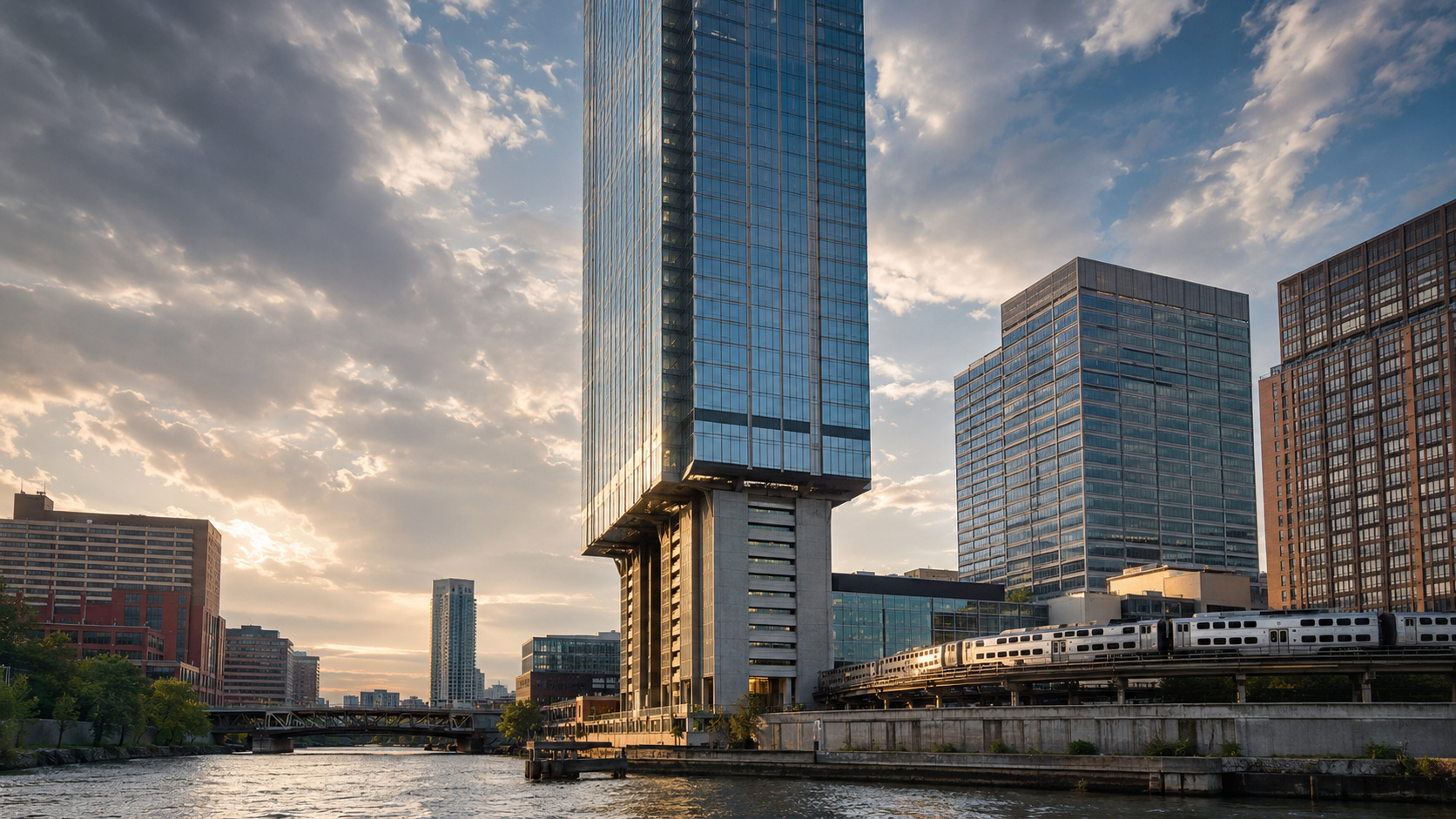
It seems too narrow to stand, but this 229-meter building houses 54 floors on a 12-meter base and controls the sway with water tanks.

-
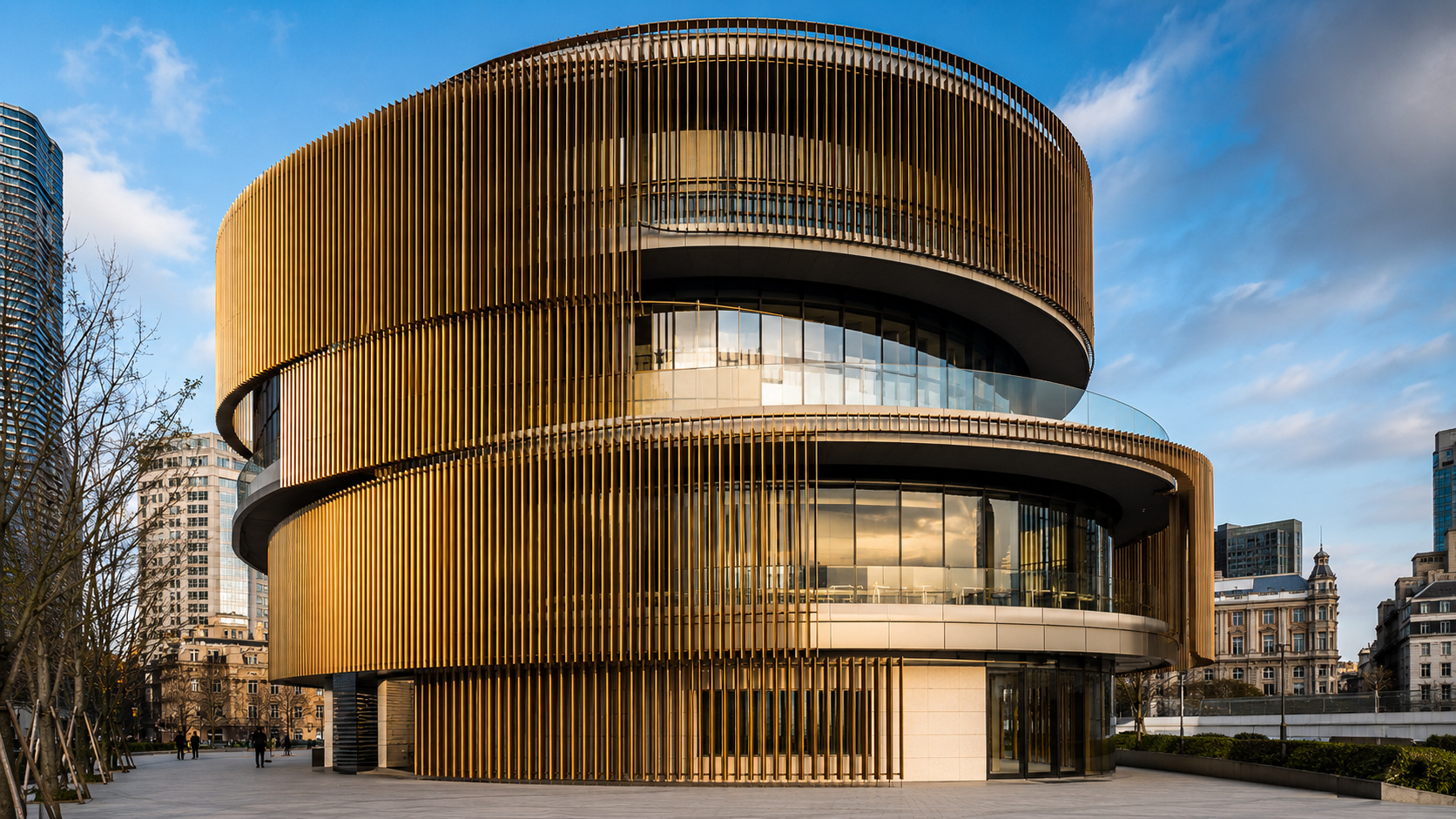
Building inaugurated in 2017 in Shanghai concealed tracks and motors at the top of the facade to move three golden curtains that completely change its appearance during the day.
-
Dubai dumped 94 million cubic meters of sand from the bottom of the Persian Gulf and designed a giant palm tree in the sea covering 560 hectares, without a gram of concrete or steel, creating 56 km of new coastline, sold 4,500 mansions in 3 days, and became the most expensive address in the country.

-
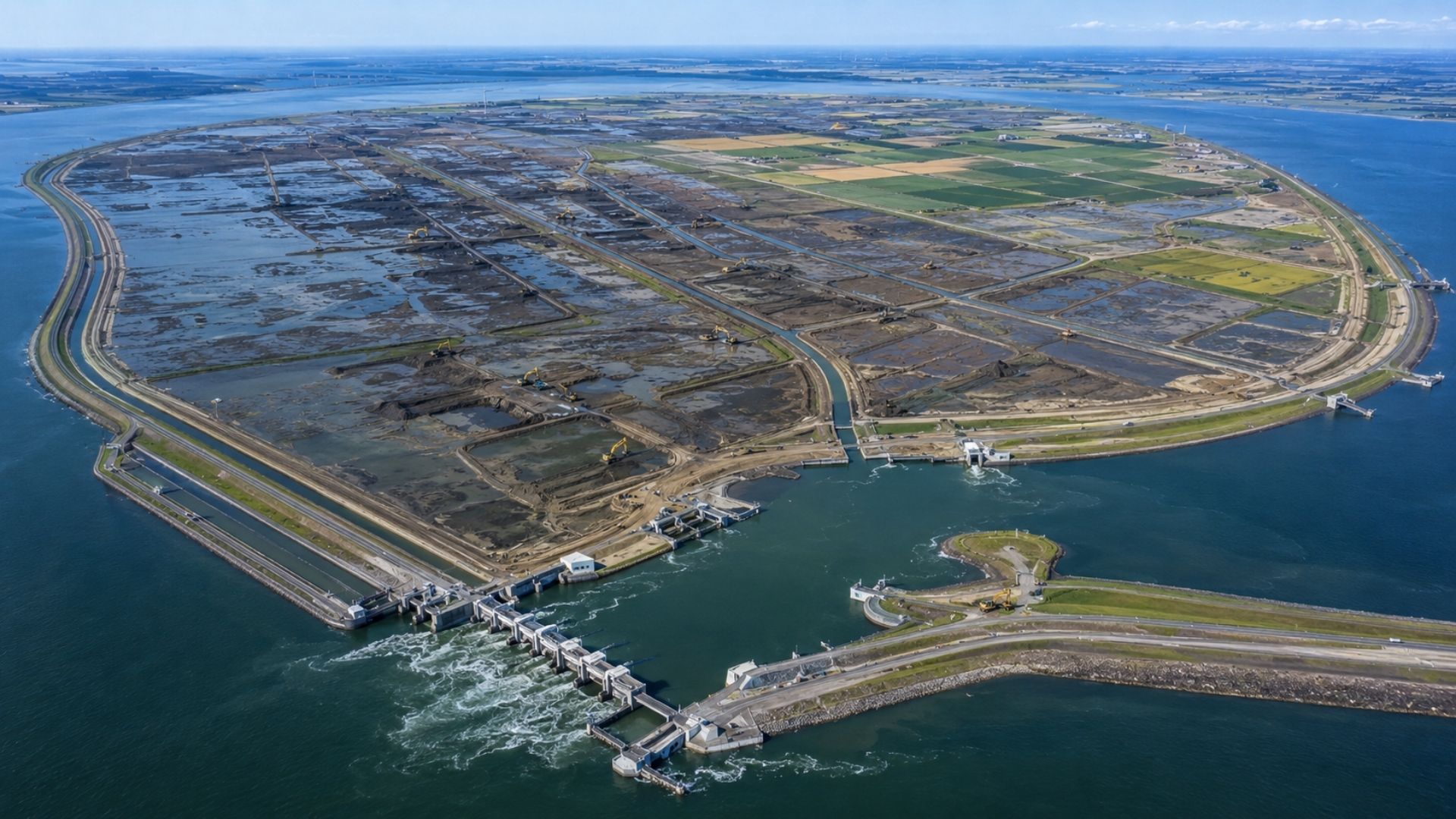
To defend itself from a sea that killed thousands, the Netherlands closed a bay with giant dikes, drained almost 1,000 km² of seabed, and transformed the land reclaimed from the ocean into Flevopolder, the largest artificial island on the planet, where today more than 400,000 people live below sea level.

It is this self-repairing capability that led the technology, marketed by the company Basilisk, to move from the laboratory to real-world applications.
Behind the discovery are researchers Henk Jonkers and Erik Schlangen from Delft University, and the solution is now driven by Green Basilisk, a spin-off born from the university itself. “We are combining nature with building materials,” summarizes Professor Henk Jonkers, a phrase that encapsulates the proposal of treating concrete almost like a living organism.
Bacteria that produce limestone

image: Delft University (TU Delft)
The secret lies in limestone-producing microbacteria. They convert certain nutrients into calcium carbonate, the limestone itself, when exposed to oxygen and moisture, exactly the conditions that arise when a crack opens a path for water.
As soon as this happens, the microorganisms begin the repair on their own, without any human intervention.
The most impressive aspect is the durability of the system. Applied in liquid form, the bacteria penetrate even the smallest cracks and remain there waiting.
According to the manufacturer, they can remain dormant in the concrete for up to 200 years, ready to awaken the moment a new crack threatens the structure — a sort of invisible maintenance team embedded in the construction itself.
Where living concrete is already being used
The technology has already left the research benches. According to Basilisk, the liquid repair system has been identified as a candidate for treating concrete areas of Schiphol Airport, such as taxiways and aircraft parking positions, as well as a tunnel where they sought to repair cracks without halting operations.
Another significant example is a 12,000 m² parking lot treated with the product. In this pilot project, half of the area, about 6,000 m², was covered with scrubbing machines, while the other 6,000 m² received application by manual high-pressure spraying equipment. The same solution is suitable for both new structures and for recovering existing concrete.
Less maintenance, less steel, and less carbon
The benefits go far beyond sealing cracks. As the concrete itself seals the fissures, special coatings or waterproof membranes are no longer needed, and the construction requires about 40% less reinforcement steel, as slightly larger cracks can be tolerated without risk. Fewer cracks to repair also means less maintenance and lower costs over the life of the structure.
The environmental impact is another major advantage. The technology promises to reduce the carbon footprint of concrete by 30% to 50%, thanks to its longer lifespan, the elimination of membranes, and the reduced use of steel.
The issue is urgent: Delft University notes that the world produces about 8 billion cubic meters of concrete per year, and the Dutch sector is already aiming to halve its emissions by 2030.
Why this matters for construction
Concrete is the most used material in the world after water, and also one of the most polluting, hence the significance of an innovation that tackles two problems at once.
Cracks are the Achilles’ heel of structures: through them, water and agents that corrode the reinforcement enter, shortening the lifespan of constructions. A concrete that repairs itself changes this equation at its root.
There is still a way to go before the technology becomes standard on construction sites, but the direction seems clear. By transforming concrete into something closer to an organism capable of regenerating, Dutch research points to a future where durability and sustainability go hand in hand and where the eternal maintenance of bridges, tunnels, and buildings can finally become cheaper.
And would you trust a building made of living concrete?
Bacteria working silently for 200 years to seal cracks and a concrete that regenerates like skin: the creation from Delft University mixes biology and engineering in a way that still sounds surreal.
Do you think self-healing concrete is the future of construction, or would you still be wary of a structure that relies on microbes to stand? And where would you most like to see this technology applied? Leave your opinion in the comments.


