






 Portuguese
  Spanish
  5 min of reading
  0 comments



Agreement between the US and Ukraine creates a reconstruction fund with preferential access to critical minerals, but faces geological doubts, war, and long production timelines.
According to Al Jazeera, the governments of the United States and Ukraine signed on April 30, 2025, in Washington, the US Ukraine Economic Partnership Agreement, creating the US Ukraine Reconstruction Investment Fund. The mechanism gives the US preferential access to new licenses for Ukrainian minerals and natural resources in exchange for financial and military assistance.
The agreement includes lithium, titanium, uranium, graphite, oil, natural gas, and other extractable materials, precisely the inputs that have gained strategic weight in the global supply chain dispute. Ukraine claims to hold about 5% of the world’s critical mineral reserves, but the real value of this access depends on three factors that make the agreement much more complex than it seems: old geological data, deposits in areas under Russian occupation, and an extremely long timeline to transform reserves into commercial production.
US Ukraine agreement targets critical minerals, but real focus is on lithium, titanium, and graphite
During the negotiations, Donald Trump repeatedly mentioned Ukraine’s rare earths, using the mineral resources as justification for American investment in the country’s security. The problem is that Ukraine’s geological situation is more complex than the political rhetoric suggests.
-
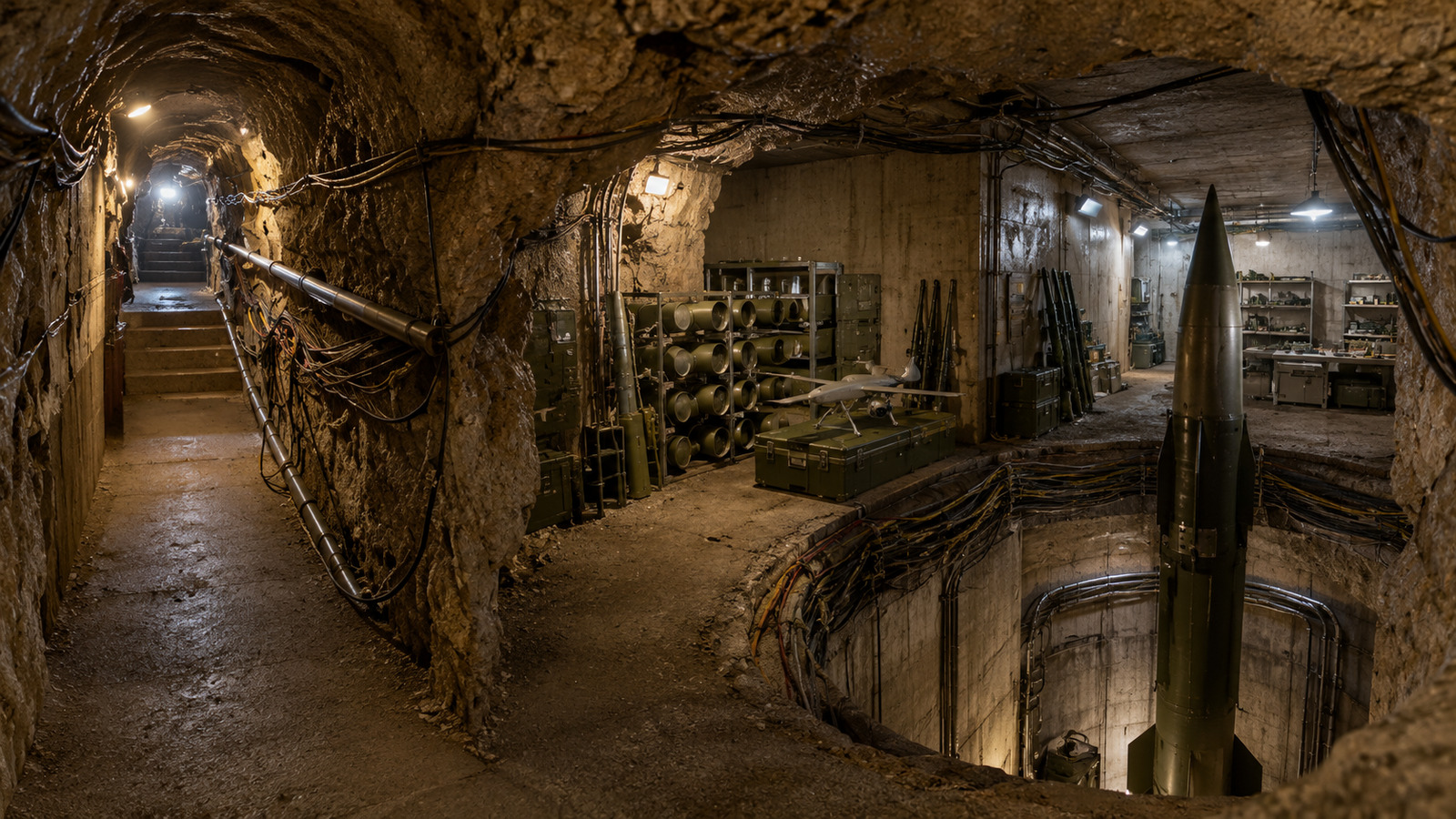
Israel finds Hezbollah militarized tunnel over 200 meters long under village, with 4 missile launch shafts, 12 chambers, anti-tank missiles, drones, and weapons depots at a depth of 25 meters.

-
Ukraine launches largest drone attack on Moscow since 2022, Russia claims to have intercepted nearly 200 aircraft near the capital, Kapotnya refinery targeted again, and offensive reignites alert about war reaching the Russian energy heart just a few kilometers from the Kremlin.

-
Truck drivers, freight, and fines from 2022 take center stage in politics: Chamber approves MP with amnesty, mandatory tracking by CIOT, million-dollar penalties, and new minimum wage for those who spend more than 24 hours on the road.

-
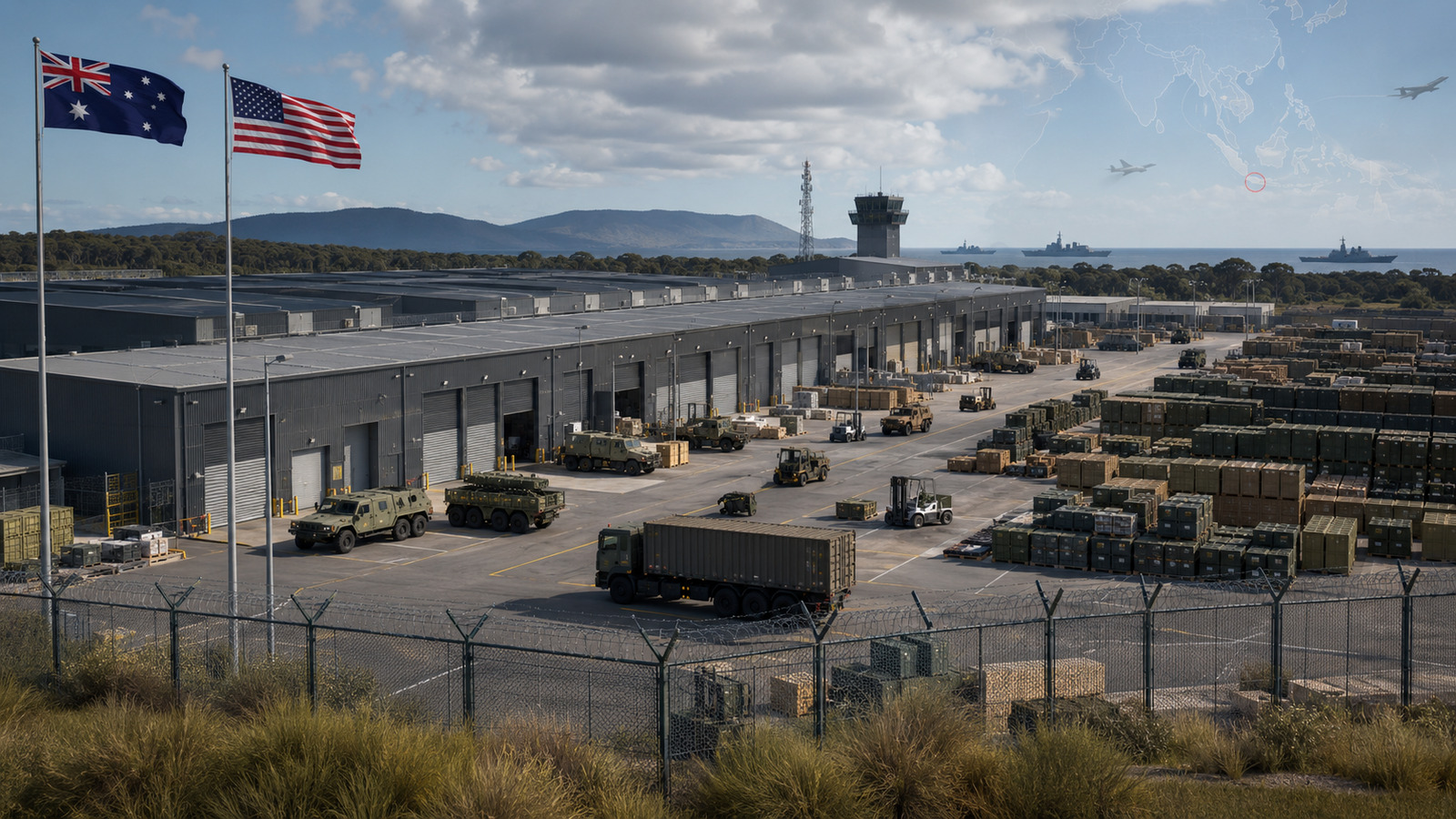
China off the radar: US plans mega $30 million weapons depot in Australia, out of reach of most Chinese missiles, with full capacity expected by 2028


Ukraine does not appear with large volumes of rare earths in the most rigorous technical sense, but it has significant reserves of titanium, graphite, and lithium, essential materials for the defense industry, batteries, electric vehicles, and high-tech sectors.
The Atlantic Council described these minerals as foundational resources for the American defense industry and the technological economy.


The main problem is that the data on these reserves is old. According to the Atlantic Council, the surveys are between 30 and 60 years old and were produced during the Soviet era, using techniques now considered outdated. This means that the agreement may rely on estimates that still need modern validation.
Minerals of Ukraine are in areas occupied by Russia, which reduces practical value of the agreement
The greatest geographical weakness of the agreement lies in the war map. An important part of Ukraine’s critical minerals is concentrated precisely in the eastern third of the country, a region that has become the main axis of combat since 2014 and remains partially under Russian control since 2022.
The provinces of Donetsk, Zaporizhzhia, Kherson, and Luhansk, formally annexed by Russia in September 2022, are over some of the most significant reserves of lithium, titanium, and graphite cited in the Soviet surveys.

This means that part of the preferential access granted to the United States may remain inaccessible in practice for many years, or even permanently.
The CEPA summarized this point by stating that a significant portion of these resources, active and unexplored, is in the eastern strip of Ukraine, exactly where the fighting has been concentrated for years. In other words, the Washington agreement may guarantee formal priority over reserves that the US may not be able to exploit.
Legal debate about the agreement questions whether there was coercion against Ukraine
In addition to the geological and territorial problem, the agreement also opened up a delicate legal debate. Jurists began to discuss whether Ukraine was coerced into signing a treaty that grants preferential access to natural resources at a time when its military survival directly depends on American support.
Just Security addressed this point in March 2026 by questioning whether the US sought a mineral treaty with Ukraine under political and economic pressure. The Vienna Convention on the Law of Treaties establishes that a treaty is void if it was obtained by coercion of a State, but the application of this rule to the case still depends on legal interpretation and complete facts about the negotiations.
The heated meeting in the Oval Office, in February 2025, between Trump, J.D. Vance, and Volodymyr Zelenskyy, is cited as central evidence of the pressure context. Zelenskyy left without an agreement, returned months later, and signed. What happened between these two moments remains a subject of legal analysis and journalistic investigation.
Reconstruction fund between the US and Ukraine is vague on the most sensitive points
The text of the agreement, according to the analysis presented, was drafted with strategic vagueness to allow both sides to sign without publicly stalling on the most sensitive points. The document creates a joint reconstruction fund, with equal management between the United States and Ukraine, without transferring unilateral control of the resources to Washington.
Ukraine maintains formal sovereignty over natural resources, and the mining projects that were already underway were left out of the scope. The agreement covers only new licenses, and the military aid previously provided by the US does not count as debt to be reimbursed by the fund, a point considered a negotiating victory for Zelenskyy.
At the same time, the text states that the fund’s resources will be reinvested in Ukraine to promote security, protection, and prosperity, but does not concretely define what this means. This lack of definition was left for a supplementary agreement that, according to the text, had not yet been negotiated.
Term of up to 16 years reduces immediate impact of the mineral agreement between the US and Ukraine
The least remembered point in the public debate is time. According to analysis by Columbia University, the global average time between discovery and production of critical minerals is 16 years. This completely changes the strategic reading of the agreement.

Even if the war ended immediately, if new geological mappings were initiated without delay, and if exploration projects advanced at an accelerated pace, Ukraine would likely only be able to produce lithium, titanium, and graphite on a commercial scale around 2040. This is far beyond any immediate political horizon in Washington.
In practice, the United States secured priority over resources that may not exist in the estimated quantities, may be in areas outside of Kiev’s control, and may take a decade or more to generate real economic results. Ukraine, in turn, secured the continuation of American support amid a war with no defined end date.





Be the first to react!