





 Portuguese
  English
  Spanish
  3 min of reading
  3 comments





Official Clarifications Made on November 13, 2025 Confirm That Cultivation Remains Allowed and Backed by Scientific Analyses
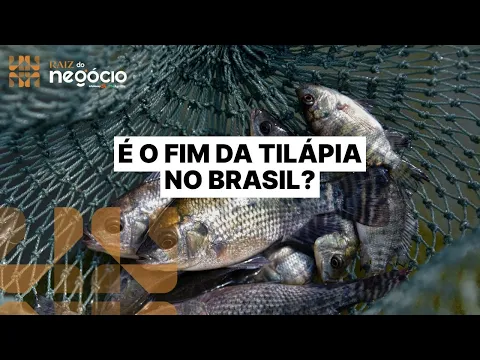
A false piece of information regarding a supposed ban on tilapia raised doubts in the country and mobilized environmental agencies.
The Ministry of Environment and Climate Change (MMA) clarified, on November 13, 2025, that tilapia cultivation is still allowed.
This confirmation completely dismissed any misinterpretation.
Ibama, responsible for authorizing exotic species in aquaculture, reaffirmed that tilapia remains permitted, as it is economically relevant and well-established in Brazil.
Furthermore, this position reinforces that there is no proposal for restriction or ban, since all decisions follow scientific criteria and official evaluations.
Technical Analysis by Conabio Reveals Preventive Nature of the Species List
The National Commission on Biodiversity (Conabio) has been updating the National List of Invasive Exotic Species since 2025, and hence, any inclusion has a technical and preventive nature.
This list does not impose prohibition, as it serves only as a reference for public policies and prevention actions.
-
WEG from Jaraguá do Sul was awarded in New York for strengthening relations between Brazil and the United States, employs over 2,250 people in American territory, operates 10 factories and 9 distribution centers in the country, and boosts the energy infrastructure of the U.S. with locally manufactured products and solutions.

-
Unclaimed funds will enter a new phase this Tuesday: banks must send funds to the government, while R$ 10.5 billion in idle funds could help finance Desenrola 2.0 and ensure debt renegotiation within the financial system.

-
Lula scraps the blouse tax, and international purchases up to US$50 are exempt from federal tax, but ICMS is still on the radar.

-
Who is the billionaire who donated R$ 140 billion and gave up almost half of her fortune?






Additionally, the evaluation is conducted collegially, as it involves representatives from ministries, agencies, universities, traditional communities, civil organizations, and the productive sector.
This format ensures transparency and broad participation at all stages of the process.
MPA Requests Extra Time to Deepen Scientific Studies
The Ministry of Fisheries and Aquaculture (MPA) requested, in November 2025, more time to finalize internal analyses of the species evaluated.
This request reinforces the need to ensure technical rigor in each decision.
The MPA works in partnership with universities and research institutes, and therefore coordinates a thorough review of technical reports.
These documents will be sent to Conabio after the completion of internal stages.
This additional phase demonstrates that the government prioritizes science, transparency, and responsibility.
It also highlights that decisions require updated grounding and ongoing dialogue.
Inter-institutional Process Reinforces Commitment to Sustainability
The federal government reaffirms that there is no discussion about banning tilapia, and therefore, cultivation remains fully regulated.
The analyses coordinated by MMA, Ibama, Conabio, and MPA show that the country maintains technical attention on exotic species.
Moreover, this process shows that environmental decisions depend on efficient governance and social participation.
This stance strengthens the credibility of the institutions involved.
What to Expect for the Future of Tilapia in Brazil?
Experts affirm that the continuity of tilapia as a permitted species depends on constant technical evaluations.
This occurs because environmental management requires scientific rigor and cooperation among various institutions.
At the same time, the public debate on preventive lists highlights the challenge of balancing environmental safety and economic production.
This scenario also demonstrates the importance of ensuring clarity in the information shared with society.
Cultivation remains allowed, and the sector awaits the technical conclusions from Conabio, which have been ongoing since 2025.
What do you think should be a priority for Brazil: strengthening scientific rigor in environmental evaluations or speeding up analyses to enhance the productive safety of aquaculture?







A pergunta é: Os orgãos ambientais vão continuar a licenciar normalmente os projetos para cultivo de Tilapias? Os bancos irão financiar esses projetos? Os orgãos Federais(Dnocs) continuarão o peixamento dos reservatórios com tilapias?
Uma vergonha total e absurda permitir a disseminação da PROIBIÇÃO POSSÍVEL sem antes esclarecer os motivos corretamente. Típico de um desgoverno ****.
Adivinha quem esparramou o boato que a espécie seria proibida no Brasil?
A mesma turminha de sempre que torce pro país dar errado