






 Portuguese
  Spanish
  3 min of reading
  0 comments


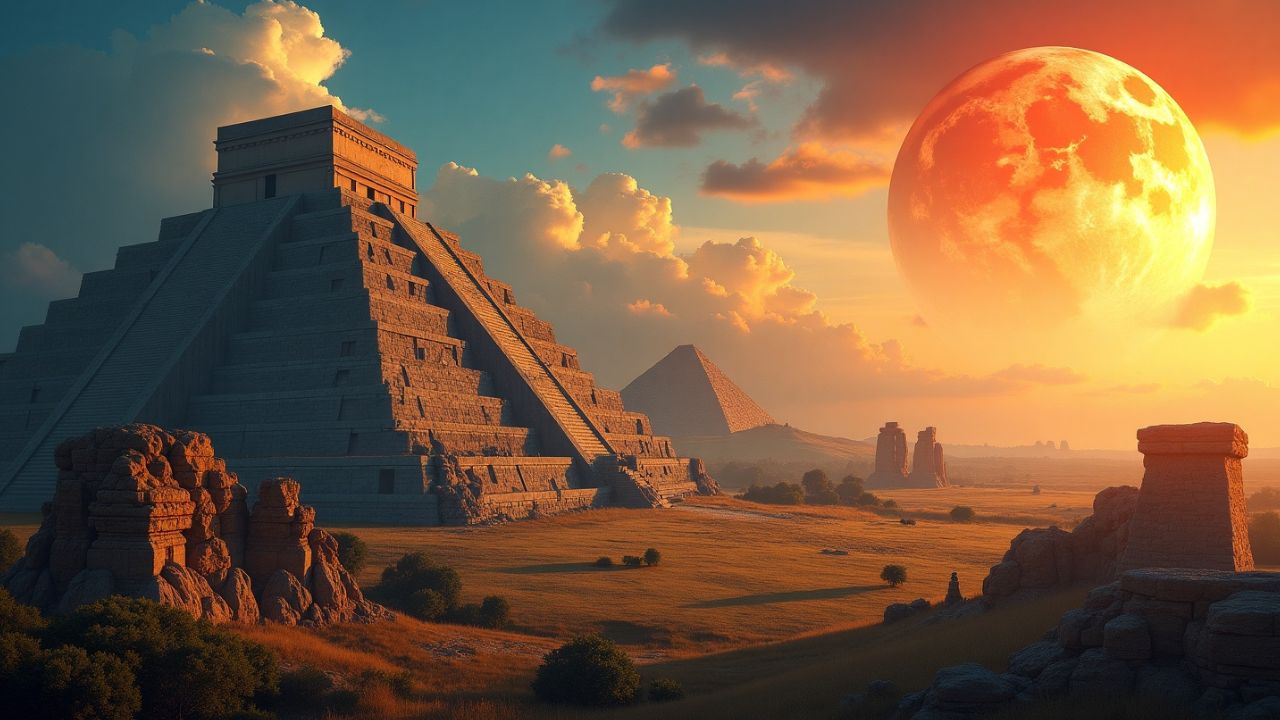
From Easter Island Moai to the Pyramids of Egypt, Understand Why These 7 Historical Constructions Still Spark Such Curiosity!
On each continent, constructions that seem to challenge human knowledge rise as silent witnesses to past civilizations. From imposing pyramids to enigmatic monuments, these ancient masterpieces fuel theories about extraterrestrial allies, but above all, tell the story of human ingenuity.
In this dive into the most fascinating places on the planet, discover how ancestral peoples erected monuments that withstand the test of time — not forgetting the legendary Easter Island.
1. Sacsayhuamán: Stone Art in the Andes
The fortress of Sacsayhuamán, near Cusco, Peru, impresses with its polygonal masonry. Blocks weighing up to 360 tons fit together with almost surgical precision, revealing Inca talent in stone manipulation and the use of levers and ropes.
-
Tired of relying on a conventional house, a young woman with no construction experience built an off-grid studio apartment with solar energy, rainwater, a biodigester bathroom, and a routine designed to live with more autonomy.

-
The European city hall that transformed an old urban avenue back into a canal, recovered a section that was filled in the 1970s, and delivered a new public space with water, vegetation, and pedestrian paths.
-
Buenos Aires and Montevideo are about 200 kilometers apart in a straight line, but the road trip can exceed 570 kilometers and take up to 8 hours and 30 minutes; see how long the journey takes by plane, ferry, car, and bus.
-
Couple sold house in São Paulo, resigned from their jobs, and paid R$ 15,780 to start over in Portugal, but the promised trip turned into a fraud complaint: suitcases remain packed, tickets were not delivered, and the European dream ended up stuck in a cramped rented room.



More than megalithic constructions, these walls attest to a sophisticated resource management and a deep understanding of construction techniques that transcend history.
2. Nazca Lines: Monuments Carved in the Desert
In the Peruvian desert, the Nazca Lines stretch over 520 km², with geoglyphs forming giant animals and geometric shapes. Made by removing the reddish surface layer of the soil, the figures reach up to 365 meters in width and are best seen from above.
Recent studies suggest that this heritage is linked to water and fertility ceremonies, demonstrating that these constructions were part of a complex ritualistic and social system.
3. Pyramids of Giza: The Grandeur of Ancient Egyptian History!
Erected over 4,500 years ago around Cairo, the Pyramids of Giza are the pinnacle of pharaonic ambition. The Great Pyramid of Khufu, made of about 2.3 million blocks of limestone and granite, displays precise angles and astronomical alignment with the stars of Orion.
Although some theories point to alien intervention, excavations and historical records prove methods of inclined ramps and specialized labor that grant the pyramids the status of the greatest feats of ancient engineering.
4. Stonehenge: Celestial Clock of Millenary Stones
In the Salisbury plain, England, Stonehenge gathers blocks weighing up to 50 tons arranged in mystical circles. Archaeological research shows that the stones were brought from distant quarries and positioned with precision to mark solstices and eclipses.
These constructions not only signaled the agricultural calendar but reinforced the power of native groups that mastered astronomical knowledge long before the Christian Era.
5. Teotihuacán: The City of the Gods in the Valley of Mexico
Amidst walls and wide avenues, Teotihuacán reveals pyramids that exceed 60 meters in height. The Pyramid of the Sun, for example, was built with millions of tons of basalt and volcanic ash.
The structures of this urban center accommodated over 100,000 inhabitants and exhibit alignments reflecting solar and lunar cycles, highlighting the deep intertwining of architecture, astronomy, and religion in Mesoamerican history.
6. Easter Island: The Imposing Moai
In the middle of the Pacific, Easter Island boasts nearly 900 moai — statues up to 10 meters tall and 82 tons, carved from volcanic tuff. Spread across slopes and coastline, these monuments feature faces that, according to researchers, represented powerful ancestors.
The transport and erection of these sculptures involved techniques of sliding with tree trunks and counterweight systems, revealing a society capable of great collective endeavors.
7. The Face on Mars: The Monument of Imagination
Though not a human construction, the rock formation known as the “Face on Mars,” photographed by the Viking probe in 1976, has become an icon of pop culture. With almost 3 km in length, the shadows create the illusion of a humanoid face.
Later, higher resolution images revealed it to be just a simple hill, but the story reinforces our fascination with monuments — real or imagined — and the idea that we can always discover something new in the vastness of the universe.





-

1 person reacted to this.