Portuguese
  Spanish


At 24 years old, Tom Robinson set off from Peru in July 2022 in a wooden boat designed by himself. It was over 260 days rowing 13 thousand kilometers alone across the Pacific until he shipwrecked a few days before reaching the final destination.
The early morning of October 6, 2023, almost ended Tom Robinson‘s story in the worst possible way. Alone in the middle of the Pacific Ocean, the 24-year-old Australian was clinging to the hull of his own boat turned upside down, completely naked, shivering with cold and not knowing if anyone would come to rescue him. Months earlier, on July 2, 2022, he had left Peru in a wooden vessel he had designed and built with his own hands, determined to fulfill a dream he had carried since he was 14: to become the youngest person to row across the Pacific.
The motivation for the endeavor was not a passing impulse. Robinson grew up on the banks of the Brisbane River in Australia, rowing every day after school and devouring books about sailors and explorers. The decision to cross the largest ocean on the planet was born in front of a mirror, still a teenager, and it turned him into a young man obsessed with that journey. In an interview with the BBC World Service radio program Outlook, conducted by journalist Mobeen Azhar, he recalled every detail of the journey that would change his way of seeing life.
A handmade boat and named in an Aboriginal language
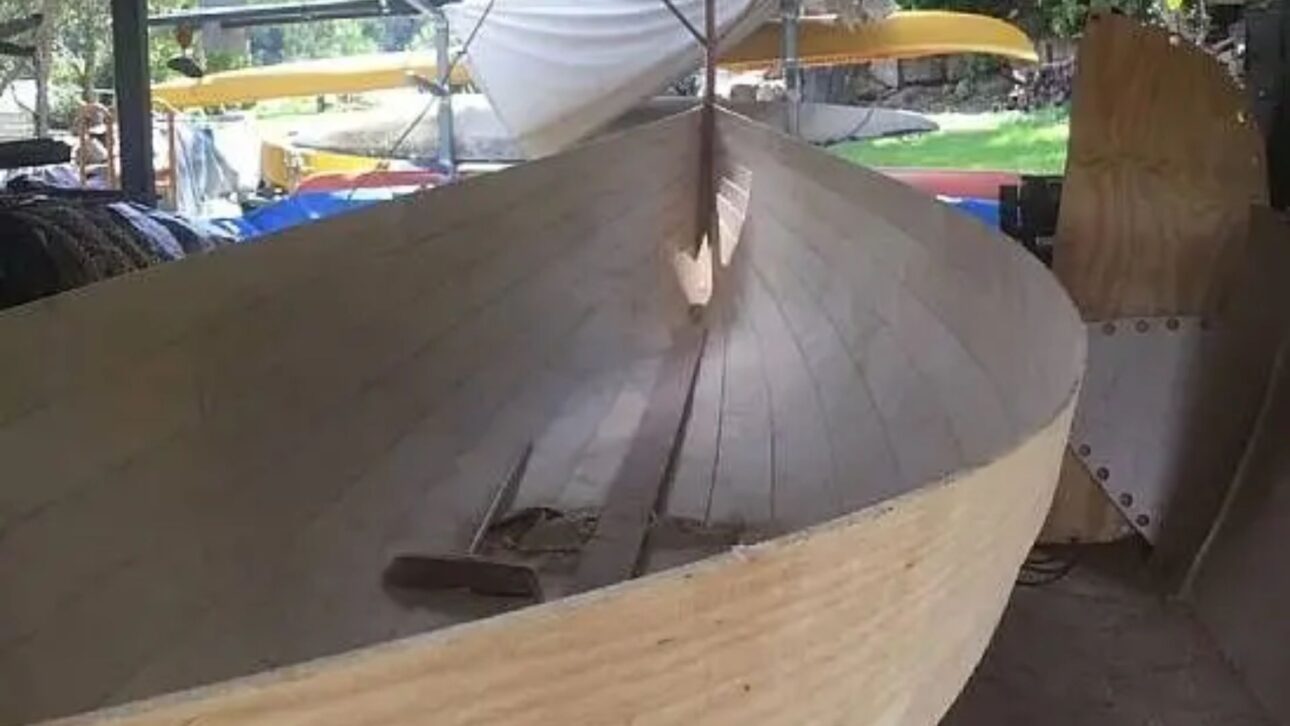
Robinson wanted the greatest challenge possible, and crossing the South Pacific represents basically the longest oceanic rowing crossing one can undertake. Therefore, he decided that he would design and build the boat himself. It was his drawings that became reality, it was his hands that shaped the wood. The whole journey, according to the adventurer himself, was about expressing himself to the fullest, and the construction was part of that.
-
Brazil Launches Ambitious Project to Recycle Toothpaste Tubes and Toothbrushes, Aiming to Revolutionize Waste Management

-
The Mystery of Roanoke: Entire Colony Vanished Without a Trace, Leaving Only “Croatoan” as a Clue and Becoming a Historical Legend

-
Namibia Plans to Build Homes for the Homeless Using Mushrooms and Invasive Plants to Tackle Housing Crisis

-
Brazilian Innovator Converts Old Car into Electric Vehicle Using Laptop Batteries and Forklift Motor, Achieves Nearly 90 km/h in Urban Settings



The project was based on the 18th-century whaling ships that sailed the Pacific to hunt whales. One night, while reading a book with the plans of these vessels, Robinson concluded that this was exactly the type of boat he needed. The reasoning made sense: the sea and the waves haven’t changed in 250 years, so the model would require no adaptations. He named the boat Maiwar, which in the Aboriginal language means “Brisbane River,” a direct tribute to the place where it all began.
The Emotional Cost of a Radical Decision
Preparing the mind for something of that magnitude was impossible, and Robinson knew it. Before leaving, he took measures to ensure he wouldn’t miss home. The strategy was harsh: cutting ties and relationships to be completely at peace with himself during the crossing, without the feeling that he should be somewhere else because of someone. For him, any contact with his previous life would harm his feelings throughout the journey.
The heaviest consequence of this choice was the end of a relationship. Robinson had a girlfriend when he decided that the crossing would take priority over everything, and he ended the relationship before traveling. It was, in his words, one of the great tragedies of the trip, even though both already knew it would happen. Friends and family also wouldn’t visit him along the way. The journey, in the adventurer’s definition, began when he boarded the plane from Brisbane to Lima and would only end upon returning to the same city.
From Initial Euphoria to the Struggle for Survival
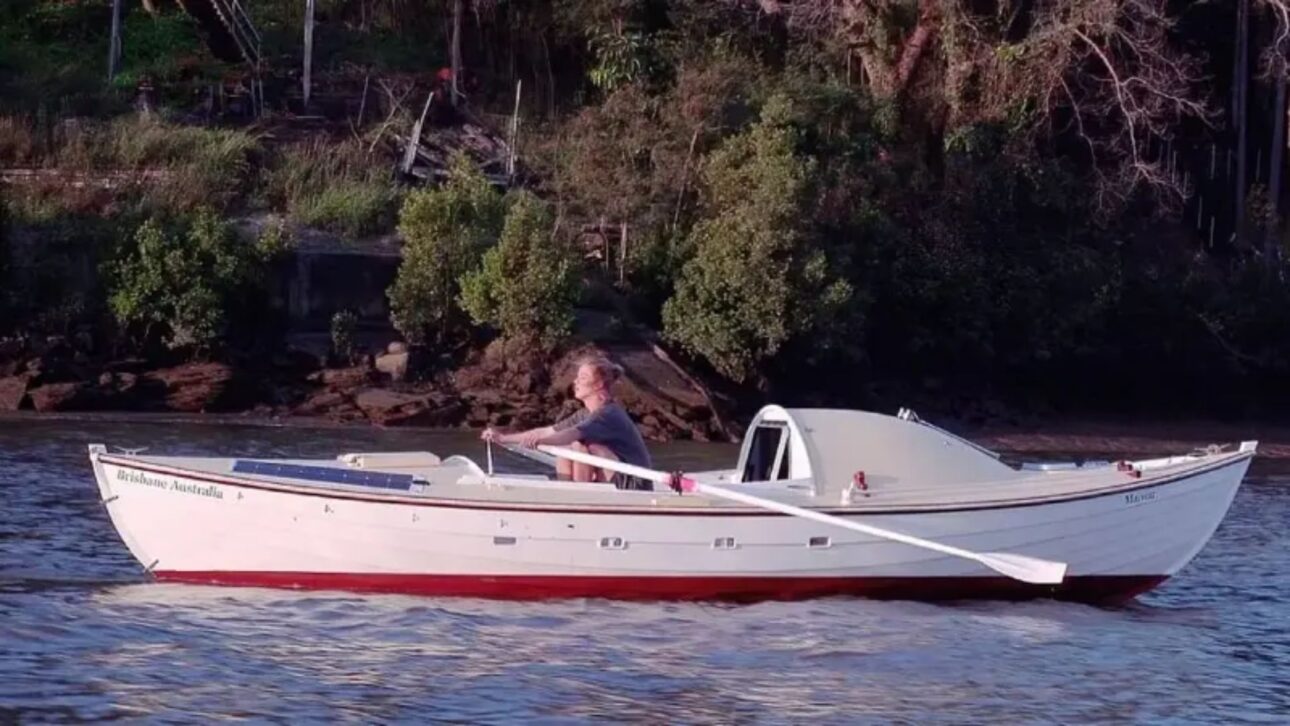
The Lima yacht club community came to say goodbye, there were television cameras everywhere, and a Peruvian naval band even played traditional songs as Robinson took the first of millions of strokes. The first 75 days were pure happiness, exactly what he had dreamed of: being on his own boat, in the middle of the Pacific, fishing for dinner and living off the ocean.
The original plan included a stop in the Marquesas archipelago, in French Polynesia, with an estimated arrival in about 100 days. Then a strong southeast wind blew for several days and pushed the boat further north, away from the destination. Faced with a large nautical chart, Robinson searched for the nearest inhabited island, as he would need to be stuck somewhere during the cyclone season. He found Penrhyn, also called Tongareva, in the Cook Islands, just a dot on the map. From there, he began rowing like crazy, about 14 hours a day, just to survive.
Penrhyn and a new name in the middle of the ocean
On the 160th day of the journey, after rowing almost 5,000 nautical miles, Robinson finally spotted land and a boat full of people approaching. The euphoria was indescribable. The locals towed him through the lagoon to Omoka, the largest town on the island, with 140 inhabitants and brick and leaf houses. Upon disembarking, he realized he was taking his first step in over 150 days and, feeling seasick, walked like a drunken sailor, supported by men from the community.
The reception was with open arms. One of the town’s elders approached to inform him that this was the first international boat to arrive there in three years and that Robinson had earned a new name. From that moment on, he was to be Mahuta Hoi Ho Asanga, an expression in the local language meaning “the warrior who rowed from afar.” The farewell was difficult, and Robinson claims to have made friends and family there for life. The contact with those people, living so differently and in peace, led him to question his own daily choices.
The wave that turned everything upside down


After more than 260 days at sea and about 7,000 nautical miles traveled, Robinson believed he was about 50 days away from fulfilling his childhood dream. That day, he rowed calmly and decided to put away the oars a little earlier, entering the cabin. The intense heat near the Equator led him to make a decisive mistake: leaving the hatch open to avoid feeling suffocated. These oceanic boats are designed to right themselves precisely because of the air trapped in the closed cabin, and the open hatch nullified this protection.
The disaster came without warning. Lying down, thinking about dinner, Robinson heard a huge crash and felt the boat being shaken by a giant wave that completely overturned it. The cabin flooded in seconds. With no alternative, he swam through the partially open hatch and clung to the overturned hull. He tried to right it with a rope, but the weight made the task impossible. He retrieved the emergency transponder by diving under the boat, tied it to his wrist, and climbed onto the hull, where he clung, naked and trembling, aware that nothing could be resolved during the night.
Fourteen hours between despair and hope
He spent about 14 hours clinging to the overturned hull, and many thoughts crossed the young man’s mind. At first, only pessimism: the feeling that not only the journey but his very life had come to an end. The thought was distressing until Robinson changed his perspective and treated the situation as just another setback to overcome. After all, the entire crossing had consisted of overcoming difficulties, and there was no reason not to get through that night as well.
The strategy was the same that sustained him at sea: small goals. The big objective became enduring until dawn and witnessing the moonrise, which he decided would be the most beautiful of his life. The transponder emitted beeps and flashes, but Robinson had no idea if anyone was looking for him. When the horizon to the east changed from total darkness to a gradually lightening purple hue, he had a strong feeling that everything would be alright. Shortly after sunrise, he spotted a black dot in the distance and knew the journey had come to an end.
A cruise, hundreds of cameras, and the rescue
The black dot that Robinson imagined to be a cargo ship heading to China turned out to be a cruise ship from the company P&O. He couldn’t help but laugh, and only then did he realize his own nudity. As the vessel approached, hundreds of passengers gathered on the decks, equipped with cameras with large lenses and binoculars, capturing the improbable scene of that young man in the tiny rowing boat.
The captain skillfully maneuvered the ship until the small Maiwar touched the side, under waves that rose and fell against the hull. Robinson had to take a leap of faith, abandon the rowing boat, and jump onto a rope ladder lowered by the crew. He gathered strength to climb and was greeted by a corridor full of crew members and staff who stared at him as astonished as he was. The situation, according to the adventurer, was absolutely surreal.
A world record and a difficult void to fill
Even without completing the journey to the final destination, Robinson had crossed enough ocean to receive from Guinness the record of the youngest person to row across the Pacific. The childhood dream was, in a way, realized. The damaged remains of the Maiwar were found months later on the coast of an island in Papua New Guinea. But the achievement came with an unexpected weight.
The 12 months following his return were, according to him, the most difficult period of his entire life. Returning to a normal pace proved impossible, and having accomplished something so significant left an enormous void. Robinson even questioned whether the journey had been worth it, but eventually accepted it in the same way he accepted each day of rowing. Today, he has returned to work, built a small business, and continues building boats. Still, one question haunts him: when will he be able to return to the sea.
The crossing also left him with something he describes as rare and beautiful. Around the 120th day, he felt an inner glow that, in his words, radiated throughout the world, two or three days of absolute peace that some would call nirvana. Robinson believes he may never feel that again, but he holds the certainty that this state is possible.
And you, would you face a solitary crossing like Tom Robinson’s or do you think this type of adventure demands too high a price? Tell us in the comments what you would do in his place.