Portuguese
  Spanish


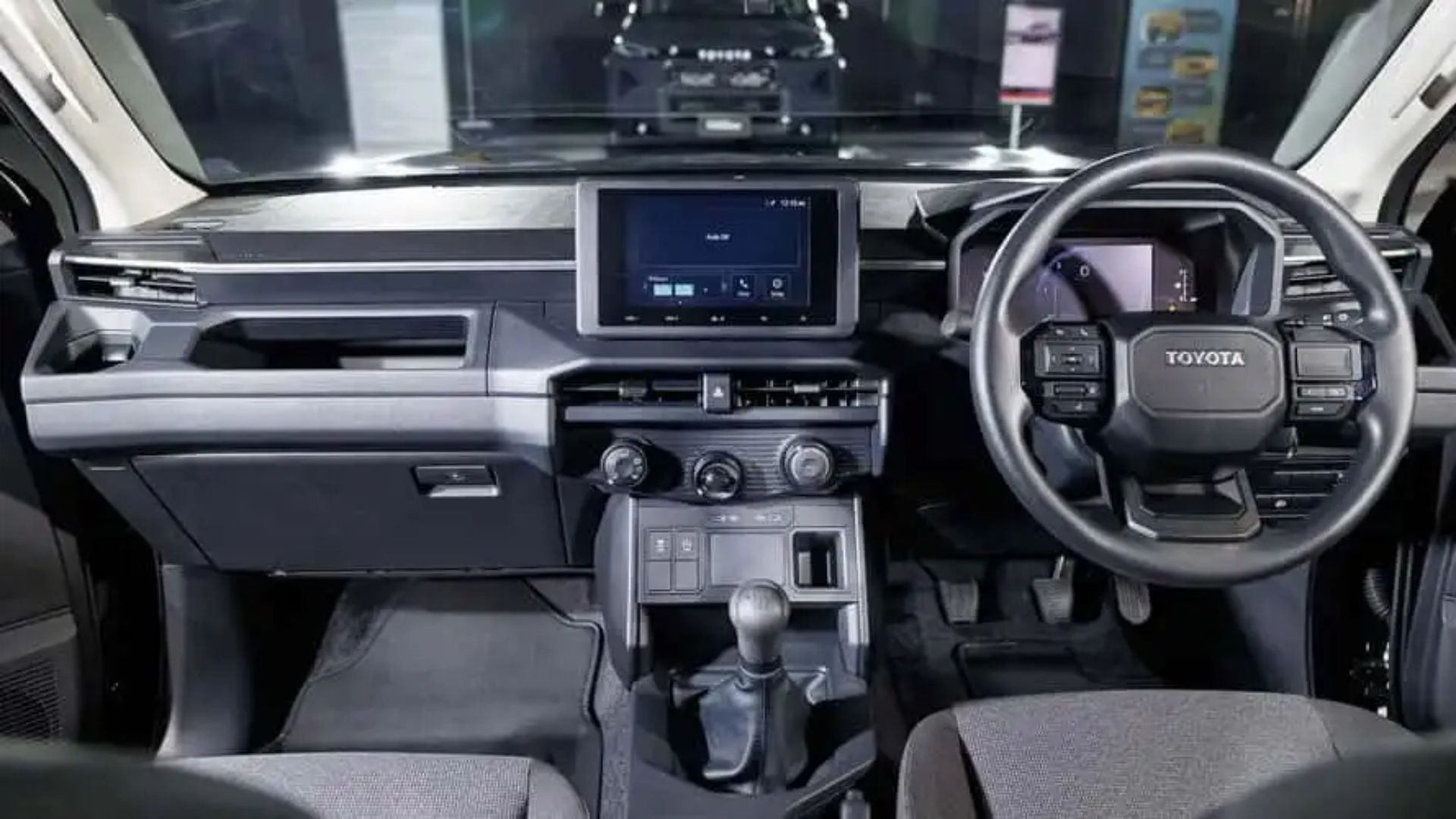


Toyota Chooses to Preserve the IMV Base to Control Costs in Emerging Markets, Explains Why It Did Not Adopt the TNGA-F Architecture of the Tacoma and Signals That Environmental Pressure May Anticipate a New Global Generation
The anticipated revolution of the Toyota Hilux 2027 will not happen this time. Despite market expectations for a complete generational change with the adoption of the modern TNGA-F platform, the Japanese manufacturer confirmed that the pickup will continue using the veteran IMV base, the same structural architecture that has supported the model for years. The decision frustrated some consumers, but was presented by the brand as a strategic choice to keep the product competitive in price-sensitive markets.
From the outset, Toyota makes it clear that the main focus of the Hilux remains the same: robustness, reliability, and controlled costs. Although the TNGA-F platform is already used in more modern models from the brand, such as the Toyota Tacoma, its full adoption in the Hilux would significantly raise the final cost of the vehicle, distancing the traditional audience of the pickup in regions like Brazil, Asia, and Australia.
Why Did Toyota Keep the Old Platform of the Hilux 2027

During the global launch of the model, the regional chief engineer of Toyota Motor Asia, Anyarat Sutthibenjakul, explained that maintaining the IMV platform is directly related to the so-called Total Cost of Ownership (TCO). According to her, migrating to a larger, heavier, and more expensive base would not make sense for the predominant usage profile in these markets.
-
1983 Chevrolet Runs Over 100,000 km Without Gasoline, Powered by Wood Chips, Reaches 125 km/h in Airport Test

-
Workshop Converts Giant Tractor Tire Tricycle into a Three-Wheel Drive Hybrid with 36,000-Watt Electric Motor Capable of Climbing Hills

-
Sales of Brazil’s Cheapest Electric Car Halted Before First Deliveries: E-Motors Suspends Emova Easy Due to Import Tax Increase and Rising Freight Costs

-
Nissan Discontinues Qashqai SUV Amid Cost-Cutting, Chinese Competition, and Product Line Review


“If we look at the customers, the Hilux buyer would need to pay more for a larger, unnecessarily heavy, and more expensive platform. This is something they do not expect,” the executive stated. Toyota’s strategy, therefore, is not only to unify its global production but to deliver exactly what the regional consumer demands.
In addition to the economic factor, the decision was also based on three technical pillars considered fundamental by the brand: Quality, Durability, and Reliability (QDR), off-road performance, and structural safety. Toyota argues that the IMV base still fully meets these criteria, especially in severe applications common in emerging markets.
Updated Mechanics Without Structural Revolution
Under the hood, the Toyota Hilux 2027 does not bring radical changes but focuses on efficiency gains. The already known 2.8 turbo-diesel four-cylinder engine continues as the only mechanical option, maintaining its current figures of 204 horsepower and 50.9 kgfm of torque in conventional versions.
The main mechanical novelty lies in the adoption of a 48V mild-hybrid system in the automatic 4×4 versions. This system assists in starts, improves response at low RPMs, and contributes to reducing fuel consumption without significantly altering the traditional pickup experience.
Traction remains temporary 4×4, a choice prioritizing energy efficiency and mechanical simplicity, in addition to easing maintenance compared to permanent all-wheel drive systems. This configuration reinforces the positioning of the Hilux as a reliable work tool, without technological excesses that could raise operational costs.
Total Change May Occur in Less Than Five Years
Although Toyota has decided to maintain the current platform, the brand itself admits that the lifecycle of the Hilux 2027 may be shorter than the historical average of around 10 years for mid-size pickups. The chief engineer revealed that a complete overhaul may happen in less than five years, depending on the evolution of global emissions requirements.
The information was disclosed by Quatro Rodas, which followed the global launch of the model and had access to statements from Toyota engineering. According to the brand, the advancement of environmental regulations is the primary factor that may accelerate the replacement of the IMV platform.
“We do not know if this platform will last five or ten years. It may be less, depending on the market and emission requirements,” Sutthibenjakul explained. This scenario allows for a quicker transition towards electrification, especially in markets where diesel is beginning to face restrictions.
Toyota has already confirmed that 100% electric and fuel cell versions of the Hilux are planned for specific markets. For regions where diesel still dominates, the manufacturer is considering offering full hybrid (HEV) and plug-in hybrid (PHEV) variants while maintaining the combustion engine as the base.
In Brazil, the new Hilux will arrive only in 2027. Production at the Zárate, Argentina plant is scheduled to begin in late 2026, with the first pre-series units expected to be assembled in mid-year. This information was revealed by Argentine journalist Horacio Alonso, indicating that Toyota has officially communicated its local teams about the timeline.
The Toyota SW4, an SUV derived from the pickup, remains confirmed for South America, even after being discontinued in markets like Australia. Its Argentine production is expected to start between March and April 2027, reinforcing the brand’s regional strategy.