





 Portuguese
  English
  Spanish
  6 min of reading
  0 comments


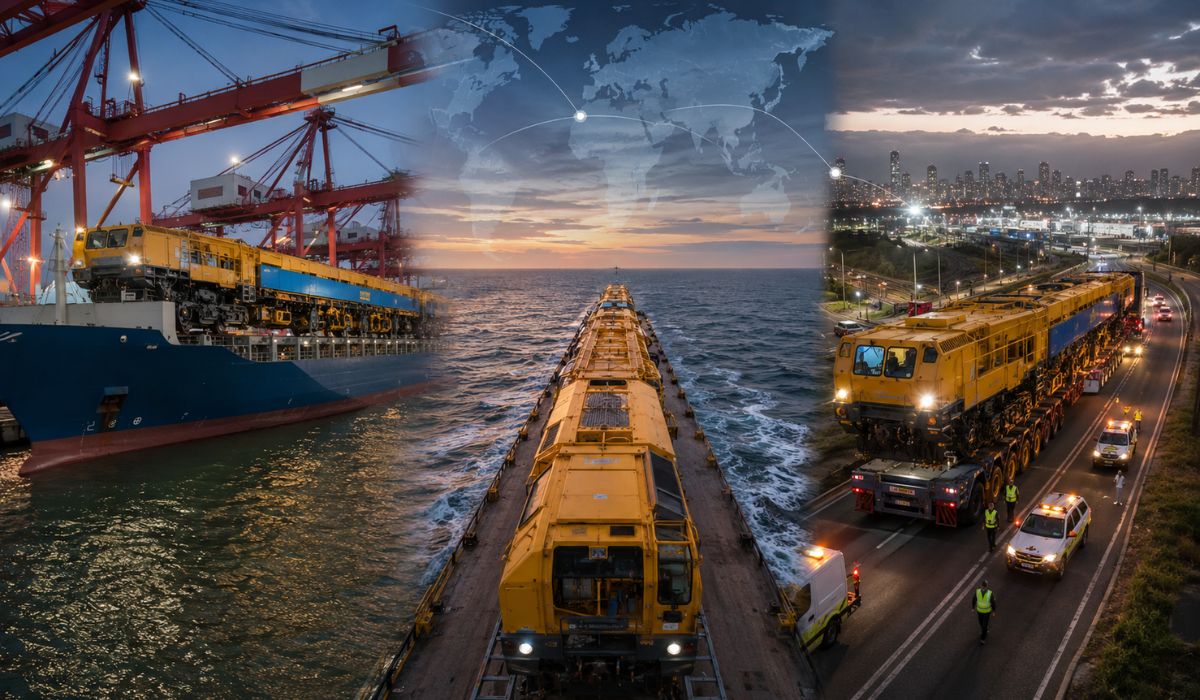
Railway equipment imported from China traveled an extensive maritime route before arriving in São Paulo, in an operation that involved port, customs, road escort, and millimetric adjustments in transport.
A set of railway maintenance vehicles left China, crossed nearly 20,000 kilometers by sea, and arrived at the TIC Trens yard in Lapa, West Zone of São Paulo, after an operation that involved maritime transport, customs clearance, road escort, engineering studies, and technical tests, as reported by InfoMoney.
The shipment included equipment intended for the maintenance of Line 7-Rubi, managed by the concessionaire TIC Trens.
The movement exposes a less visible part of railway operation: before running on tracks, machines of this size need to go through a logistics chain planned in stages.
-
A small town with 800 inhabitants in the interior of the United States is giving away free land, with water, electricity, and paved streets, and even offers a cash allowance for families with children, all to attract residents and escape the depopulation threatening rural villages.

-
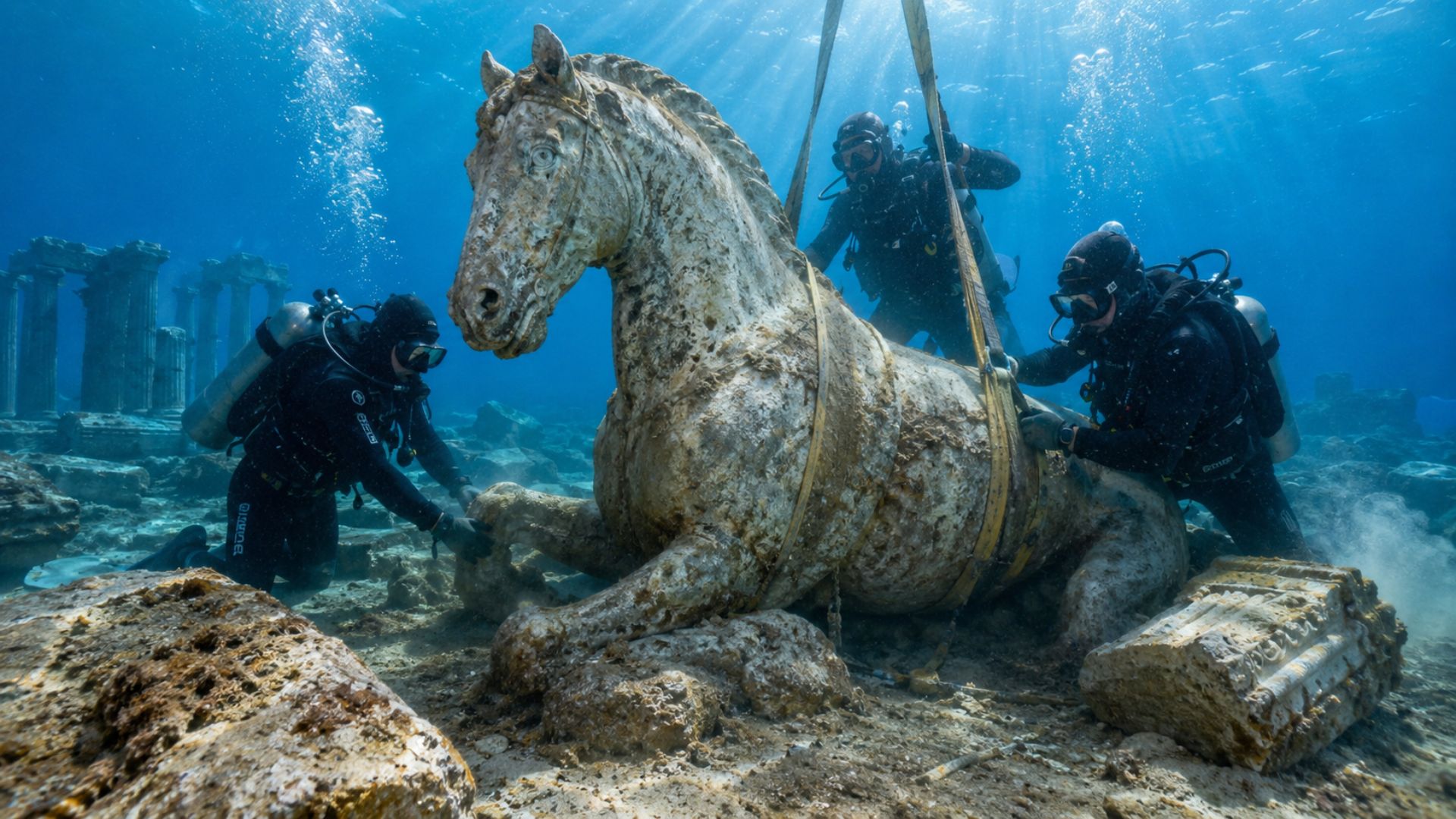
At about 9 meters deep in the sea of Sicily, divers recovered a 2,500-year-old marble horse attributed to the colossal Temple of Zeus in Agrigento, a piece that, if confirmed, would be the largest archaeological discovery in the region in a century.
-
22-carat gold may be hidden in household items treated as scrap, while Swiss scientists use whey to recover the precious metal and pave the way for new sustainable urban mining.

-
With a gigantic arch of 106 meters and the largest stadium swing in the world, the Moses Mabhida Stadium accommodates up to 54,000 people, offers a panoramic tour with views of the Indian Ocean, and has become an architectural symbol of South Africa by combining soccer, tourism, and extreme attractions at the top of its monumental structure.



Some vehicles can reach 23 meters in length and up to 111 tons, which requires prior analysis of routes, viaduct heights, bridge capacities, road widths, and times of less traffic on highways.
In one of the routes between Santos and São Paulo, the available height under a viaduct required an intervention on the truck used for transport.
To allow the passage of the set, the tires had to be deflated, reducing the total height of the load.
The measure was part of the necessary road operation to bring the equipment to the São Paulo capital.
The journey, however, begins before boarding at the Chinese port.
According to TIC Trens, the period between hiring the manufacturer and the arrival of the vehicles in São Paulo was about 12 months, with deliveries made between November 2025 and January 2026.
During this interval, teams from purchasing, engineering, logistics, import, and legal, as well as freight agents, customs brokers, and specialized consultancies, were involved.
How railway vehicles are prepared before boarding
The equipment brought from China are not passenger cars, but auxiliary vehicles used in the routine conservation of the railway.
They function as work machines on tracks, each aimed at a specific stage of track maintenance, overhead network, or operational support structure.
TIC Trens ordered part of these vehicles from CRRC, a Chinese manufacturer that also integrates the concessionaire alongside Grupo Comporte.
In the production process, parts and components can come from different suppliers before being assembled in the company’s factories in China.
Before manufacturing, the concessionaire and manufacturer develop the executive project.
This phase defines the necessary adaptations for the vehicles to meet the characteristics of the São Paulo line, operational requirements, and technical standards planned for maintenance.
After this stage, construction, assembly, and part of the homologation tests begin.
The contract director of TIC Trens, Max Fagundes, stated that CRRC’s presence in the partnership facilitates the search for solutions within the manufacturer’s structure.
“We always try to see what the best solution for the project is. Since CRRC is a shareholder, we have this possibility to identify the best solutions within,” he said.
He also highlighted that there are equipment produced in the country.
“But some of our vehicles are national. There is production of locomotives and wagons in Brazil, for example.”
According to the company, importation occurs when certain vehicles do not have national equivalents available for the same application.
One example is the overhead line vehicle, used by teams responsible for interventions in components installed above the tracks, such as cables and structures connected to the railway electrical system.

Machines operate on the physical base of the railway
Among the imported equipment are machines used in the maintenance of the ballast, the layer of stones placed under and around the sleepers.
This structure helps distribute loads, maintain track stability, and allow adjustments in track alignment during technical services.
One of these machines is the tamping machine.
The equipment uses vibrating elements to compact and accommodate the ballast stones, a procedure that contributes to the proper support of the sleepers and tracks.
The activity is part of the maintenance routines necessary to preserve train circulation conditions.
Another equipment mentioned by the concessionaire is the ballast regulator.
Its function is to redistribute and level the ballast along the line, preventing irregularities in the arrangement of the stones.
Although this type of service is not directly perceived by passengers, it is part of the structural maintenance of the railway.
The auxiliary fleet also includes support vehicles aimed at different work fronts.
The concessionaire reported that, since signing the contract with the São Paulo government, it has already received about 50 vehicles intended for the maintenance of Line 7-Rubi.
The specific amount spent on purchasing the auxiliary equipment was not disclosed by the company.


Maritime crossing from China to the Port of Santos can take up to 70 days
The international route departed from Chinese ports such as Taicang and Zhangjiagang, heading to the Port of Santos, on the São Paulo coast.
According to TIC Trens, the cargo ships took 45 to 70 days to complete the crossing, depending on the route, travel conditions, and port scheduling.
After arriving in Brazil, the cargo still underwent unloading procedures and document analysis.
This stage takes about ten days, according to the company, and involves verifying the regularity of the import by customs authorities.
During navigation, TIC Trens employees monitored the cargo ship’s route via GPS.
The mobilization for unloading began before docking, with standby teams prepared to receive the vehicles at the port and monitor the movement of the cargo.
Fagundes explained that the inspection of large equipment requires attention but can be straightforward when the vehicles arrive assembled.
“Unloading very large equipment demands a lot of attention, but on the other hand, it’s easy to inspect. Since the train comes assembled, it’s not difficult for inspection agents to check if it matches the invoice,” he said.
From Baixada Santista to São Paulo
After clearance at the port, the cargo proceeded by highway to São Paulo’s capital.
This movement involves special trucks, escorts, and support from the highway police.
The transport usually occurs during the early morning, a period with less vehicle traffic and more control over the route.
The route needs to be studied before leaving the port.
In loads with non-standard dimensions, any difference in height or width can alter the planning.
Therefore, the operation considers overpasses, curves, inclines, declines, accesses, and points where the equipment can be temporarily parked.
In one of the cases, the calendar also interfered with the scheduling.
As the transport coincided with a period of higher traffic on the highways, part of the equipment was parked for a few weeks at the port and, at other times, in police yards before proceeding to São Paulo.
“In this case, we also needed to note that it was the beginning of the year, many people returning from the beach, and heavy traffic on the highways. In this case, we parked the equipment at the port for a few weeks and in the police yard at other times before proceeding with the journey,” stated Fagundes.
Why the vehicles do not go directly by the tracks
Even being railway equipment, the vehicles are not taken on the tracks to the capital before technical clearance.
The concessionaire informs that they need to undergo a period of specific tests on the lines before entering operation.
These checks assess the compatibility of the vehicles with the infrastructure, safety procedures, and the necessary conditions for use in maintenance.
Only after this stage can the equipment be incorporated into the routines of the railway.
The Linha 7-Rubi is part of the Trem Intercidades Eixo Norte project, which plans a connection between São Paulo and Campinas, as well as inter-metropolitan service between Jundiaí and Campinas.
The concession involves operation, maintenance, and modernization of structures associated with the branch, including permanent way, energy, overhead network, and support systems.
TIC Trens plans to invest R$ 14.5 billion, in updated values, in the Linha 7-Rubi.
The company, formed by the Brazilian Comporte and the Chinese CRRC, did not detail how much of this total corresponds to the acquisition of auxiliary vehicles.
Overall, the arrival of these machines shows that railway maintenance depends on stages that begin far from the tracks where passengers circulate.
Between manufacturing, maritime transport, customs, highway, and tests, each phase needs to be completed before the equipment is used in regular operation.





Be the first to react!