






 Portuguese
  Spanish


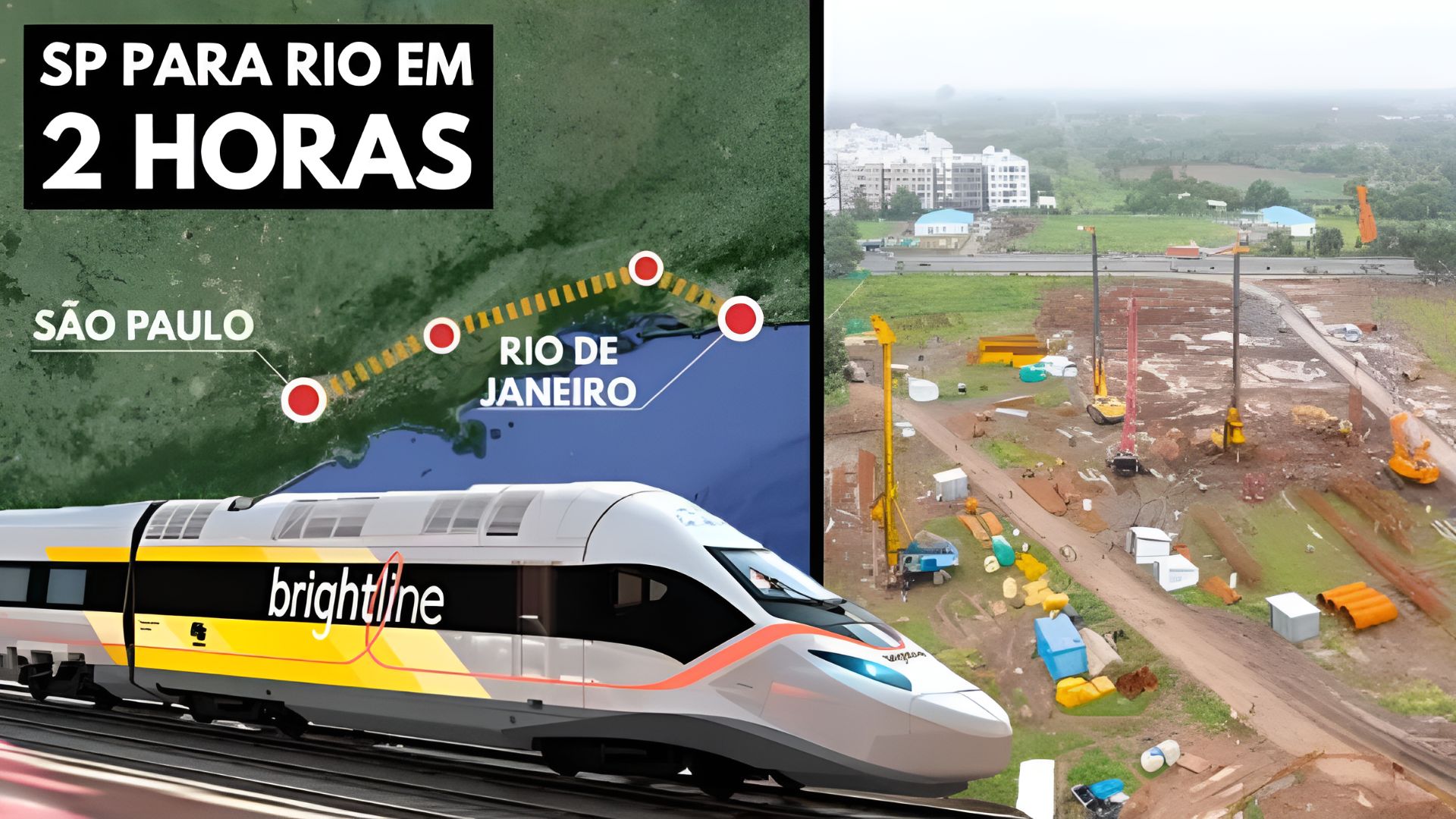


High-Speed Train Project Between São Paulo and Rio de Janeiro Advances with Defined Route, Investment Estimates, and Start Date for Works, While Comparisons with Chinese Technologies Show the Contrast Between Local Challenges and Global Advances.
The high-speed train project between São Paulo and Rio de Janeiro has entered a new phase and, according to the channel Urbana, is closer to becoming a reality than at any other time in the last few decades.
The proposal envisions a fast connection between the two largest metropolises in the country, drastically reducing travel time currently concentrated on the Via Dutra or at the airports.
According to the content presented in the video, recent studies indicate that civil works could begin as early as this decade.
-
At 14 years old, she worked in a factory in Hong Kong, studied economics abroad, and then entered the Chinese real estate market, which helped change the landscape of Beijing.

-
While NATO secured more than $10 billion in missiles and space surveillance at a single forum, Brazil still spends 1.1% of its GDP on defense and is stalling its own anti-aircraft system.

-
Corn ethanol attracts R$ 23 billion in 21 new plants and prepares for a nearly 50% jump in Brazilian production by 2027, even with high interest rates.
-
A newly opened terminal in the middle of the Amazon has begun transporting soy and corn through Amapá, eyeing the queue of ships that is congesting the ports in the South.


Route of the High-Speed Train Between SP and RJ
As explained by the channel Urbana, the route follows the guidelines already analyzed by ANTT in partnership with TAV Brasil.
The line is expected to connect the capitals via a direct axis, with only two intermediate stops in São José dos Campos and Volta Redonda, leveraging the established infrastructure of the Vale do Paraíba.
The current design differs from older versions, which included departures in Campinas and crossings through densely urbanized areas.
According to the video, the São Paulo station is expected to be located in the northern zone, in an industrial area near the railway axis of Line 7–Rubi.
The choice aims to place the terminal in an environment already accustomed to logistical infrastructure, minimizing land use conflicts.

The channel highlighted that the São Paulo segment will require about 20 kilometers of tunnels, a necessary solution to cross dense neighborhoods and infrastructure networks with minimal surface impact.
In Guarulhos and Arujá, the project also envisions significant stretches of underground track.
Upon exiting the metropolitan region, the line emerges to follow predominantly at surface level, which reduces costs and simplifies maintenance.
As noted by Urbana, São José dos Campos is expected to become the first major stopping point, serving as a regional connection hub and redistribution point.
Subsequently, the high-speed train will pass near cities such as Taubaté and Pindamonhangaba, always avoiding consolidated urban centers to maintain speed and operational safety.

Stops in the Vale do Paraíba and Arrival in Rio
Upon crossing into the state of Rio de Janeiro, the railway corridor serves the Médio Paraíba.
Volta Redonda emerges as the main intermediate station in the state, as emphasized by the channel, for gathering a significant population, heavy industry, and strategic location.
Upon arrival in Rio de Janeiro, new tunnels are expected to be built to cross densely urbanized areas of the west zone until reaching the Santa Cruz region, which is slated to host the final terminal.
According to Urbana, the latest version of the project envisions approximately 417 kilometers in length, four stations, and dedicated high-speed operation, isolated from freight trains.
The estimated investment hovers around R$ 60 billion, entirely private.
The projected full fare for the entire stretch is expected to be around R$ 500, while trips to São José dos Campos or Volta Redonda should cost around R$ 250.
Structuring of the Project and Environmental Licensing
The channel also highlighted that, since 2023, the initiative has moved beyond mere study and has a private company authorized to conduct the structuring: TAV Brasil.
The company is working on financial modeling, consolidating the route, and refining engineering.
As mentioned in the video, the company is negotiating funding with Chinese, Spanish, and Arab investment groups, combining long-term financing and technology transfer.
In terms of regulation, the project is advancing between feasibility and environmental licensing.
The next phase depends on obtaining licenses, detailing impacts, and formal approval of the route.
Only after this process will it be possible to begin expropriations and contract large works packages.
Urbana mentioned that the latest forecasts indicate the start of construction sites around 2027, dynamic tests in 2031, and commercial operation starting from 2032, provided all phases advance according to the schedule.


O gatuno q adora cachaça está entregando tudo para a China, até milhares de hectares de terras.
Será?
Chinesada tá dominando tudo em infra nesse país!
Tomara q custe menos q a passagem de avião ✈️ 🚆