






 Portuguese
  Spanish


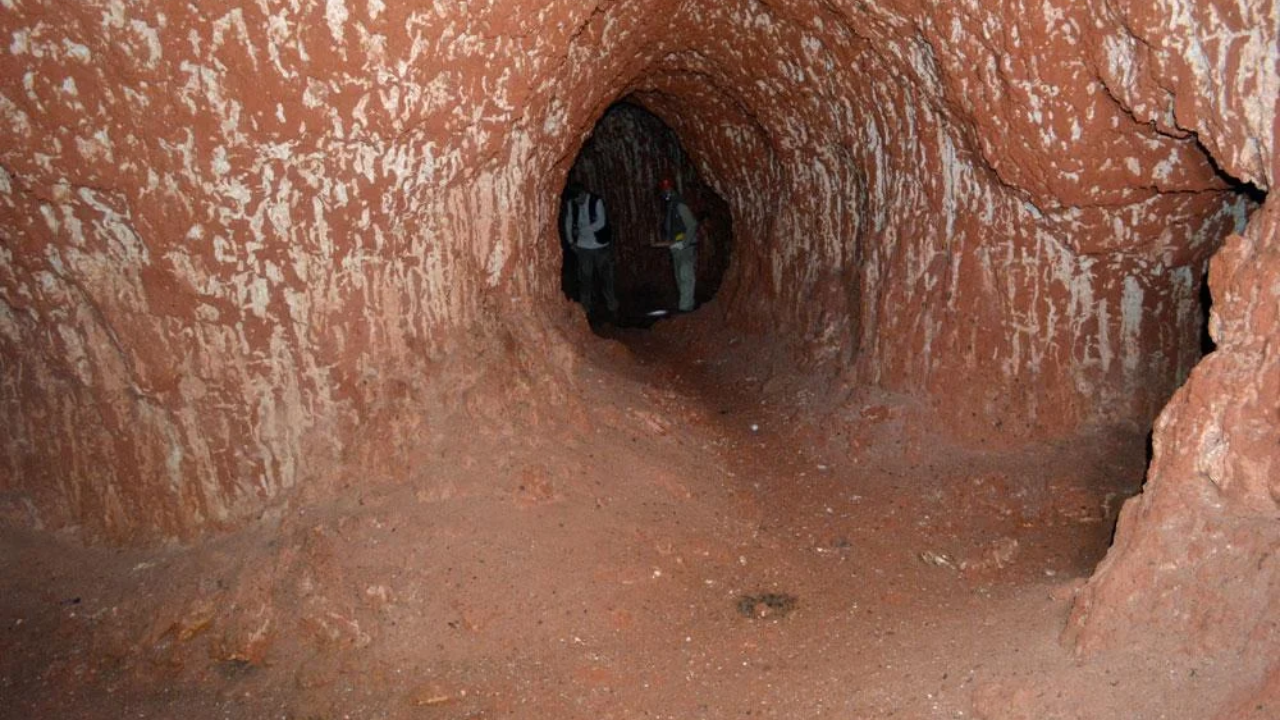


The Giant Sloths, With Their Massive Size, Left Traces Like Underground Tunnels in Brazil, Revealing Their Impact on Megafauna and Transformation of the Brazilian Landscape.
The giant sloths, imposing creatures of Brazilian megafauna, marked an important chapter in the natural history of the country. These animals, weighing up to five tons, fed on large amounts of vegetation and left impressive traces, such as underground tunnels that still surprise scientists today. In this article, we explore the impact of these creatures, their unique characteristics, and the fascinating tunnels they built.
The Massive Size of Giant Sloths
The giant sloths were very different from the sloths we know today. With a colossal size, these creatures weighed around five tons and had an equally impressive appetite, consuming up to 300 kilograms of vegetation per day.
Unlike their modern relatives, which are arboreal, the giant sloths were terrestrial animals, walking on all fours and standing only to reach food in the trees.
-
At a depth of 750 meters, scientists find real gold trapped in the so-called “fool’s gold,” with a content of up to 1.9% in microscopic grains, but the record concentration still does not confirm a deposit ready for commercial exploitation.

-
Mother discovers she may have won £12 million in the lottery but faces an agonizing wait after the shopkeeper threw the ticket in the trash.

-
A couple bought a house in Sheffield and, when removing the carpet from the hallway, found a trapdoor leading to a secret 23 m² basement with a 2-meter ceiling height, a discovery that eliminated the need for an expensive extension and, according to them, added £70,000 to the property’s value.
-
A nurse bought for 20,000 a 1955 house abandoned by a hoarder in Texas, and months later, rain revealed a buried pool in the backyard valued at $160,000, which he restored himself for about $10,000, a fraction of the cost of building a new one.





In an interview with G1, biologist and paleontology specialist Ednair Rodrigues revealed that “the ones that exist today are arboreal species, and often when they come down to the ground, they face serious life risks, predation, not only by humans but also by the environment itself.”
These giant herbivores had continuously growing teeth and lacked enamel, adapted to feeding on fibrous plants.
They lived in social groups, and it is possible that they had parental care, indicating complex family behaviors.
The fact that they stayed in herds and their large size indicates advanced social behavior for the time.
The Decline of Giant Sloths
The giant sloths, like other megafauna species, disappeared during the glacial period.
Experts, like biologist Ednair Rodrigues, explain that intense climate changes, combined with difficulties in adapting to new environments, contributed to their extinction.
Restricted feeding and low reproduction rates were also critical factors. While other species managed to adjust to the new conditions, the giant sloths did not survive the impact of these environmental changes.
In addition, the giant sloths coexisted with other giant species, such as glyptodonts (ancestors of armadillos) and mastodons (ancestors of elephants), creating a unique ecosystem.
Despite their extinction, the traces left by these animals are still a testament to the grandeur of this fauna.
Underground Tunnels: Traces of the Life of Giant Sloths
One of the most fascinating discoveries related to giant sloths is the enormous network of underground tunnels that they possibly built.
Located in the state of Rondônia, the largest paleotoca in Brazil consists of tunnels and galleries over 600 meters long.

Some of these tunnels exceed three meters in height, suggesting that the giant sloths needed ample underground spaces, possibly as refuges or paths to protect themselves from predators.
These tunnels are a true archaeological treasure and offer a unique glimpse into the behavior of these animals.
Recent studies indicate that the paleotoca may be even larger than previously thought, revealing the complexity of the interactions of giant sloths with their environment and their adaptation to the ecosystem.
These tunnels may have served not only as shelters but also as a way to move safely, possibly avoiding predators.
The Impact of Giant Sloths on the Brazilian Landscape
The giant sloths played an important role in transforming the Brazilian environment.
Their large-scale feeding altered the vegetation, and the need for large areas of land to move and feed directly impacted the local ecosystem.
The discoveries of paleotocas and other fossil traces help us better understand how these giant creatures modified the landscape.
The tunnels formed by the giant sloths also reveal their adaptation to their environment and their interaction with it.
Contrary to initial thoughts, these underground structures are not just a paleontological curiosity, but a key piece to understanding the behavior of these prehistoric giants.







O Brasil foi o primeiro a exportar um tatuzao, os egípcios e outras culturas ao redor do planeta usaram muito essa tecnologia kkkkkkk