Portuguese
  Spanish


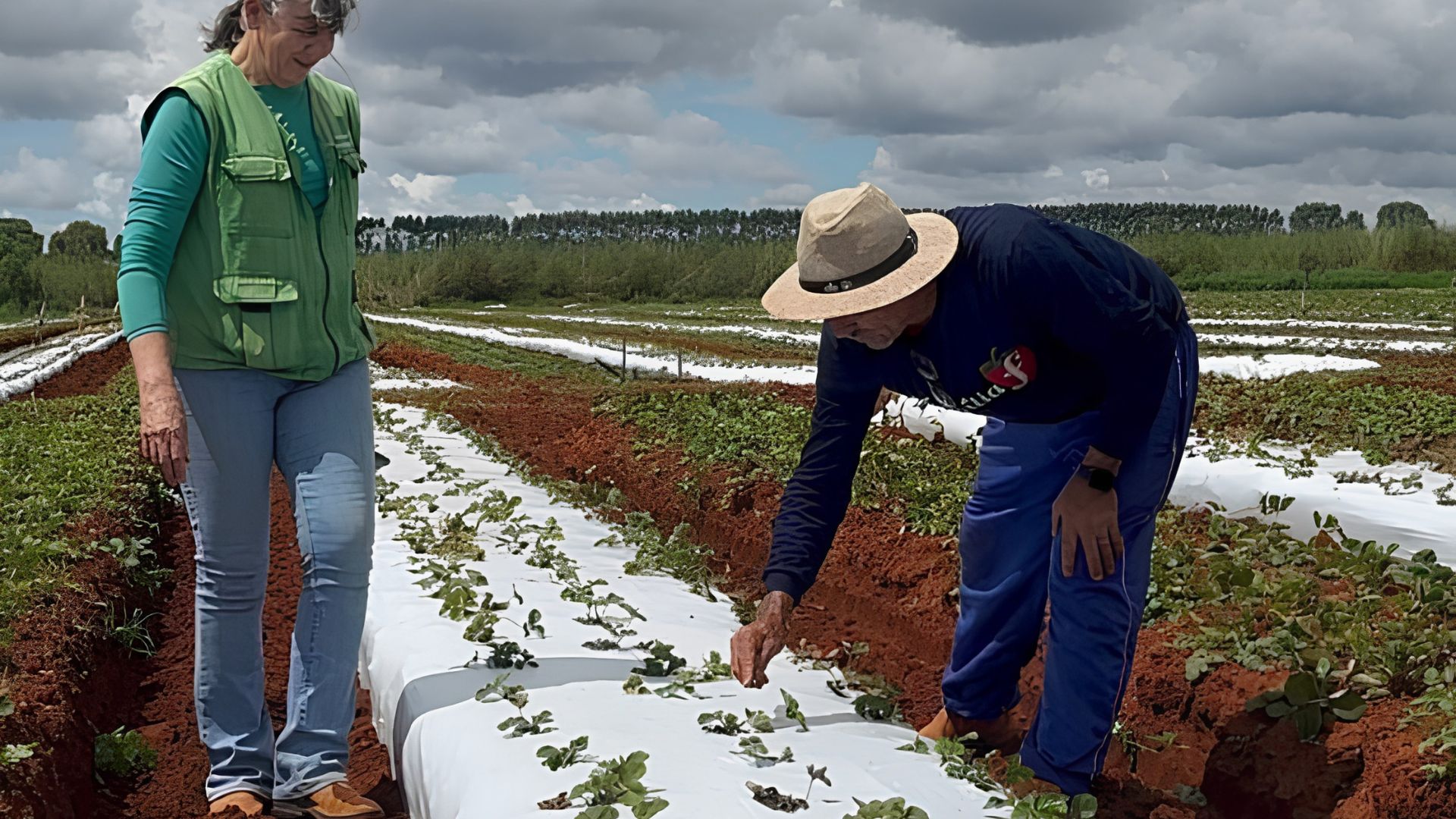

Brazlândia, strawberry, family farming and rural succession mark the story of a couple who left São Paulo and acquired two farms.
In 2006, Francisco Santos de Sousa and Maria do Rosário de Sousa left São Paulo and headed to Brazlândia, in the Federal District, with a clear goal: to find a safer place to raise their eight children. Originally from Paraíba, they arrived without their own land and began to rebuild their lives through rural work. According to Emater-DF and a report published by Jornal de Brasília, the move was mainly motivated by concerns about urban violence and the search for a more peaceful environment for the family.
Almost twenty years later, the family left the status of tenant, bought two farms, and established a strawberry production that now involves children, daughters-in-law, sons-in-law, and grandchildren. For Emater-DF, the case has become an example of well-conducted family farming and rural succession in Brazlândia.
Move to Brazlândia was motivated by the search for safety for the children
According to accounts gathered by Emater-DF, the main reason for the move was not just economic. Maria do Rosário stated that the couple wanted to remove their children from an environment marked by violence and start over in a region where the family could live more peacefully.
-
Without anyone betting that Amazonian açaí would catch on in Rio Grande do Norte, he brought the seedling from Pará, planted 80 hectares, and transformed the “unlikely land” into a business that harvests 280 tons of fruit and exports pulp to Italy, the Netherlands, and Kuwait, proving that the superfood from the North thrived in the semi-arid region.

-
A company from SC that moves R$ 125 billion in agribusiness is integrated into an international group, maintains its headquarters and jobs in Chapecó, and is preparing to expand software for cooperatives, grain companies, and industries while targeting new markets without leaving the western region of Santa Catarina.

-
Producer receives news and had to cull almost the entire herd, bounced back with the help of compensation, and is now producing 450 liters of milk per day in SC.

-
Quail Eggs Reveal a “Secret Code” on Their Shells Explaining Unique Patterns and Colors



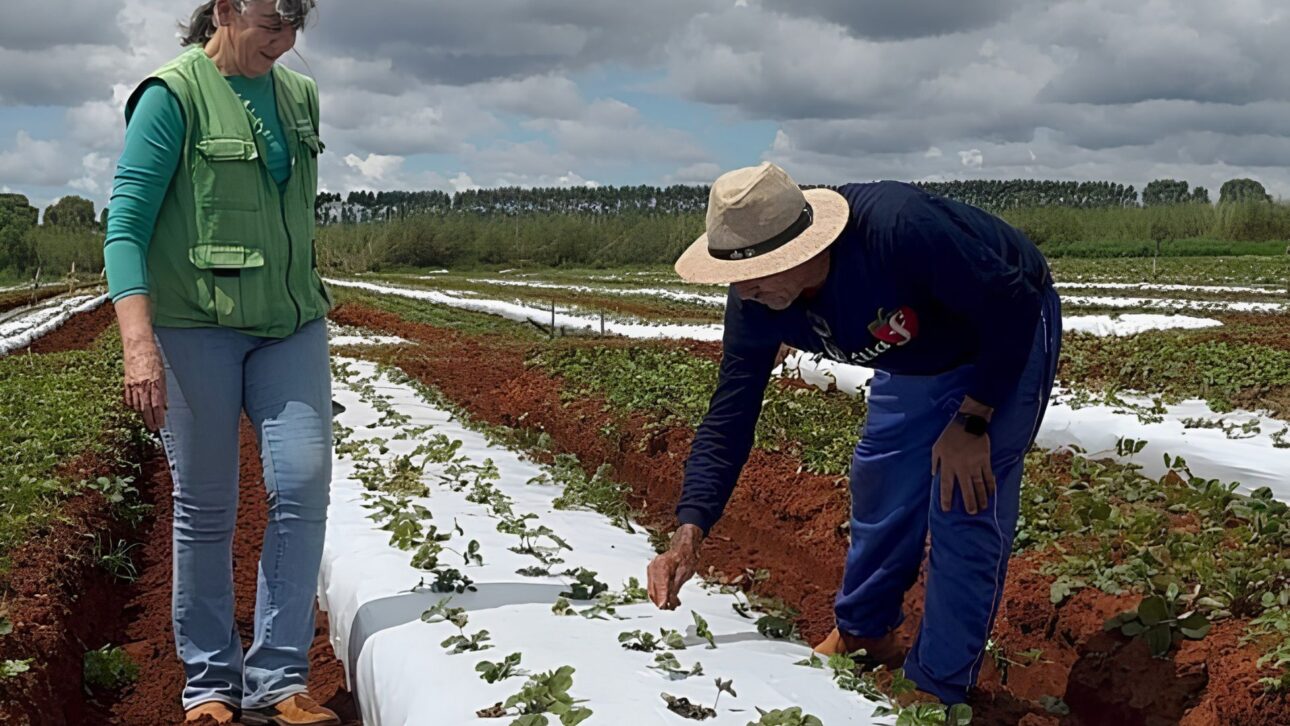
Upon arriving in the Federal District, the family began working on third-party properties. This initial period served to gain experience, learn the routine of the countryside, and gather the minimum conditions to start their own production, even if on leased land.
Working on third-party land paved the way for their own production
In the early years in Brazlândia, Francisco and Rosário had no land. According to Emater-DF, they started as rural workers and then became tenants, cultivating small areas while trying to structure the family business.


The technical support from Emater-DF began in 2009, when the family was registered by the public company. From then on, they received support in property management, agronomic assistance, access to rural credit, and guidance for marketing programs like PAA and Pnae.
Strawberry became the income base and supported the family’s expansion in the countryside
Over time, the strawberry established itself as the main crop of the property. According to Emater-DF and the Jornal de Brasília, the fruit became the main source of the family’s income and the axis of productive expansion in Brazlândia.
During rainy periods, production is diversified with crops like carrot and beetroot, a strategy that helps maintain income throughout the year. This model allowed for a reduction in dependence on a single harvest and provided more stability to the rural enterprise.
Continuous reinvestment allowed the purchase of two farms
According to Francisco Santos de Sousa, growth came from the habit of reinvesting almost everything the farm generated. The strategy allowed for the repayment of loans, access to new lines of credit, and gradual expansion of the productive area, instead of turning the initial income into immediate consumption.
This process led to the purchase of the first farm and then a second property, ending the dependence on leased lands. For the family, this transition from leasing to owning two productive areas was the milestone that consolidated the project started years earlier with few resources.
The couple’s goal was to build assets to keep their children in the countryside
The expansion of the property was never treated merely as a financial goal. According to Maria do Rosário, the plan was always to grow enough to leave a productive base for the children and create real conditions for the new generation to also remain in the countryside.
Today, the production involves children, daughters-in-law, sons-in-law, and grandchildren, forming a family business that spans generations. Emater-DF itself classifies this movement as a consistent example of rural succession, because the children began to see agricultural activity as a life project and not just as a survival job.
Training and technical assistance helped professionalize the property
In addition to direct assistance in the field, the family also participated in programs focused on management, entrepreneurship, and succession in the countryside. Emater-DF reported that the brothers Francisco Júnior and Felipe de Sousa went through the Empreender e Inovar and Filhos deste Solo programs.

According to Felipe, the courses expanded the business vision of the enterprise and helped professionalize the management of the property. For the family, the training was not only to improve production but to transform the agricultural activity into a more structured business.
Rural production helped finance education, assets, and the permanence of a new generation
According to Emater-DF, the income generated by the strawberry not only supported the farm. It also helped finance the academic education of the children, expand the family’s assets, and keep a new generation connected to rural activity.
The report from Emater-DF states that the family includes children with education in areas such as Physical Education, Pedagogy, Law, and Environmental Technician. Even with different career paths, many decided to remain connected to the rural enterprise built by their parents.
Family from Brazlândia became a reference for family farming in the Federal District
The journey of Francisco Santos de Sousa and Maria do Rosário de Sousa shows how a change made for the safety of their children ended up producing a consolidated rural enterprise. The couple left the city without land, worked on third-party properties, leased small areas, and with planning and technical assistance, built a business capable of involving three generations.
In Brazlândia, the family went from rural labor to owning two farms, with the strawberry at the center of income and family succession. Therefore, the case is treated by Emater-DF as a concrete reference of successful family farming in the Federal District.