Portuguese
  Spanish


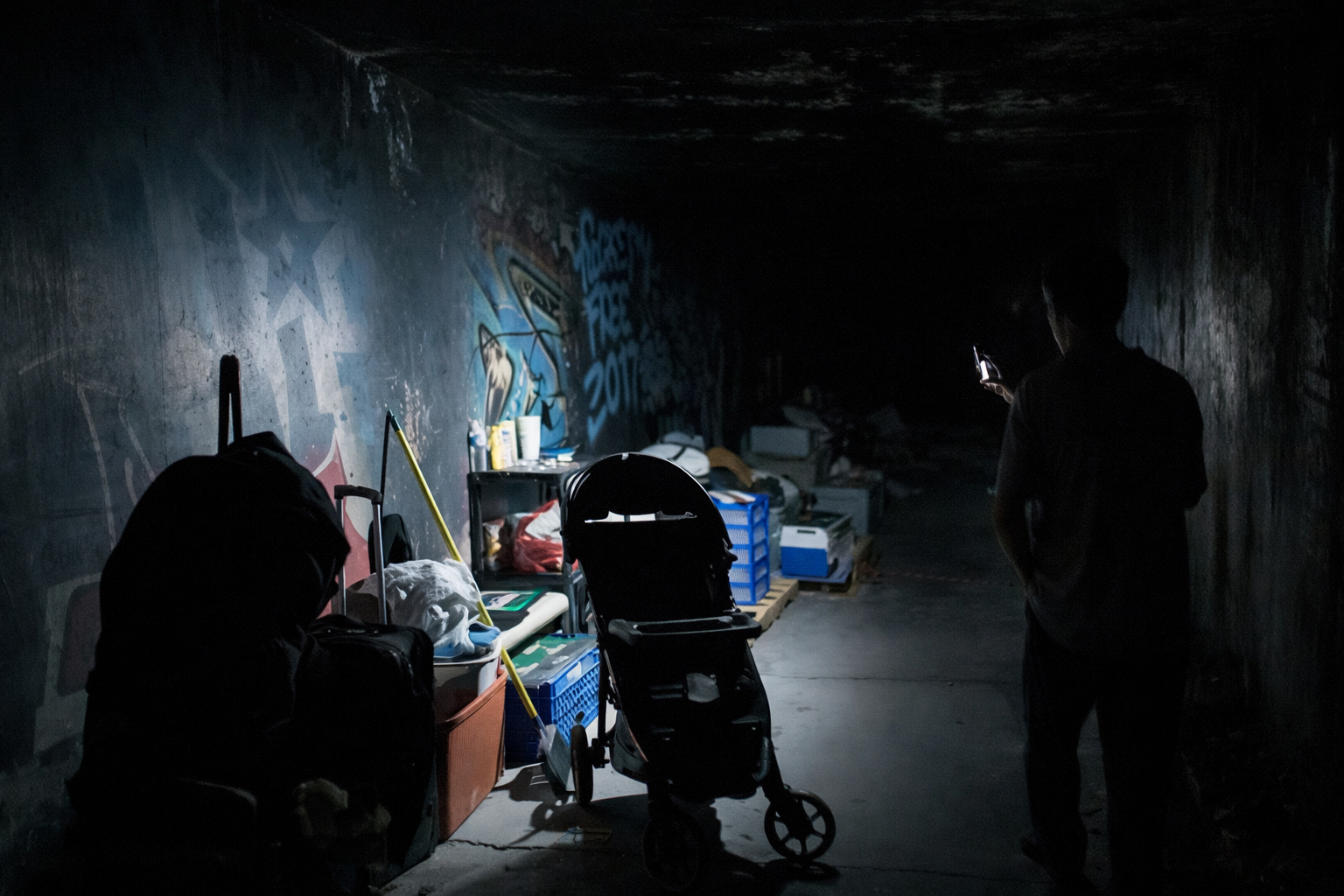


Away From Hotels And Entertainment That Generate Billions, Hundreds Of People Occupy Drainage Tunnels Beneath Las Vegas, Adapting To The Darkness, Sudden Floods, And A Parallel Life Almost Unknown
The city is still waking up when, below street level, the day has already begun. Under Las Vegas, an extensive network of approximately 200 miles of drainage tunnels houses about 1,500 people, according to recurring estimates since the 2010s. Far from the glare of the casinos, these residents organize a routine marked by constant adaptation, improvisation, and a daily quest for stability. While tourists circulate above ground, a parallel reality remains almost invisible.
This underground dynamic has been documented in reports and audiovisual productions featured over the past years, with direct investigations in the tunnels and accounts from people who have lived there for long periods. The testimonies reveal a little-known daily life, sustained by their own strategies and the absence of immediate alternatives.
Tunnels Created For Urban Infrastructure Became Occupied
Originally, the tunnels were designed to solve a technical challenge for the city. The hard desert soil makes it difficult for rainwater to be absorbed, which necessitated the construction of underground channels to direct the water flow. Over time, however, these spaces became occupied by people seeking shelter.
-
How to Prevent Brown Recluse Spider Bites: Common Hiding Spots and Free Tips to Reduce Risks

-
Natto: The Unusual Japanese Superfood Gaining Popularity on Social Media and Driving Record Exports
-
Brazilian Mayor Goes Undercover as Homeless for 24 Hours to Assess Public Services

-
15-Year-Old Entrepreneur Malu Lira Publishes 20 Children’s Books on Financial Education, Earns $500,000, and Expands Her Project to the Amazon Rainforest




The functioning of the system poses challenges. Rainfall recorded miles away can rapidly increase the water volume in the tunnels, even when there is no visible precipitation in the city. According to records from the Clark County Regional Flood Control District, these variations happen quickly, requiring constant attention from those living there. In recurring events since the 2010s, material losses are frequently reported, reinforcing the sense of instability.
Routine Without Natural Light Requires Constant Adaptation
Prolonged stays in environments without natural light are one of the main points cited by residents. The lack of time reference and clear cycles of the day affects habits, sleep, and perception of the environment. Therefore, many organize their spaces based on memory and repetition, creating mental maps of the tunnels.
Moreover, the absence of personal documents is common, whether due to loss or wear over time. Without these records, access to formal jobs, conventional housing, and public services becomes limited. In practice, life begins to depend on informal solutions.
Resource acquisition occurs primarily through reusing discarded materials, selective collection, and items left by city visitors. Bicycles are essential for transportation, as the tunnels stretch over long distances, and walking can take hours.
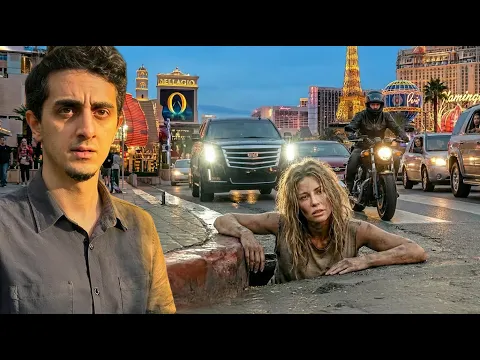

Self-Organization And Coexistence Challenges
Coexistence in the tunnels follows unwritten rules. Each area usually has fixed occupants, and respect for others’ space is essential to maintain balance. However, the lack of constant public authority presence makes conflict mediation difficult.
According to information from the Las Vegas Metropolitan Police Department, communication within the tunnels is limited, as conventional equipment does not function properly underground. This means that many everyday incidents go unrecorded officially, reinforcing the character of this community.
Contrast With The Surface City
The contrast with what happens above is evident. Nevada casinos recorded over US$ 15 billion in revenue in 2023, according to data from the Nevada Gaming Control Board. In some areas, ventilation openings allow visibility into areas near Caesars Palace, revealing the physical proximity between such distinct realities.
While the surface concentrates consumption, entertainment, and a constant flow of people, the tunnels house a silent routine, based on adaptation and continuity.
Marks Of Time And Sense Of Transience
Along the underground corridors, abandoned objects and small personal signs indicate interrupted stories and frequent changes. Each rain period redefines the space. Nothing is permanent, and the residents know that adjustments will always be necessary.
Thus, the tunnels of Las Vegas represent a little-observed side of the city, where urban infrastructure, individual choices, and social limitations intersect. Faced with this hidden scenario under one of the most visited cities in the world, how many other realities remain outside the collective field of vision while life continues to accelerate on the surface?