






 Portuguese
  Spanish
  3 min of reading
  0 comments


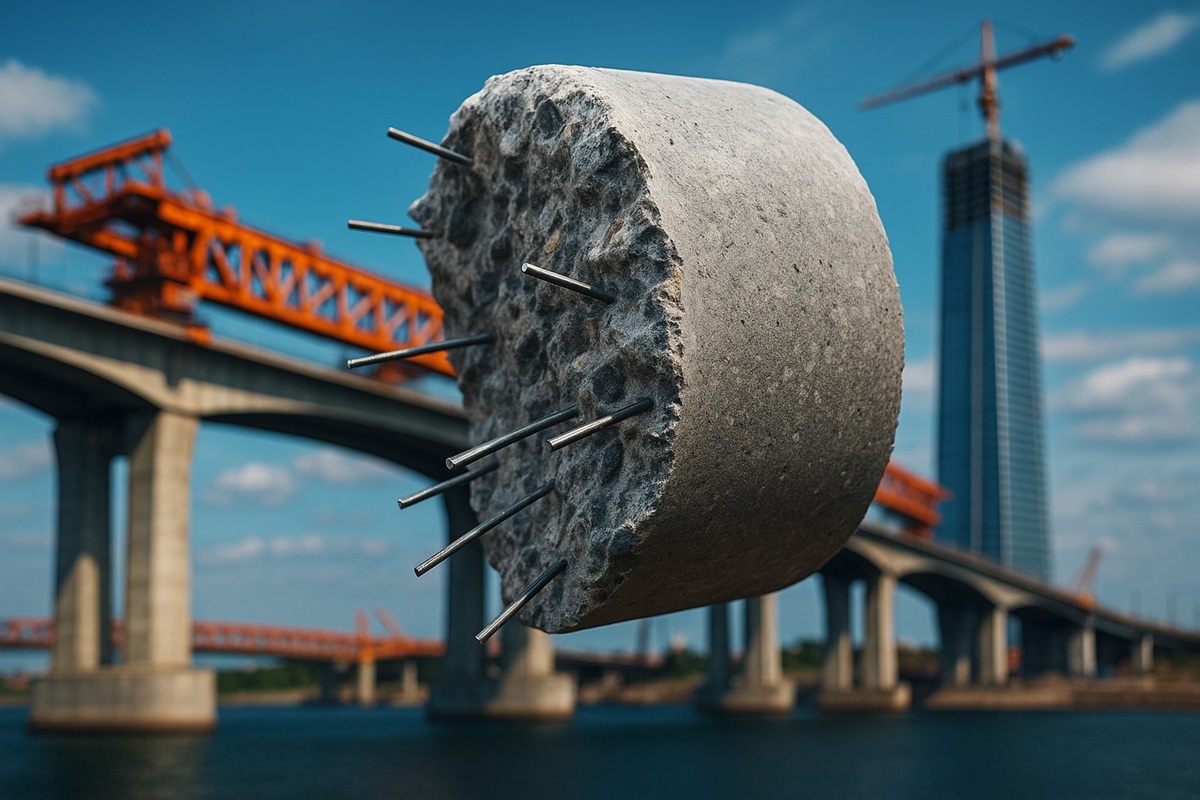
Advanced Engineering Material That Combines Extreme Strength, Ultradense Microstructure, and Metallic Fibers to Create Much More Durable, Safe, and Efficient Structures in Modern High-Performance Works
Ultra High Performance Concrete (UHPC) has been transforming engineering standards by combining exceptional strength, extreme durability, and performance far exceeding conventional concrete.
This advanced material, created through cutting-edge technology, has become central to projects that require maximum performance, such as bridges, complex architectural elements, and military structures.
Its popularity is growing because it offers solutions to historical problems in civil construction, reducing failures, extending lifespan, and decreasing maintenance.
-
The owner of Facebook, Mark Zuckerberg, opened his wallet and paid the equivalent of R$ 72.9 billion, or US$ 14.3 billion, to hire a 28-year-old and put him in charge of Meta’s new superintelligence.

-
They wanted artificial intelligence, but they drained the water from a village in Mexico: the water consumption of data centers caused a hepatitis outbreak, and big tech companies Amazon, Microsoft, and Google were forced to halt billion-dollar projects.

-
System created to save lives in disasters turned ‘against’ Brazilians overnight: a hacker attack sent out a false alert from Civil Defense with the word “misantropia” that went off on the phones of half the country, even in silent mode, and took down the Cell Broadcast.
-
In the cold desert of Ladakh, where it hardly rains, engineer Sonam Wangchuk created the ice stupa, a tower that freezes winter water and stores it for irrigating crops in the spring, a simple engineering feat that mimics nature.




What is UHPC
UHPC is a type of concrete developed with ultrafine grading, high cement content, reactive silica, state-of-the-art chemical additives, and fibers metallics.
The result is a material with an extremely dense microstructure, low porosity, and an impressive ability to withstand significant mechanical stresses.
In general, this concrete exhibits compressive strength between 150 MPa and 250 MPa, potentially exceeding 350 MPa in special laboratory formulations. By comparison, regular concrete has a strength of about 20 MPa to 40 MPa.
How UHPC is Produced
The formulation of UHPC follows principles different from conventional concrete. Instead of aggregating stones and sands of various sizes, the mix adopts small, highly controlled particles.
This creates a “perfect packing,” filling voids and eliminating weak zones. Its components include:
- High-quality Portland cement
- Active silica
- Quartz powder
- Metallic or synthetic fibers
- State-of-the-art superplasticizers
- Water in minimal proportions to reduce porosity
The combination of these ingredients generates concrete with superior density and extraordinary resistance to both compression and tension.
Why UHPC is So Resistant
The main reason lies in the microstructure. Since there are no large internal voids, the material hardly suffers from rapid crack propagation.
The metallic fibers also act as a distributed internal reinforcement, enhancing toughness and preventing small cracks from evolving into ruptures. Thus, UHPC can withstand enormous loads, impacts, and highly aggressive environments.
Where UHPC is Used
UHPC has become one of the favorite materials in works requiring extreme performance:
- Slender bridges and walkways
- Military protection elements
- Structures exposed to marine environments
- High-aesthetic architectural facades
- Precast components with complex geometries
- Industrial components subject to abrasion
Several countries already use UHPC to extend the lifespan of bridges, reducing maintenance and replacement costs.
Advantages of UHPC
- Much higher strength than traditional concrete
- Decades greater durability
- High capacity to withstand impacts and vibrations
- Excellent performance in aggressive and saline environments
- Slenderer and lighter structural elements
- Lower maintenance needs
Limitations and Challenges
Despite the benefits, UHPC presents challenges:
- Higher production costs
- Specific equipment for mixing
- Specialized labor
- Strict quality control
- Longer preparation time in some cases
Even so, as technology evolves and becomes more popular, costs are expected to decrease.
The Future of UHPC
Ultra High Performance Concrete is seen by experts as one of the materials that will guide the next generation of civil construction.
Its potential includes safer skyscrapers, more durable public works, and complex structures with reduced environmental impact, as the material allows for less waste and greater lifespan.
UHPC is not just a stronger concrete: it is a profound shift in how to build and think about structural engineering.





-

-

2 people reacted to this.