Portuguese
  Spanish


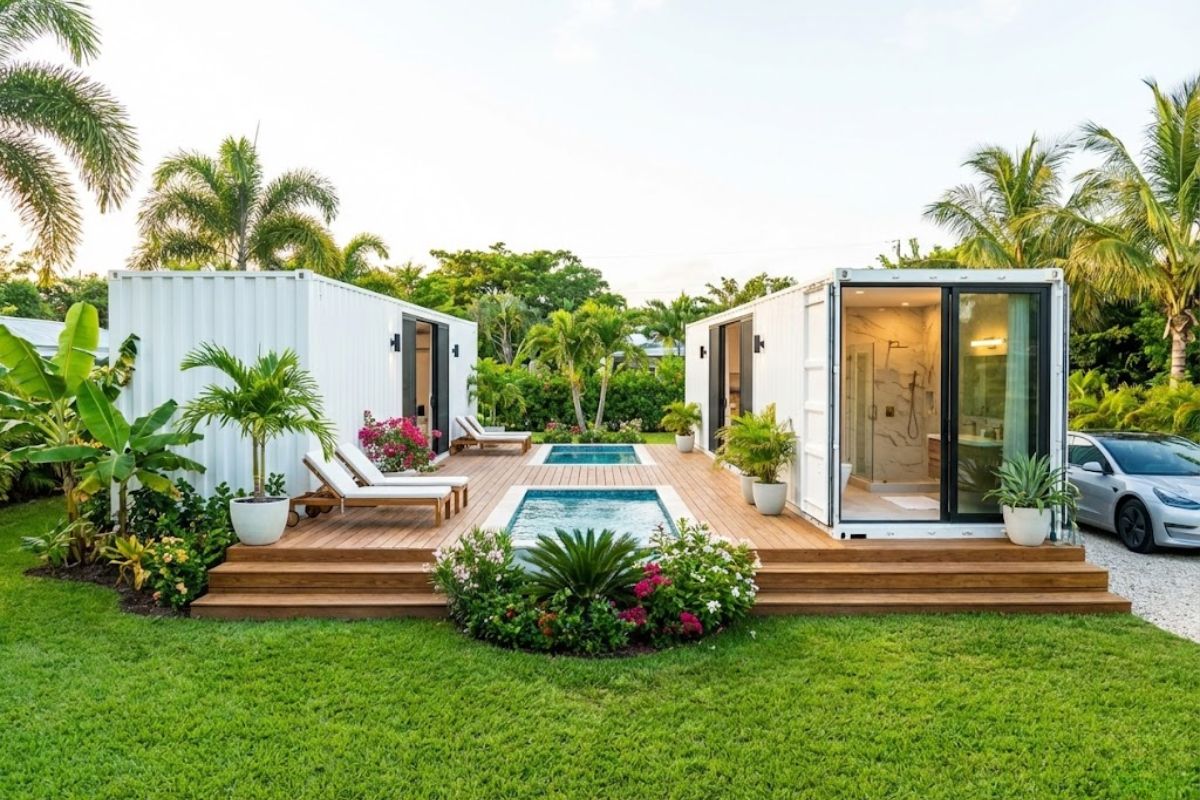


In The Dominican Republic, In La Vega, S Village Transformed A 40-Foot Container Into Two Mini Houses For Four Guests Each, With Kitchen And Bedroom. The Differential Is In The Expanded Bathroom Outside The Structure, In The Pool Surrounded By Flowers, Deck, Bamboo Gazebo And Covered Leisure Area On Airbnb.
The Idea Of Living Well In A Few Square Meters Often Sounds Like A Vague Promise, But Here It Appears As Something Concrete: A Container Cut In Half That Became Two Complete Mini Houses In La Vega, Dominican Republic. What Draws Attention Is Not Just The Structural Solution, But The Whole Set: Kitchen, Living Room, Bedroom And An Expanded Bathroom That Completely Changes The Feeling Of Space.
The Project Was Born From A Simple And Practical Impasse. The Owner Wanted To Build A Single House, However The 40-Foot Container Was Too Big To Be Taken Whole To The Site; The Solution Was To Divide The Structure Into Two Parts And Transform Each Half Into An Independent Unit. The Construction Took 5 Months And The Reported Investment Was About 15 Thousand Dollars, With The Two Units Now Focused On Rental.
When A Large Container Turns Into Two Small Spaces

Cutting A Container In Half Is Not Just “Dividing By Two” On Paper: The Decision Changes Logistics, Assembly And The Internal Architecture Itself.
-
Pre-mixed stabilized mortar set to revolutionize construction in 2026: extends usability to 36 or 72 hours, boosts productivity, and minimizes waste in building projects.

-
Mexico Sinks Giant Fabric Tubes Filled with Sand off Yucatán Coast to Create Invisible Barrier and Restore Hurricane-Damaged Beaches

-
Modern Liquid Porcelain Flooring Offers Seamless, High-Gloss Finish for Home Renovations Without Demolition
-
Brazilian Couple Builds Entire Cabin from Cement and Shade Cloth in Just 7 Days to Escape Renting, Using Affordable Farm Supplies Instead of Steel Mesh




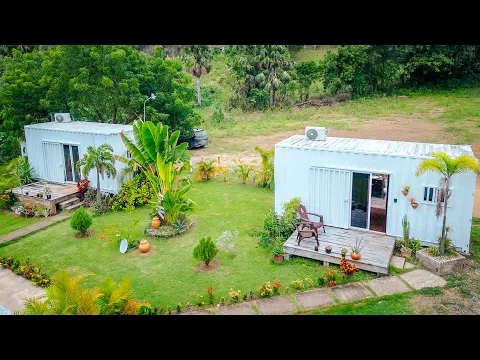
By Transforming A Single Container Into Two Units, The Project Solves The Transportation Problem While Creating Two Mini Houses That Share The Same Structural Origin.
There Is Also A Direct Effect On The Proposed Use. Each Half Is Thought Out To Accommodate People Realistically And The Location Report Indicates A Clear Limit: Up To Four People Per Mini House. This Guides The Entire Internal Design, From The Choice Of The Sofa That Becomes A Bed To The Size Of The Furniture And Circulation.
An Outside That Is Part Of The House, Not Just The Scenery
Even Before Entering, The Exterior Already Functions As An Extension Of The Container. There Is A Tropical Garden With Flowers And Spread Lighting, Creating Privacy And A Sense Of “Refuge” That Contrasts With The Industrial Origin Of The Metal Structure.
The Pool Is Large, With Space For Several People, And Comes With A Gazebo With A Bamboo Roof And Seating A Detail That Transforms The Outdoor Area Into A Gathering Spot. Further Back, There Is Another Covered Recreation Area, With Hammocks, A Table And Games (Like Dominoes), Reinforcing The Idea That Leisure Was Not Left “For Later”, But Was Incorporated Into The Planning Of The Place.
Kitchen And Living Room: The Essential Fitted Inside The Container

On The Inside, The Mini House Organizes The Kitchen And Living Room In The Same Space, Something Common In Compact Projects, But Executed Here With Very Specific Solutions.
The Kitchen Includes Wooden Cabinets, A Two-Burner Stove, A Microwave And A Refrigerator Positioned In The Lower Part, As Well As A Good Sized Stainless Steel Sink For The Reduced Space Standard.
Ventilation Appears As A Central Strategy: There Are Windows On Both Sides For Breeze Entry And Odor Exit During Food Preparation.
In The Living Room, A Roman Style Clock Emerges As A Highlight Decorative Element, While The Convertible Sofa Expands The Sleeping Capacity Of The Space Without Requiring A Second Bedroom.
The Expanded Bathroom Outside The Container Changes The Game

Among All The Rooms, The Bathroom Reveals The Project Logic The Most. It Is Not Entirely Inside The Container: An External Extension Was Created To Accommodate A Larger Bathroom, A “Tropical” Space That Is Nearly Outdoors, Surrounded By Bamboo And With A Caribbean Feel.
This Choice Has A Practical Explanation: Placing A Large Bathroom Inside The Container Would Consume Usable Area And Make Circulation Tighter.
By Shifting Part Of The Bathroom Outside, The Interior Of The Container Preserves The Kitchen, Living Room And Bedroom With More Comfort. The Set Includes A Toilet, A Large Sink, A Mirror And A Shower; The Presence Of Hot Water Is Said To Be Guaranteed By A Heating System.
Compact Bedroom, View To The Green And Thermal Comfort

The Bedroom Reinforces How A Mini House Can Feel Larger Than It Is When The View And Opening Are Well Used. There Is A Sliding Door, Which Saves Space Compared To Traditional Doors, And A Direct Perspective To The Outside, Creating The Feeling Of Waking Up “Inside The Garden”.
For The Local Climate, Thermal Comfort Is A Decisive Item: There Is Air Conditioning In The Room, As Well As A Television And A Wardrobe, Something That Is Usually Rare In Such Compact Spaces. The Bedroom Accommodates Two People In The Bed, While The Sofa Bed In The Living Room Complements The Total Capacity Mentioned For The Unit.
Two Mini Houses, Same Base, Changes That Alter The Experience
The Second Mini House Follows The Same Distribution And The Same White Facade, Glass And Metal Doors, Wooden Deck And Integrated Garden But Changes In Details That Impact The Perception Of Comfort.
The Decoration And Colors Are Different, Showing How Paint, Tones And Finishes Change The “Personality” Of A Space, Even When The Container Structure Is Identical.
There Are Also Subtle Functional Differences: The Presence Of A Wooden Table For Two People In The Kitchen Space Was Mentioned, And The Impression Of A Slightly Larger Bathroom, With Less Bamboo.
The Result Is An Interesting Contrast: Two Halves Of The Same Container Offering Distinct Visual Experiences, Without Relying On Major Structural Changes.
In The End, The Case Of La Vega Leaves A Provocation That Goes Beyond Aesthetics: When A 40-Foot Container Becomes Two Houses, What Becomes More Valuable, The Square Footage, The Design, Or The Way Each Centimeter Was Used?
The Solution To Cut, Expand The Bathroom Out And Invest In The Garden And Pool Shows That The “Small” Can Be Comfortable Without Hiding Its Limitations.
And Here Comes A Very Direct Question For You To Answer With Experience And Personal Preference: Would You Stay In A Mini House Made From A Container If It Had This Type Of Expanded Bathroom And Complete Outdoor Area Or What Would Weigh More In Your Decision: Interior Space, Privacy, Temperature, Or The Fact That It Is A Container?