






 Portuguese
  Spanish


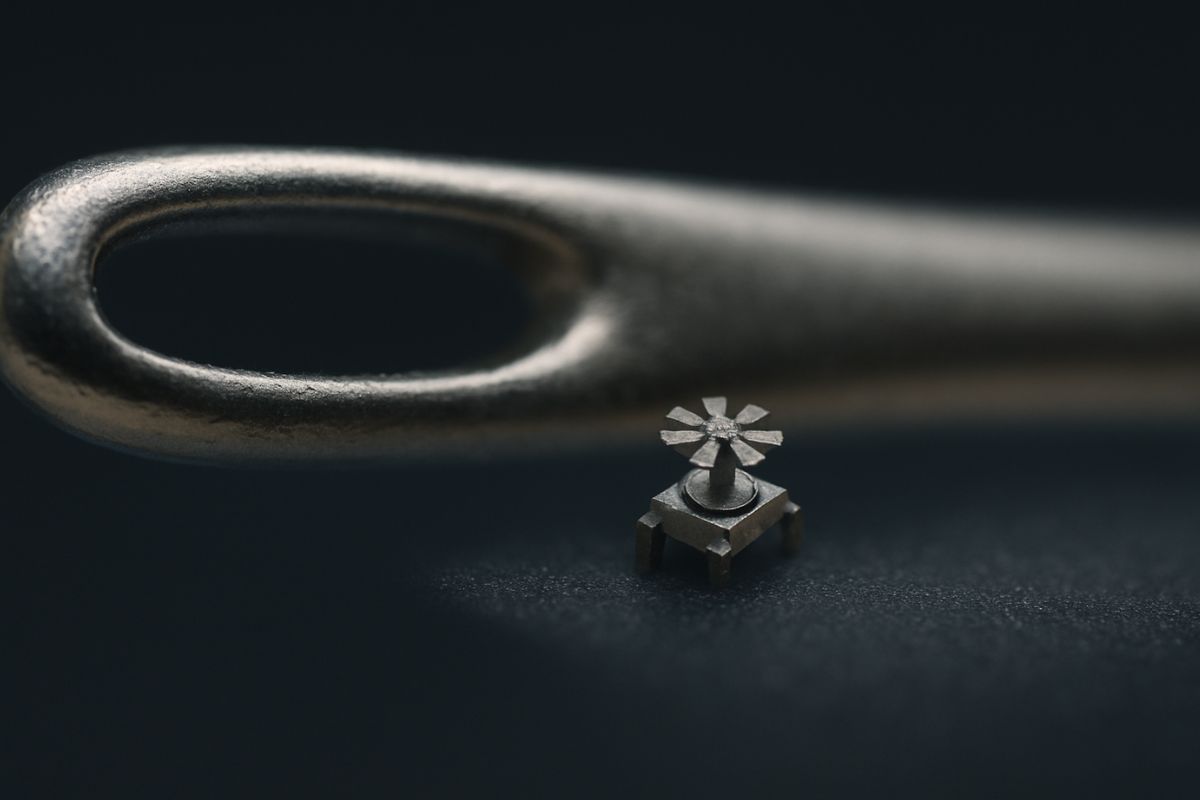


Team Recreates Engine Launched as a Challenge by Feynman 65 Years Ago and Impresses the World of Science. Discover the Behind-the-Scenes of This Feat That Opens Doors for Future Engineering
Imagine an engine so small it could fit on the tip of a pin. It may sound like science fiction, but this was precisely the challenge posed in 1959 by physicist Richard Feynman to the scientific community. At the time, nanotechnology didn’t even exist as a formal concept. Nevertheless, in just a year, engineer William McLellan accepted the challenge and created a motor just half a millimeter in size, using simple tools like a toothpick and a watchmaker’s lathe. Now, over six decades later, a group of engineers has decided to take this achievement even further.
The Challenge Issued by Feynman That Crossed Generations
Feynman’s provocation was made during a historic lecture, in which he urged the creation of devices on a microscopic scale. McLellan’s work at Caltech became a landmark in microscale engineering, paving the way for the development of modern nanotechnology.
Inspired by this story, a group of specialists from Chromonova Engineering decided not only to replicate but to surpass the original feat. The goal? To build an even smaller engine using current technology, but employing tools and processes similar to those used by McLellan in the 60s.
-
House Left Isolated in the Middle of New Chinese Highway as Owner Refuses Compensation Deal, Construction Continues Around the Property

-
Venetian Factory Luigi Bevilacqua Crafts Velvet by Hand on 18th-Century Looms, Producing Just 30 Centimeters a Day

-
Five Brazilian Students Invent Drug Test Pen That Detects Date Rape Drugs in Seconds
-
From Customer Service to Pipeline Welding: She Becomes the Second Female Welder in Utility’s History, Now Leading a Team in San Diego



A Microscopic Engine That Borders on the Invisible
The engineers documented the entire process in a video published on the official Chromonova YouTube channel, explaining each stage of the engine’s construction. “This was truly an innovative feat and, as far as I know, no one else has been able to replicate it. So, the question was: can we achieve the same result using similar tools and techniques?” the engineers explain in the video.
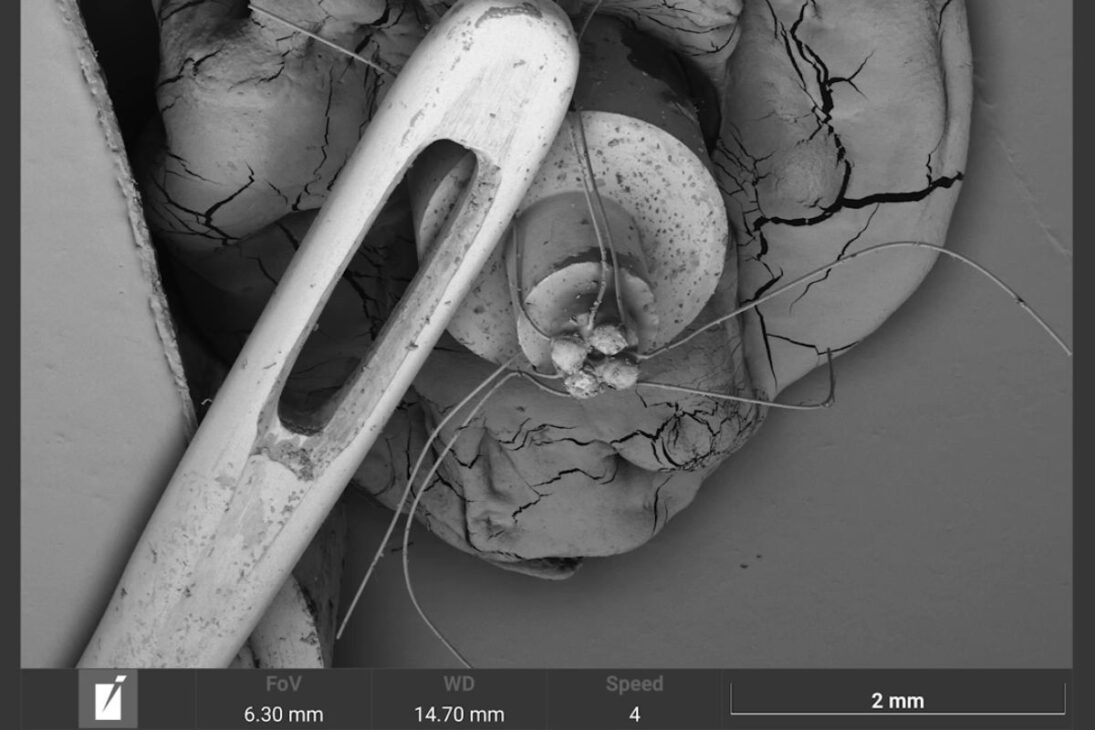
The new engine created is the size of a grain of sand and has a volume of just 0.4 thousandths of a cubic millimeter. This makes it practically invisible to the naked eye. The device includes a rotor, four electromagnets, a base, and a control circuit, all assembled on a microscopic scale.
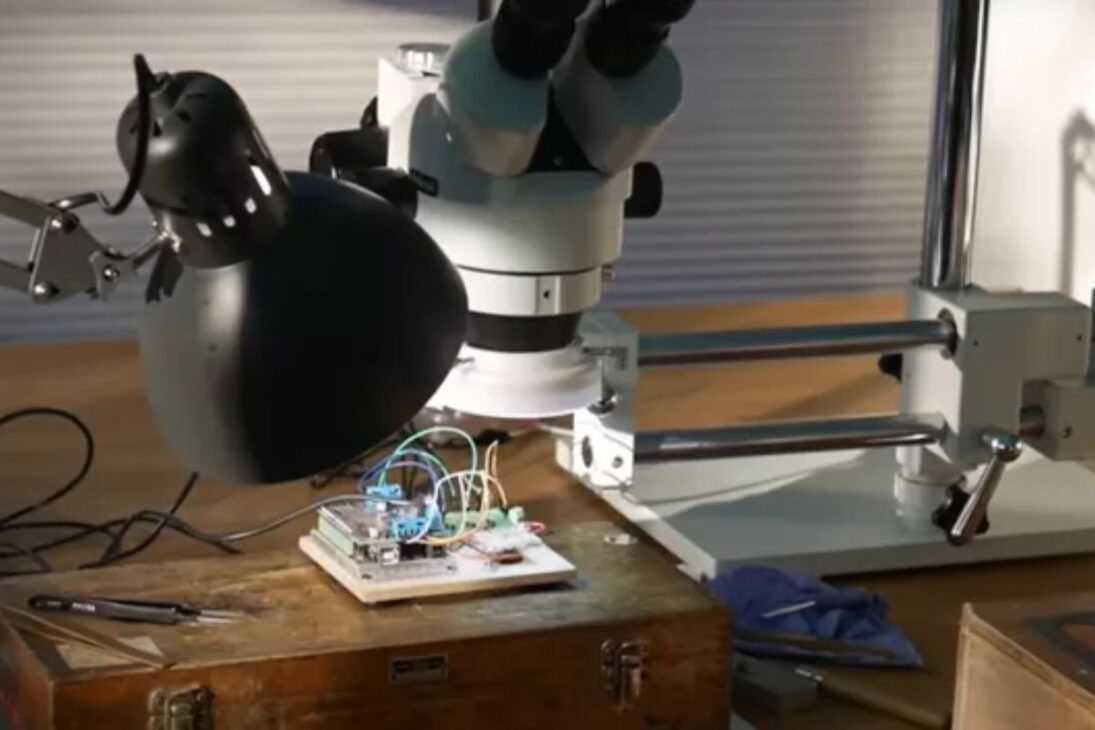
Due to its size, much of the work had to be done under a high-precision microscope. “During the video, it’s important to remember how small this engine is. I filmed almost everything with a microscope, so it’s easy to lose that perspective,” notes one of the engineers.
An Extremely Precise Construction
The construction was a true challenge. At various moments, the process was nearly interrupted due to unexpected problems. “I couldn’t breathe during the operation because my hands wouldn’t be stable enough. But I can only hold my breath for 40 seconds, which wasn’t enough to transfer the rotor safely,” reported one of the engineers.
During testing, several rotors were inadvertently launched due to the fragility of the assembly. Still, the team persevered and managed to successfully complete the assembly.
Did It Work?
The question everyone is asking: Did the engine work? The answer is yes. Despite numerous obstacles, the device responded positively to the activation of the electromagnets. “It wasn’t exactly the ‘eureka’ moment I was expecting, but honestly, for a while I thought it would be much worse,” admitted one of the team members.
This result is already considered a partial success, and the Chromonova Engineering team is already working on a second version of the engine. The new version is expected to have increased strength and reliability, further enhancing the project.
Feynman’s Legacy and the Future of Nanotechnology
The accomplishment by Chromonova is not just a tribute to Feynman’s challenge, but also a significant advancement in the field of precision engineering. Today, motors and devices on a microscopic scale have concrete applications in areas such as medical robotics, implantable devices, and advanced sensors.
According to a study published by Nature Nanotechnology, miniaturizing motors could drive new technologies for nanorobots capable of operating within the human body with applications ranging from targeted therapies to cellular repairs.
Although the motor created by Chromonova does not yet have direct practical applications, it proves that what seemed impossible in 1959 is now within reach of engineers and researchers. And like all innovations on a microscopic scale, it could be the seed for new technologies that we haven’t even imagined yet.


Não deu para ler, havia muita propaganda cobrindo o texto o que é uma pena pois, parecia ser uma matéria interessante
Realmente é inovador! Espero que consigam avançar cada vez mais.