Portuguese
  Spanish


A routine between milking, maturation, and mountains reveals how a family decision led a couple to swap industry for an artisanal cheese dairy in Minas Gerais, with their own production and recognition in competitions.
The production of artisanal cheeses made with raw milk has come to guide the routine of Bianca Lamenha and Gustavo Pitta, a couple who left their jobs at Furnas Centrais Elétricas to live on a farm in Itamonte, in the south of Minas Gerais.
On the property Velho Pitta, located in the Serra da Mantiqueira, they dedicate their days to milking, making, and maturing cheeses that, according to Bianca, have already received more than 30 medals in national and international competitions.
Before the cheese dairy, the couple’s story went through other attempts in the field.
-
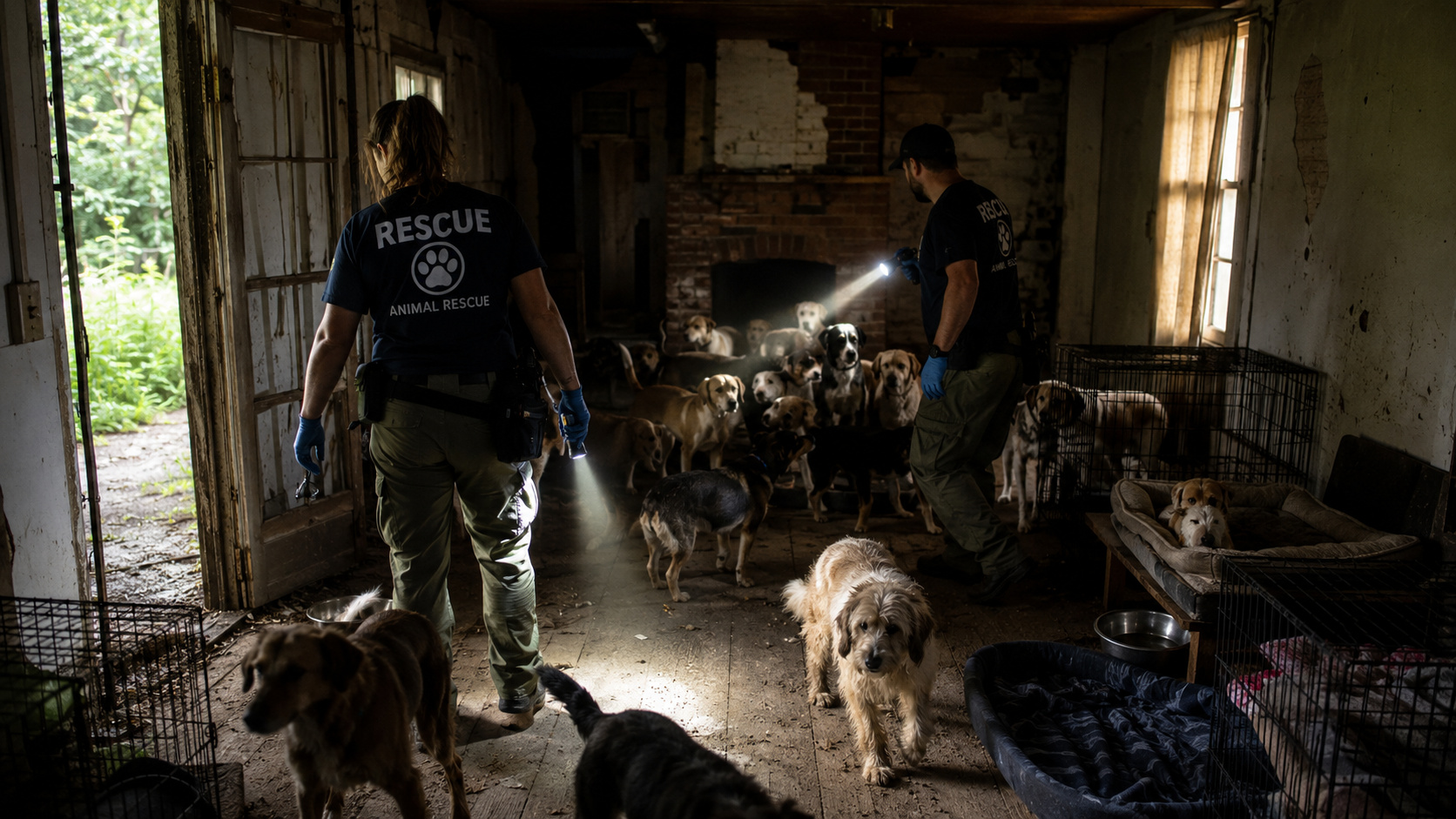
Rescue Teams Use Flashlights to Find 47 Dogs in Abandoned, Powerless U.S. Home, Offering Them a Fresh Start Through Responsible Adoption

-
Siblings Discover 1939 Superman Comic in Late Mother’s Attic, Sets Record at $9.12 Million Auction

-
12-Year-Old Discovers 80-Million-Year-Old Marine Tylosaurus Fossil During Kansas Field Trip
-
At 24, Beatriz Becomes First Woman from Mato Grosso to Work on Live Power Lines with Energisa, Starting as a Meter Reader in 2022


Gustavo decided to buy the farm after retirement, with the goal of fulfilling a plan associated with his father, an Army veterinarian who wanted to live far from the city.
The name Velho Pitta was chosen in reference to the way he called his father.
The first activity tested on the property was fruit production.
According to Bianca, the business did not progress as expected due to dependence on middlemen.
After that, the couple invested in sheep farming, but the experience was also discontinued.
The decision to leave the breeding for slaughter occurred after a scene that marked both of them.
“I was crying and so was he, because the sheep was crying. Then we said: this is not what we want,” Bianca recounted.
The next day, according to her, the animals were sold.
From then on, milk became the base of work on the farm.
“Let’s go for milk, because with milk we won’t kill,” said Bianca, explaining the change of course.
The choice paved the way for the production of artisanal cheeses and for the structuring of the family-run cheese dairy.
The routine of the artisanal cheese dairy begins before dawn
At the Velho Pitta farm, work starts around 5 a.m., the time of the first milking.
In the afternoon, the activity is repeated.
The herd consists of 46 animals, of which 27 are dairy cows.
According to Bianca, each one produces, on average, 25 to 28 liters of milk per day.
The daily production is not entirely destined for the cheese factory.
Part of the milk is reserved for the calves, fed with milk until four months of age.
On a day mentioned by the producer, the farm recorded 370 liters, of which 320 liters went to cheese production.
In herd management, the official identification of cows coexists with a practice adopted by Bianca: calling each animal by name.
Sanitary control requires numbered tags, but the producer states that she prefers not to treat the cattle just by numbers.
“Our cattle are certified by IMA, free of tuberculosis and brucellosis. With that, we have to have the tag with their number. And, since I don’t like to call the cows by the number, IMA argues with me. They say: ‘Bianca, you can’t give names’. I said: ‘No, but here everything has a name’,” she reported.
The sanitary certification is one of the requirements related to the production of artisanal cheese with raw milk.
According to regulations applied in Minas Gerais, properties seeking regularization need to meet herd control and food safety requirements.
In the case mentioned by Bianca, the condition of being free of tuberculosis and brucellosis allows commercialization in other states.


Mantiqueira Cheese is related to territory
Velho Pitta produces artisanal cheese associated with Mantiqueira de Minas, a region recognized by state agencies in studies on cheese production.
The characterization takes into account elements such as climate, altitude, soil, water, and the methods adopted by producers.
This set of factors is known as terroir.
The term, used in studies on food and beverages, describes the influence of territory and human practices on the characteristics of a product.
In the case of cheeses, experts and research institutions apply the concept to explain differences in flavor, texture, and maturation between producing regions.
In Itamonte, the farm is located at about 1,600 meters of altitude, according to Bianca.
For the producer, this condition affects the characteristics of the cheese made on the property.
Maturation also alters the final result, even when the recipe and manufacturing process are maintained.
“The more it matures, the flavor changes. If you take my fresh cheese and my more matured cheese, I made them the same way. It’s just that one matured and the other didn’t. You will see that they are completely different cheeses,” she stated.
Bianca describes the Velho Pitta cheese as a piece with a firm, cooked texture and a mild flavor, with sweet notes.
The producer also compares the making process to the one used for parmesan, although she attributes the result to the specific conditions of the farm and the region.
Award-winning cheeses increase the farm’s visibility
The production remains on a family scale, despite the presence in competitions.
Bianca oversees the production, maturation, and delivery of the cheeses.
Part of the sales occurs directly to private customers, including in Rio de Janeiro, where she claims to take about 200 kilos per month.
According to the producer, Queijaria Velho Pitta has accumulated more than 30 awards.
Among the results she mentioned are medals in Cunha, in the interior of São Paulo, in Chile, and in Peru, as well as a state achievement in Minas Gerais with the Ametista cheese.
“We received two awards in Cunha, two in Chile, and a Super Gold in Peru. And we won the state of Minas Gerais with the Ametista cheese in first place,” said Bianca.
The awards are used by the producer as a reference to present the cheeses to the public and expand the circulation of the products.
Even so, the production remains linked to the volume of milk produced on the property and the direct monitoring of the production stages.
In addition to selling the cheeses, the farm receives visitors for gastronomic experiences.
The program includes brunch with cheeses and wines.
According to Bianca, the property is also preparing new outdoor activities, including a luau with a bonfire.
Raw milk production requires daily control
Bianca and Gustavo’s routine has become organized around the herd, the milk, and the maturation of the cheeses.
Milking needs to occur every day, while production requires temperature control, hygiene, rest time, and monitoring of the pieces.
In the artisanal process, small variations can alter the final result.
Therefore, regularity in handling, sanitary care, and maturation control are part of the cheese factory’s work.
Production with raw milk also requires attention to specific inspection and commercialization standards.
For Bianca, staying in the field is linked to the quality of the product and the care for consumers and farm workers.
“I think it’s about doing it with love and quality. Caring about the consumer, with our collaborators,” he stated.