






 Portuguese
  Spanish


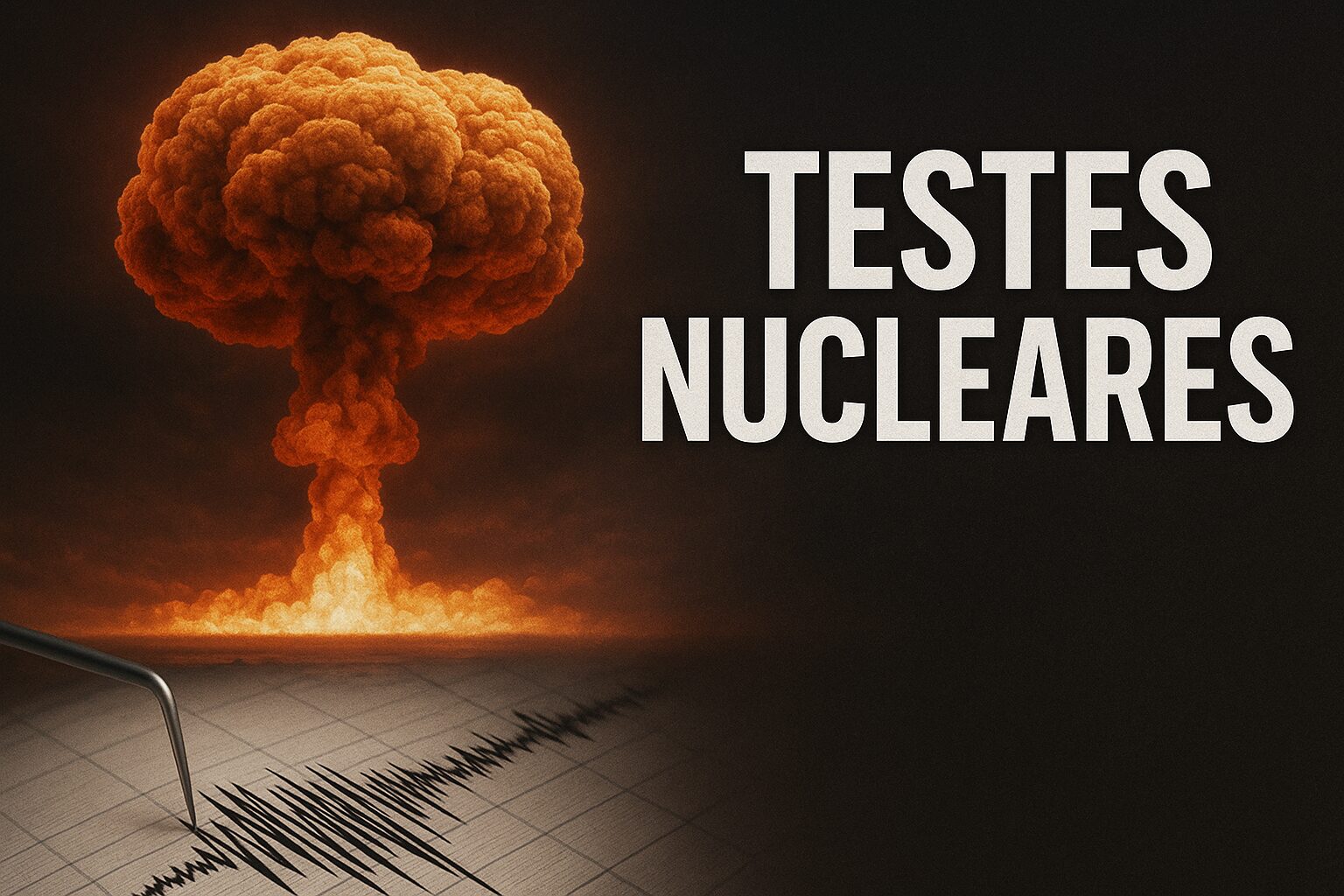

Overlapping of Natural and Artificial Seismic Signals Represents a Challenge for Global Monitoring of Clandestine Nuclear Activities
Scientists from the Los Alamos National Laboratory in the United States have released a study that points to a concerning possibility: underground nuclear test explosions could be concealed under the guise of natural earthquakes.
The discovery suggests that detecting clandestine testing may be more challenging than previously thought.
Review of Previous Findings
The new study contrasts with an analysis published in 2012. In that year, experts concluded that earthquakes would not be able to mask the signals left by nuclear explosions.
-
China Develops Custom 140-Ton Electric Mining Truck with 770 kWh Swappable Battery, Deploys 290 Units in Xinjiang’s Largest Zinc Mine

-
Meta to Launch Arena, a New Prediction App Targeting 3.56 Billion Users, Competing with Polymarket and Kalshi

-
Scientist Challenges Famous Human Evolution Theory, Argues Homo Sapiens Evolved Gradually Over Thousands of Years
-
15-Year-Old American Builds Ocean Generator with PVC Pipe and 3D-Printed Propeller for $12, Wins National Prize, Presents at White House, and Makes Forbes 30 Under 30 List




However, the latest data indicates that the overlapping waveforms of an earthquake and an explosion can fool even advanced digital detectors.
The Comprehensive Nuclear-Test-Ban Treaty (CTBT), signed in 1996, aims to prohibit all nuclear explosions in any environment. To ensure compliance, an international monitoring system has been established to identify explosions underground, in the air, and underwater. The new research, however, raises doubts about the effectiveness of current methods in specific situations.
Detection Rate Falls Amid Tremors
The study by Los Alamos scientists showed that a detector’s ability to identify a 1.7-ton underground explosion drops from 97% to just 37% if an earthquake occurs 250 kilometers away within 100 seconds after the detonation.
This scenario illustrates how natural events can hinder the identification of clandestine nuclear activities clandestine. According to the authors, the difficulty arises from the mixing of seismic signals generated by both events, which can confuse automatic detection systems.
Moreover, the masking effect also impacts the detection of smaller earthquakes and other seismic phenomena. In tests conducted, the identification rate of small events fell from 92% to just 16% when there was signal overlap.
Proposals to Improve Identification
To address this challenge, researchers developed an alternative method. They worked with data from explosions and natural earthquakes recorded at the Nevada National Security Site.
The strategy involved reducing the amplitude of explosion waves to simulate smaller events and then combining these signals with earthquake waveforms.
The goal was to check if detectors could distinguish between a real explosion and a natural tremor. The results suggest that adjustments to algorithms may make identification more accurate, even in overlap scenarios.
The scientists emphasized that, despite the challenges, the confirmation of a nuclear explosion does not rely solely on seismic signals. Other factors, such as the presence of radionuclides in the atmosphere, are also essential for determining the occurrence of tests.
Challenges Remain
While it is unlikely to completely hide a nuclear test using earthquakes as a disguise, the study indicates that this tactic could significantly hinder the work of monitoring systems.
The new research provides vital insights for enhancing detection techniques, reinforcing the need to combine multiple data sources to ensure accuracy in identifying explosions.
The complete study was published in the Journal of the Seismological Society of America, bringing new elements to the discussion about safety and control of nuclear armaments in the global scenario.






