Portuguese
  Spanish


While Drilling a Well for Water, a Rural Woman Discovers a Huge Gold Deposit, but the Fortune Found Costs Her Farm and Triggers a Legal Battle Against the Government
In search of water to irrigate her crops, a French farmer ended up unearthing a true treasure. What seemed like the beginning of a new life turned into a tragedy: upon finding gold on her land, she was evicted from the property by the government itself.
The case, which quickly gained national attention, revealed a legal and moral dilemma regarding property rights and the possession of natural resources. The story illustrates how wealth can turn into a curse when the State decides to intervene in the name of “public interest.”
A Well That Changed Everything
Marianne Delcourt, a 48-year-old farmer, owned a small organic farm in southern France, in the Occitanie region. She led a simple and sustainable life, growing vegetables and raising chickens. Everything changed when she decided to drill a new well to ensure water during the summer.
-
Brazilian Researchers Develop Cassava Starch and Grape Peel Packaging That Changes Color to Indicate Spoilage of Meat and Fish

-
Revolutionary Air Fryers: New Models Offer Up to 12 Liters Capacity, 10 Functions, and 90% Less Fat Starting at $80
-
New Helmet Rule in Brazil Requires Inmetro Digital Seal and QR Code from July 1, 2026, But Existing Helmets Are Exempt — Here’s What Changes and How to Verify Authenticity

-
Son of a traveling salesman, John D. Rockefeller used the 1873 financial crisis to acquire competitors, build an empire with 100,000 employees, and become the world’s first billionaire.



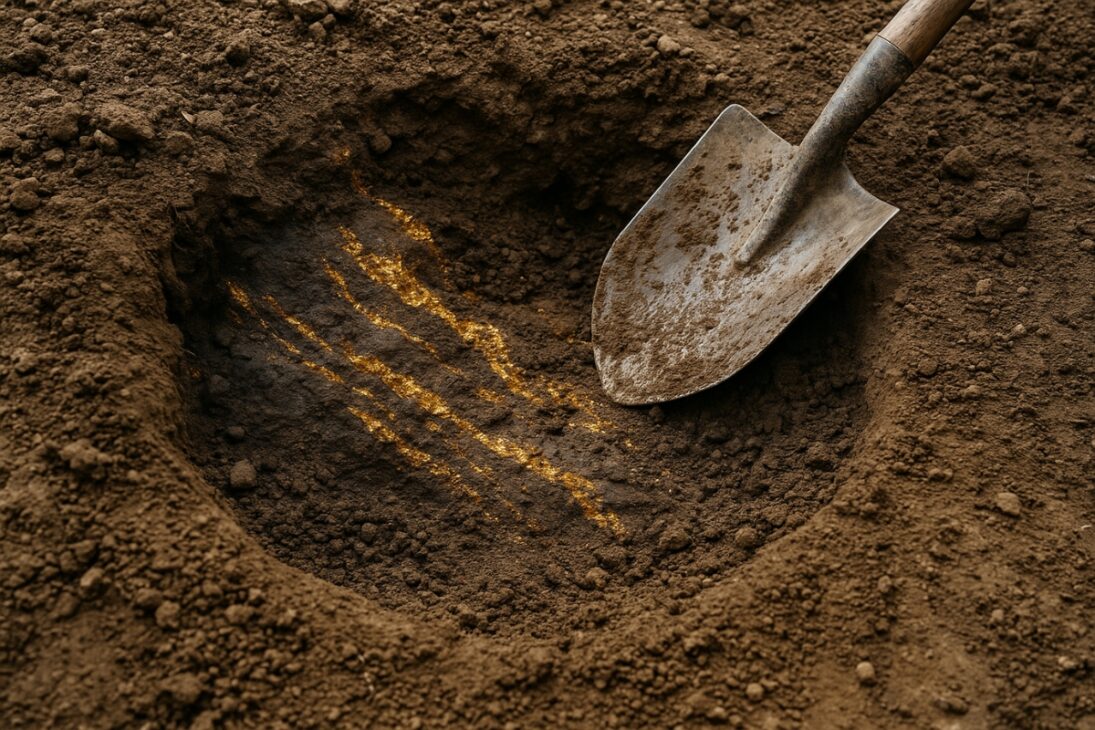
During the excavations, workers noticed something strange in the soil. Samples were sent for analysis, and a few days later, the confirmation arrived: it was a pure gold deposit, one of the largest ever found in the country.
What seemed like a blessing soon turned into a nightmare. French authorities declared that the subsoil of the farm contained around seven tons of gold, valued at over €2 billion. In light of the discovery, the government immediately claimed ownership of the area, citing national security reasons.
The State Intervenes and the Owner Loses Everything
According to French legislation, all mineral resources belong to the State, regardless of who owns the land. Based on this rule, the government officially requisitioned the farm and ordered the family to vacate the premises.
“I thought it would be a blessing, but it turned into a curse,” Marianne told the local press. After twenty years of hard work and dedication to sustainable production, she lost the right to remain in the place where she built her life.
The decision sparked a strong public reaction. Neighbors, activists, and even local politicians rallied in support of the farmer, accusing the government of abuse of power. Protests were recorded in the region, and the case reignited a debate about the balance between individual rights and collective interest.
An Old and Recurring Problem
The episode of Marianne Delcourt is not the first of its kind in France. In 2022, farmer Michel Dupont from the Auvergne region found large golden fragments in a stream on his property. Tests confirmed the presence of gold valued at over €4 billion. Shortly thereafter, the State intervened and confiscated the land.
Experts explain that French mining law is one of the oldest in Europe. Established in the 19th century, it stipulates that the subsoil and its resources belong to the Republic. The original aim was to protect national reserves and prevent private exploitation, but critics argue that the rule no longer fits the current reality, especially in cases of accidental discoveries.
What Does French Law Say
The French Mining Code is clear in stating that resources like gold, silver, gas, and oil belong to the State. Even when the discovery occurs by accident, the right to exploit is automatically transferred to the government. Thus, any citizen who finds a valuable resource on their property may be forced to hand over the land and leave without any right to possession.
In such situations, the State can requisition the area at any time and compensate the owner in a partial or symbolic manner. In practice, finding buried treasure can mean the legal loss of one’s own home.
A Debate on Justice and Property
The case of Marianne Delcourt has reignited discussions about the scope of state power and the right to private property. Many experts argue that the law should be updated to ensure fair compensation for landowners.
As she attempts to reverse the judicial decision with the support of lawyers and public opinion, Marianne has become a symbol of a struggle that goes beyond her farm. For many French citizens, her story represents the clash between state bureaucracy and a basic citizen’s right to what they built with their own labor.
The gold that could have changed her life for the better has turned into the ruin of her trajectory. Today, the farmer lives in hope that Justice will recognize not only the value of the mineral found but also the human value of someone who lost everything because of it.