






 Portuguese
  Spanish
  5 min of reading
  0 comments


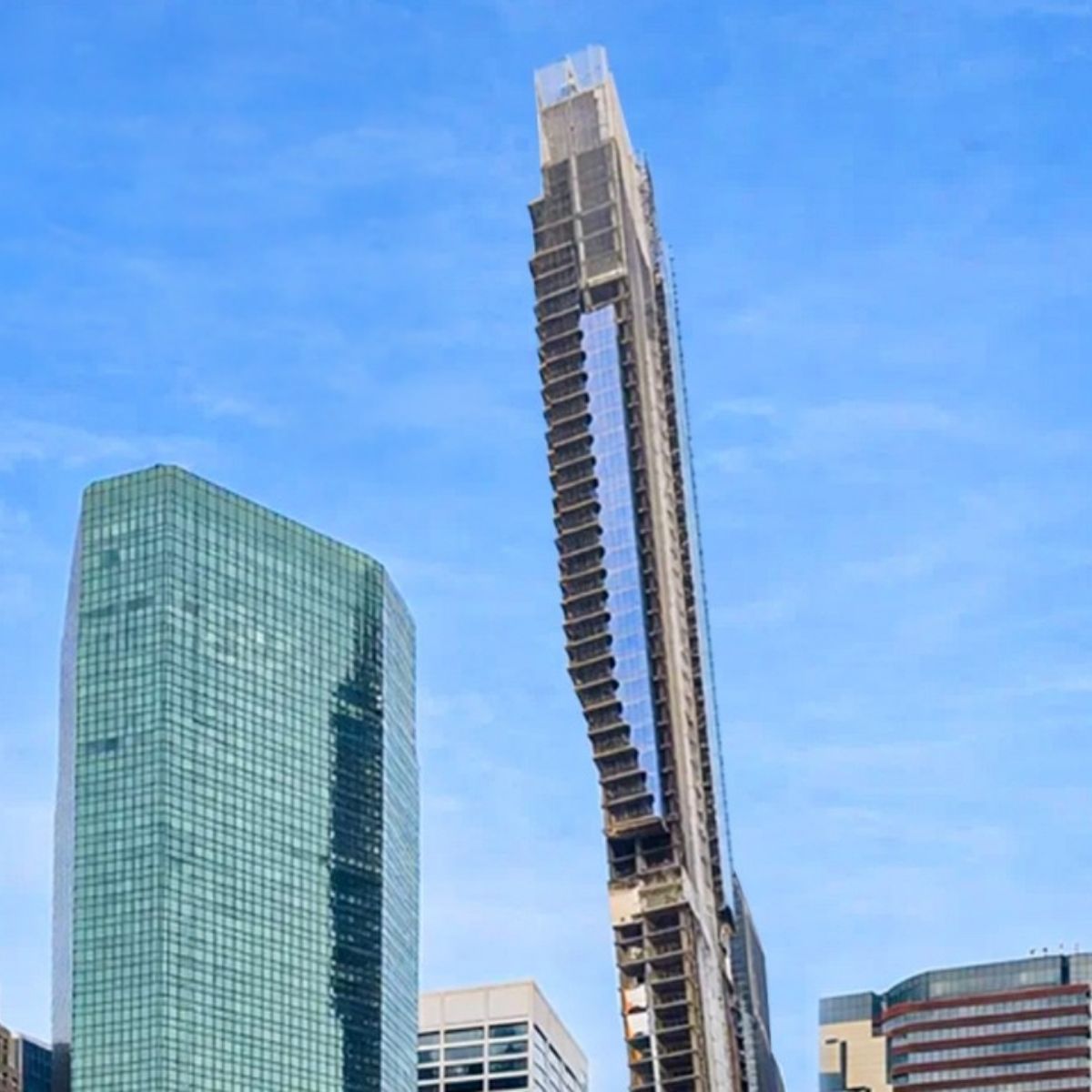
The One Seaport skyscraper in Manhattan, a 60-story tower, is leaning 8 centimeters after the construction company Pizzarotti sued the developer Fortis, claiming that the foundation was cheapened with inadequate techniques for soft soil, and the building remains empty while glass panels are removed for safety.
The most expensive abandoned skyscraper in New York City is located at 161 Maiden Lane, on the East River waterfront, in southern Manhattan, and cost $400 million to build. The One Seaport was supposed to be a luxury residential landmark with smaller units starting at $1 million and penthouses up to $7 million, but surveyors and engineers confirmed that the tower is leaning, and Fortis halted construction without anyone being able to guarantee that the skyscraper will stop moving. Buyers who had made deposits of hundreds of thousands of dollars withdrew their funds, and the building transformed from a symbol of real estate ambition into an example of what happens when savings are made on the foundation.
The lean has been measured at approximately 8 centimeters off the central axis, and the skyscraper remains tilted without engineers being able to guarantee stabilization. It may seem small in absolute terms, but in a 60-story skyscraper, every millimeter of deviation creates uneven stress on the structure, compromises the functioning of the elevator shafts, and poses a risk of glass facade panels becoming detached. Workers have already begun removing sections of the outer glass curtain to relieve weight and prevent the panels from falling uncontrollably onto the sidewalk, an emergency measure that does not resolve the underlying problem but reduces the immediate danger for those passing through the area.
What the construction company claims about the skyscraper’s foundation

Pizzarotti, the Italian contractor hired by the Fortis Property Group to build the tower, sued its client with a specific accusation. According to the lawsuit, Fortis allegedly opted for soil improvement techniques instead of driving deep piles down to bedrock, a decision motivated by saving time and money that resulted in a foundation unable to support the weight of the skyscraper evenly, leaving it leaning. The soil along the East River waterfront is made up of sediments, sand, and fill accumulated over centuries, material that compacts unevenly when subjected to loads of hundreds of thousands of tons.
-
Federal Police involved in the case to identify the person responsible for hacking the Civil Defense system, which sent ten false alerts, frightened residents of different capitals, and turned messages about real risks into notifications with “misanthropy” and even alien attacks.

-
Extreme drought causes ghost village to reappear at the bottom of the reservoir that supplies Athens, revealing houses, a school, and ruins swallowed since the 1980s as the lake shrinks and exposes the water crisis threatening the capital of Greece.

-
An entire village lay asleep at the bottom of a lake for 3,000 years: divers suction sediments in Italy and reveal more than 600 wooden stakes, bronze tools, and traces of a Bronze Age settlement hidden underwater.
-
They call it the “Shopee house” and even cardboard, but the R$ 20,000 house is a certified Wood Frame from Alea, financed by Minha Casa Minha Vida: understand if it’s worth more than masonry.


The difference between the two techniques is decisive. Deep piles penetrate through all the soft soil until they reach the solid rock below, creating a foundation anchored in material that does not move. Soil improvement, on the other hand, tries to strengthen the existing ground itself with grout injection and compaction, a quicker and cheaper procedure that may work for smaller constructions, but which Pizzarotti considers inadequate for a 60-story skyscraper on unstable soil. Fortis disputes the claims, and the dispute continues in court without resolution.
Why the skyscraper continues tilting and what may happen

The problem is not static. Pizzarotti warns that the soil under the skyscraper has not finished settling, which means that the tilt may increase over time if no intervention is made to the foundation. As the ground continues to yield unevenly, the structure accumulates stress at points that were not designed to bear it, creating a cascade of risks that engineers classify as increasing.
The problems arising from the tilt of the skyscraper are multiple. Glass panels from the facade may crack or detach due to the deformation of the structure, and in a 60-story building, any falling fragment represents a lethal danger to pedestrians. The elevator shafts, designed to be perfectly vertical, become misaligned when the building tilts, compromising the safety of the internal transport systems. Additionally, prolonged exposure to the elements without maintenance accelerates deterioration: water seeps into cracks, metals corrode, and materials fatigue, making each day without a solution more expensive than the last.
The precedent of the Millennium Tower in San Francisco and the possible solution


The One Seaport is not the first modern skyscraper to face tilting problems. The Millennium Tower in San Francisco sank about 46 centimeters and tilted several centimeters to one side after construction, generating scandal and a legal battle similar to the one currently occurring in Manhattan. The solution applied in that case was the so-called underpinning: drilling new piles through the existing foundation until reaching the bedrock, creating a deeper and more stable base under the already constructed building.
The same approach was suggested for the Manhattan skyscraper, but the execution is extraordinarily complex and expensive. Drilling under a 60-story structure that is already leaning requires prior stabilization, specialized equipment, and an investment that can exceed $100 million, an amount that adds to the $400 million already spent on construction. And none of this can move forward while the courts do not determine who is responsible and who will pay. The skyscraper remains in a simultaneous limbo: legal, because the dispute between Pizzarotti and Fortis is ongoing, and structural, because each month without intervention worsens the situation.
The human cost behind the abandoned skyscraper
Behind the legal disputes and engineering reports are real people affected. Buyers who deposited millions of dollars in apartments that were supposed to be their homes have lost time, money, and, in some cases, the property they planned to move into. Young professionals who saved for years to buy their first luxury apartment, couples who wanted a seaside residence, and investors who trusted the project have had to restart their searches from scratch.
The neighborhood is also paying the price. The southern east side of Manhattan was undergoing a transformation that the skyscraper was supposed to consolidate, and instead of a residential landmark, the area gained a leaning and empty skyscraper that no one knows how to fix. Contractors, subcontractors, and hundreds of workers linked to the project are suffering the economic consequences of a stalled construction that generates no revenue. The case of One Seaport demonstrates that, in construction, saving on the foundation may seem smart in the budget, but when physics picks up the tab, the cost is always greater than everything that was tried to be saved.
And you, do you think the skyscraper can be saved or should it be demolished? Who should foot the bill: the developer or the construction company? Leave your opinion in the comments.




-

1 person reacted to this.