






 Portuguese
  Spanish


African Engineer Transforms Plastic Waste Into Bricks Up to Five Times Stronger Than Concrete and Creates a Factory That Recycles 1.5 Tons Per Day, Boosting Infrastructure and Income in Vulnerable Neighborhoods.
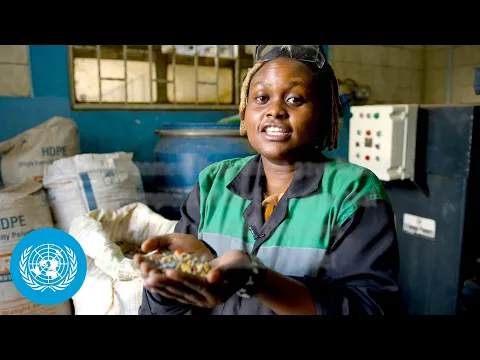
When Reuters showcased a small factory in Kenya turning plastic waste into building blocks in 2020, what seemed like just another environmental initiative quickly became a global symbol of social innovation. The project was led by Nzambi Matee, then a little over 30, a former data analyst who left her job to set up an improvised lab in her backyard to study how plastic waste could be turned into construction material.
Three years later, her startup, Gjenge Makers, began recycling about 1,500 kg of plastic per day, according to data released by the company itself, creating bricks that, according to tests presented to the press and partner institutions, are up to five times stronger than conventional concrete. This story has been featured in outlets such as BBC, CNN, Reuters, and UN Environment, becoming a reference for a circular production model applied in low-income areas.
Sustainable Innovation in Civil Construction
The core of Matee’s technology is based on a simple and disruptive premise: to transform plastic waste that would not be recycled into pavements and blocks capable of supporting heavy loads.
-
U.S. City Builds Tiny Home Village on Water Company Land to House 136 Homeless People: Inside the Social Housing Units

-
Woman Turns Shipping Container into Home, Embraces Rural Life to Cut Monthly Expenses to Just Over $330
-
France Revamps 530 Social Housing Units with Large Balconies and Glass Facades Without Demolishing Existing Buildings

-
Facing high rent, couple transforms parents’ garage into a fully functional apartment, creating a complete home at a fraction of the market cost.




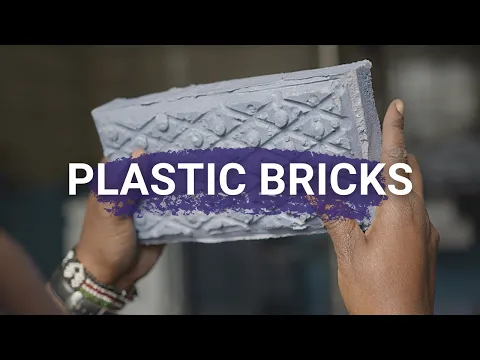
By mixing plastics such as low-density polyethylene and polyethylene terephthalate with sand and subjecting them to controlled pressure and heat, the entrepreneur created a high-density, high-durability, and modular compound — suitable for building sidewalks, community areas, small public works, and urban paving.

In the context of African cities, where informality and urban infrastructure deficits are high, this solution represents not only a technical advance but a practical and low-cost alternative for local governments, community associations, and social housing initiatives.
From Improvised Bench to International Recognition
The journey did not start in sophisticated laboratories. In interviews, Matee claims she melted the first plastics using makeshift equipment at home, repeatedly failing until she reached the ideal formula.
In 2017, after experimenting with and discarding hundreds of prototypes, she achieved the first stable batch. In 2020, she was recognized as Young Champion of the Earth by the United Nations Environment Programme, a milestone that reinforced the project’s credibility and attracted new funding and research opportunities.

This support allowed the factory to reach its current level of recycling and production, demonstrating that impactful technological solutions can originate from modest environments and grow with organic traction and applied innovation.
Direct Social Impact in Vulnerable Neighborhoods
In peripheral areas of Nairobi, where the bricks have already been applied, community centers, recreational areas, and school pavements have gained more stable infrastructure. Local associations highlight advantages such as lower cost, superior durability, and reduced erosion impact.
Another relevant collateral effect is socioeconomic inclusion: residents and cooperatives participate in the waste collection process, generating income in communities typically affected by unemployment.
By uniting the recycling chain, industrial production, and urban application, Matee’s initiative drives an ecosystem at each step of the process, contributing to a more circular and resilient economy.
An Exportable Model for Other Cities
Urbanism experts interviewed by international outlets emphasize that the Kenyan model generates interest in other Global South countries, where there is an abundance of plastic waste and a deficit of accessible solutions for basic infrastructure.
Local governments and international organizations are studying the replication of the process in regions such as West Africa, Southeast Asia, and Latin American urban centers.
The startup, according to interviews, plans to expand the automation of production lines and form partnerships to license the technology, which could accelerate the dissemination of this collaborative solution.
Technological Perspectives and Limits
The technology, although efficient for specific uses, does not replace concrete in large vertical structures or heavy works, but effectively meets essential urban demands such as community paving and small constructions.
Researchers add that scaling up will depend on the ability to maintain quality standards and ensure waste collection and sorting chains.
Even with challenges, the project reinforces the role of local technologies in the transition to more sustainable urbanization models and underscores the premise that innovation can emerge in any geographic or economic context.
Environmental Education and Cultural Transformation
In addition to physical production, the educational impact is evident. Schools and communities have incorporated workshops on recycling and sustainable construction, connecting young people to the theme of the circular economy. This pedagogical dimension strengthens responsible consumption practices and proper disposal, creating a virtuous cycle between technology, community, and the environment.








O ser humano o nunca deixa de evidenciar kem é o seu Crador.
Afinal das afrurias sempre rir um bo. Proveito.
Tapa boca dos seletivas
Boa idéia, precisaria que os tijolos fossem encaixado entre si para dá uma melhor garantia
“Engenheira queniana”, você quis dizer. Quando você se refere a alguma personalidade francesa você diz “cientista europeu”? Se for um artista japonês famoso diz “artista asiático”? Até quando o jornalismo vai continuar ignorando a geografia?