Portuguese
  Spanish


Rio Grande do Norte secured the installation of at least one submarine cable departing from Natal, with an official announcement expected in the next 45 days by the federal government. According to information from Tribuna do Norte, the state was also chosen to receive one of the two supercomputers from the Brazilian Artificial Intelligence Plan, with an investment of R$ 1.8 billion in the Augusto Severo Science and Technology Park in Macaíba. Today, 90% of Brazil’s internet traffic passes exclusively through Ceará, and the absence of submarine infrastructure on the Potiguar coast limits the arrival of data centers and technology investments.
Rio Grande do Norte is about to change its position on Brazil’s digital map with the arrival of its own submarine cable. The state Secretary of Economic Development, Hugo Fonseca, confirmed in an interview with the newspaper Tribuna do Norte that at least one landing zone for a submarine cable is already secured, with an official announcement from the federal government expected in the next 45 days. The infrastructure is considered strategic because 90% of all internet traffic circulating in Brazil passes exclusively through Ceará, and any cut in the cables reaching Fortaleza can paralyze critical operations such as banking.
In addition to the submarine cable, the state was selected to receive one of the two supercomputers planned in the Brazilian Artificial Intelligence Plan. The equipment will be installed in the second half of 2026 in the Augusto Severo Science and Technology Park in Macaíba, Greater Natal, with an investment of R$ 1.8 billion in federal resources with state counterpart. The combination of submarine cable and supercomputer positions Rio Grande do Norte as a future hub of technology, data centers, and high-performance computing in the Northeast.
Why the submarine cable changes everything for Rio Grande do Norte

image: Flickr MTur Destinos
The logic behind the installation of the submarine cable is simple: without a direct connection to international data routes, the state cannot attract data centers, which need physical proximity to the cables to reduce latency in the transmission of large volumes of information. Currently, any company that wants to operate a data center in Rio Grande do Norte needs to route the traffic to Ceará, adding milliseconds of delay that make operations requiring instant response unfeasible.
-
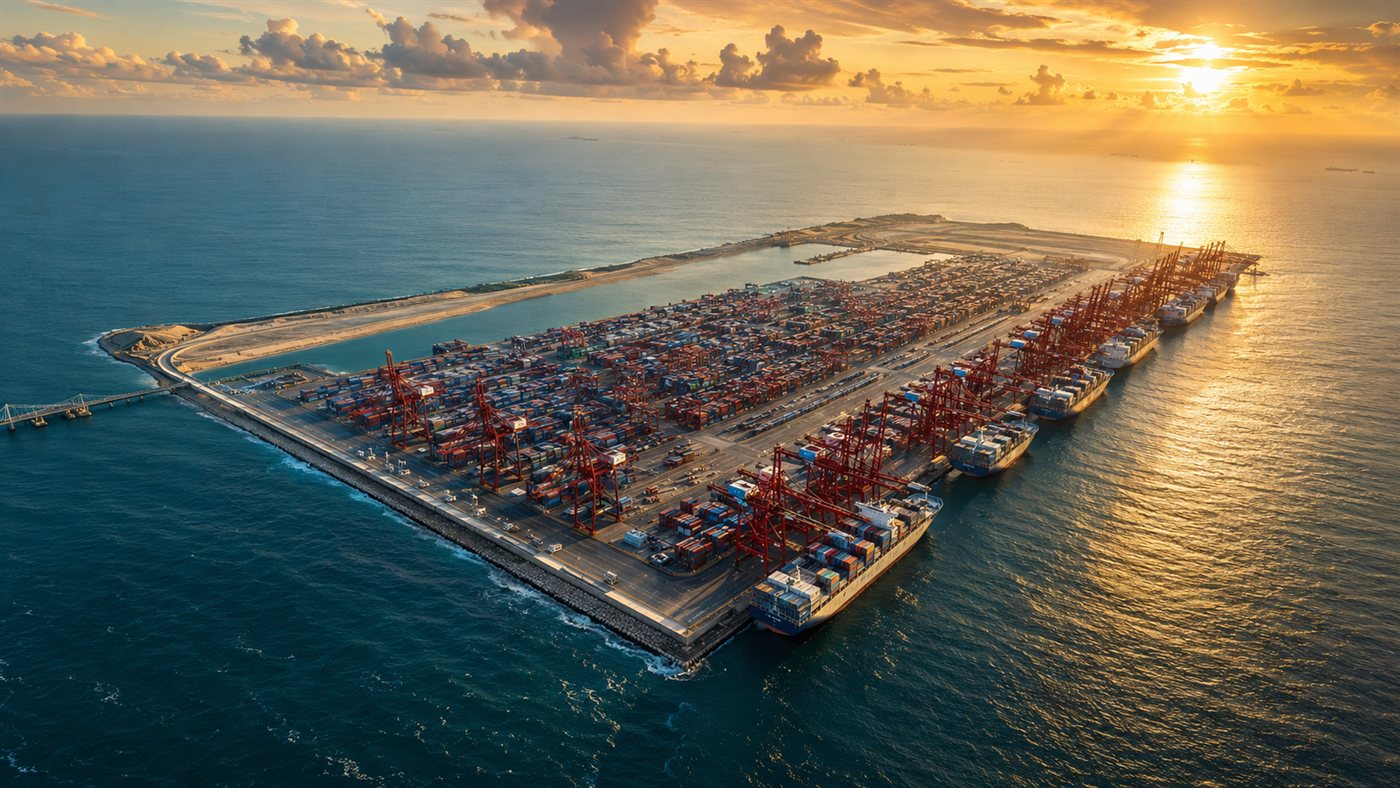
China Constructs Artificial Island 32 km Offshore for Yangshan Port, Connected to Shanghai by 32 km Bridge, Unloading 3,000 Containers in 20 Hours

-
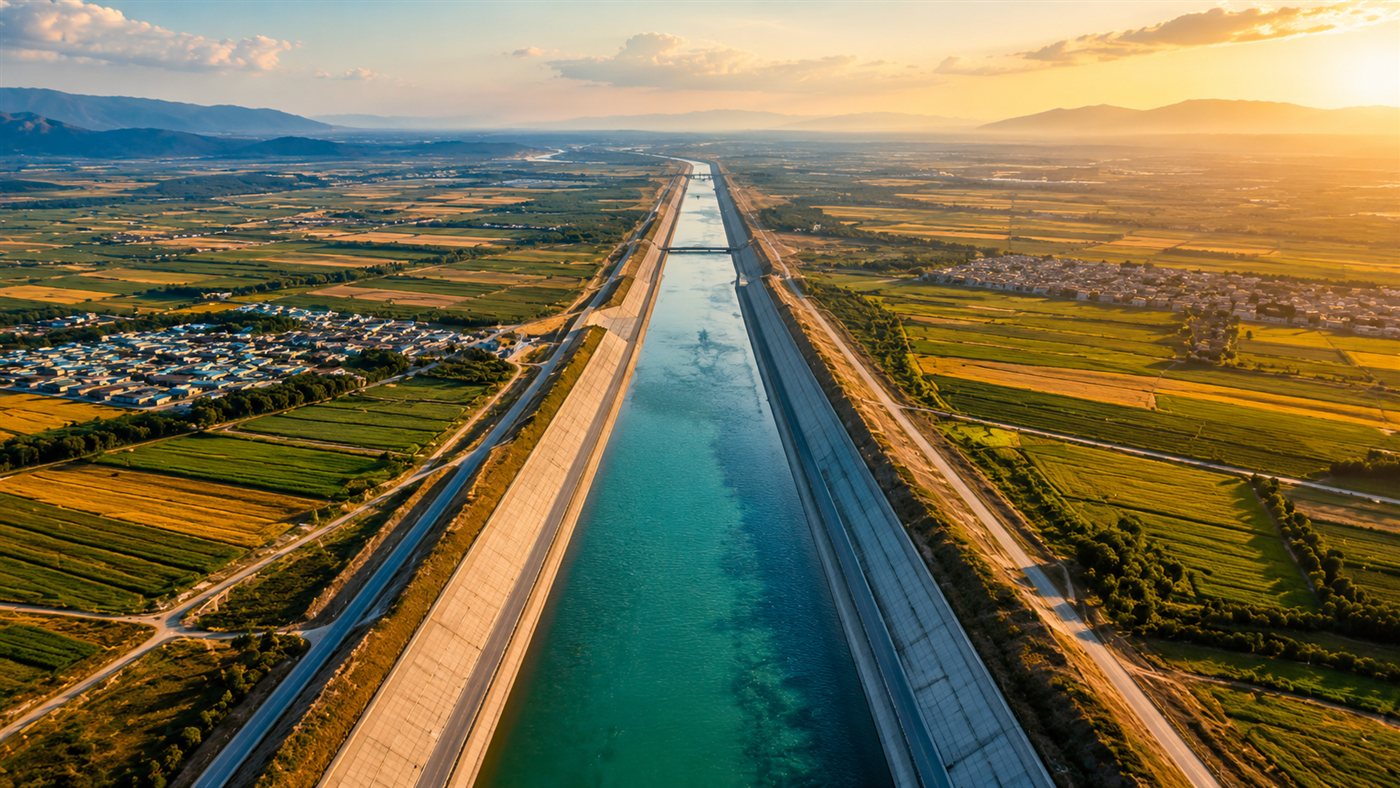
China’s $70 Billion River Diversion Project, the World’s Largest, Moves 44.8 Billion Cubic Meters Annually, Crosses Under the Yellow River, and Displaced 330,000 People
-
Indian Driver Spends 14 Years Digging 10-Meter Tunnel Through Mountain to Connect Isolated Village to the World

-
72 m² Prefabricated Home Arrives in a Container and Assembles in About an Hour


Hugo Fonseca explained that the project for submarine cable landing zones was presented to the Ministry of Communications last year. The state provided 13 priority areas along the Potiguar coast, and at least one is already guaranteed, possibly in Natal or Areia Branca. The ambition of the state government is to secure two landing points: one in Natal and another in Areia Branca, connected by a section of the submarine cable that skirts the coast and integrates the East and West regions of the state.
The concentration in Ceará that worries the entire country
The dependence on Ceará as the entry point for practically all Brazilian internet is a risk that experts have pointed out for years. The northeastern state concentrates the arrival of dozens of international submarine cables that connect Brazil to Europe, Africa, and North America, but this concentration means that an accident, sabotage, or natural disaster in Fortaleza could disrupt the digital communication of the entire country.
The geographical diversification of submarine cable landing points is a matter of national security. Rio Grande do Norte, with its privileged geographical position at the closest point to the African continent and Europe, is a natural candidate to receive new cables. The installation of a submarine cable in Natal not only protects the system against failures concentrated in Ceará but opens an alternative route that can attract international telecommunications operators and cloud providers.
The R$ 1.8 billion supercomputer in Macaíba
The second component of the technological transformation of Rio Grande do Norte is the supercomputer that will be installed in the Augusto Severo Science and Technology Park, in the city of Macaíba. The equipment is part of the Brazilian Artificial Intelligence Plan and represents an investment of R$ 1.8 billion, with federal resources and a counterpart from the state government.
The supercomputer will be one of the two planned in the national plan, and its installation in Rio Grande do Norte reinforces the strategy to decentralize technology infrastructure in Brazil. The equipment can be used for research in artificial intelligence, climate simulations, genomic data processing, and industrial applications that require computational capacity that no conventional server offers. The proximity to the future submarine cable creates a complete ecosystem: data arrives via the sea’s fiber optics and is processed by the supercomputer on land.
The Potiguar industry that needs to digitize
Hugo Fonseca revealed a fact that explains the urgency of the investment: only 30% of the Rio Grande do Norte industry is digitized. The arrival of the submarine cable and the supercomputer is considered a necessary condition for the two main regions of the state, East and West, to be ready to receive investments from the electro-intensive industry, including data centers and high-performance computing centers that require direct connection with submarine cables.
The modernization of the Potiguar industry depends on high-speed, low-latency connection, something that only a submarine cable with local docking can offer. Without this infrastructure, the state remains dependent on Ceará for any intensive digital operation, which increases costs for data centers, increases latency, and reduces competitiveness compared to states that already have direct connection with international data routes.
Did you know that 90% of the Brazilian internet passes through a single state? Do you think the submarine cable and the supercomputer will transform Rio Grande do Norte into a technology hub, or is infrastructure alone not enough? Tell us in the comments.