






 Portuguese
  Spanish


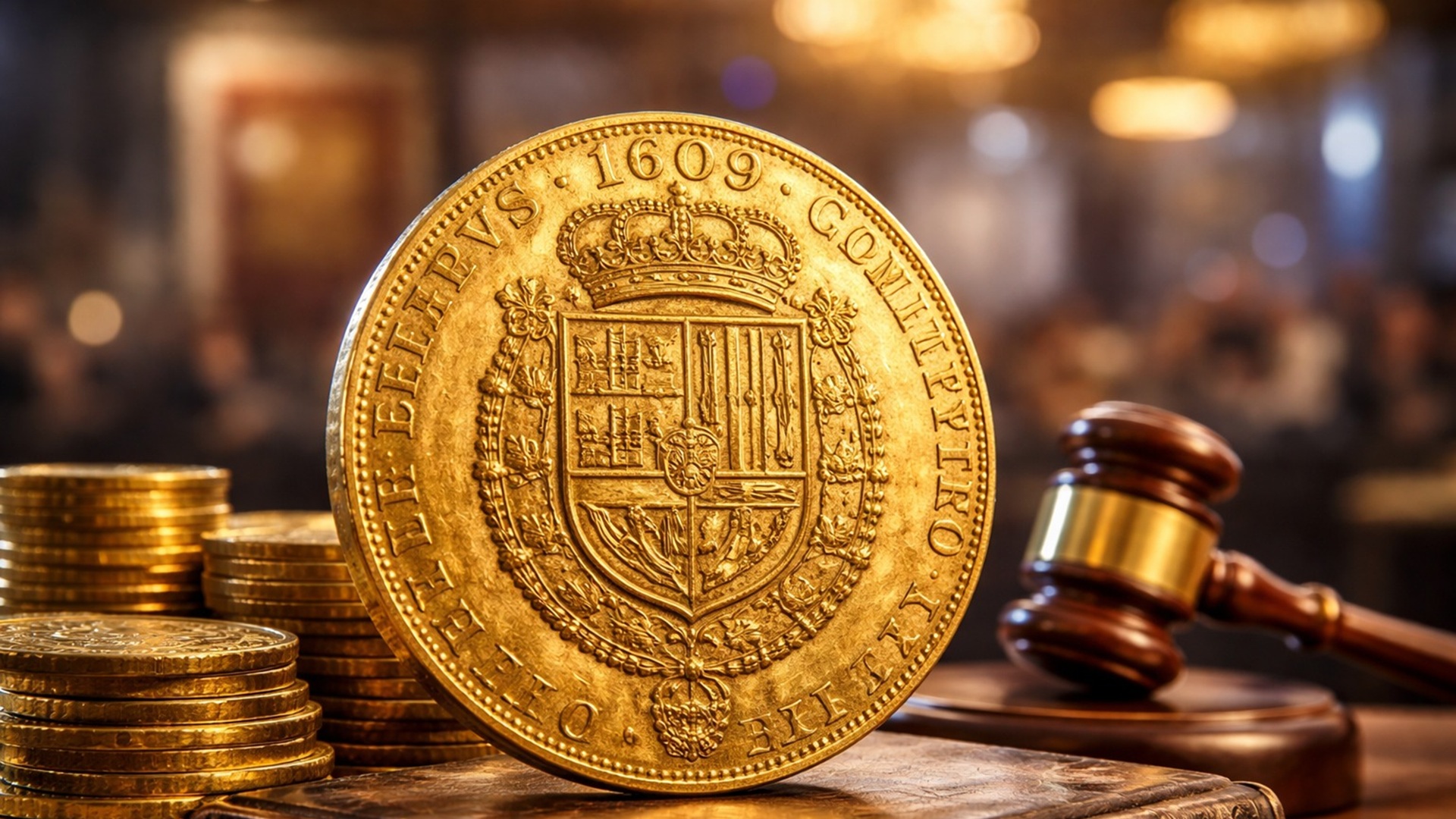


Sold for 2.8 Million Swiss Francs at Auction Held in Geneva, the Centén Segoviano Gold Coin, Struck in 1609 and Weighing 340 Grams, Established a New Historical Record in the European Numismatic Market by Surpassing Recent Sales of Rare Pieces
The Centén Segoviano, a gold coin minted in 1609 during the reign of Spanish King Philip III, was sold on November 24 for 2.8 million Swiss francs in Geneva, becoming the most expensive European coin ever traded at auction and establishing a new milestone in the numismatic market.
Auction in Geneva Establishes New European Record
The sale took place at an auction held in Geneva by the Numismatica Genevensis. The event offered one of the rarest known coins, considered extremely coveted in the international market. The initial price set for the lot was 2 million Swiss francs, a value surpassed during the bidding.
According to information released by TF1, the final result exceeded 3 million euros. The amount reflects the absolute rarity of the piece, described by the NGSA as the first known specimen of the Centén Segoviano, a decisive factor for the valuation recorded.
-
Brazil’s 2026 Tax Refund: Record 9.58 Million Filers in Largest Payout Ever, But a Key Detail on Priority Recipients Draws Nationwide Attention

-
Itaú Alters Hybrid Work Model, Increasing Office Days from 2028, Prompting Employees to Adjust to New Routine
-
Facing Labor Shortage, Japan Plans to Invest $34 Million to Attract Foreign Workers in Construction, Healthcare, Industry, and Commerce

-
Brazilian City Makes Remarkable Leap, Becomes 4th Wealthiest in the Country with GDP of R$ 134.1 Billion




Characteristics and Purpose of the Gold Coin
Minted in 1609, the coin weighs 340 grams of gold and was not intended for monetary circulation. It is a presentation piece, created to demonstrate the prestige and power of the Kingdom of Spain in the early 17th century, a period when the country was at the height of its political and economic influence.
The NGSA emphasizes that the Centén Segoviano served as an institutional symbol, not as a commercial instrument. This specific purpose, combined with the lack of other known specimens, contributed to the spectacular value achieved at the auction held in November.
Surpassing Recent Record in the Numismatic Market
With the sale for 2.8 million Swiss francs, the Centén Segoviano surpassed the previous European record. Just a few days earlier, a 100 ducat coin featuring the image of Ferdinand III of Habsburg had been auctioned for 1.95 million Swiss francs, thus establishing the highest value on the continent.
The new mark repositions the level of prices for historical European coins and highlights the growing appreciation for pieces considered unique. The identities of the buyer and seller remain confidential, as reported by the auction organizers.
Historical Context and Impact of the Record Sale
The coin is considered a testament to an era marked by the significant influx of gold and silver from the New World to Spain. This historical context reinforces the symbolic meaning of the Centén Segoviano as a representation of Spanish economic power in the early 17th century.
With a selling price close to 3 million euros, the NGSA states that the piece becomes the most expensive European coin in history at public auctions. The result consolidates the event as one of the most relevant in the recent international numismatic market.








