






 Portuguese
  Spanish


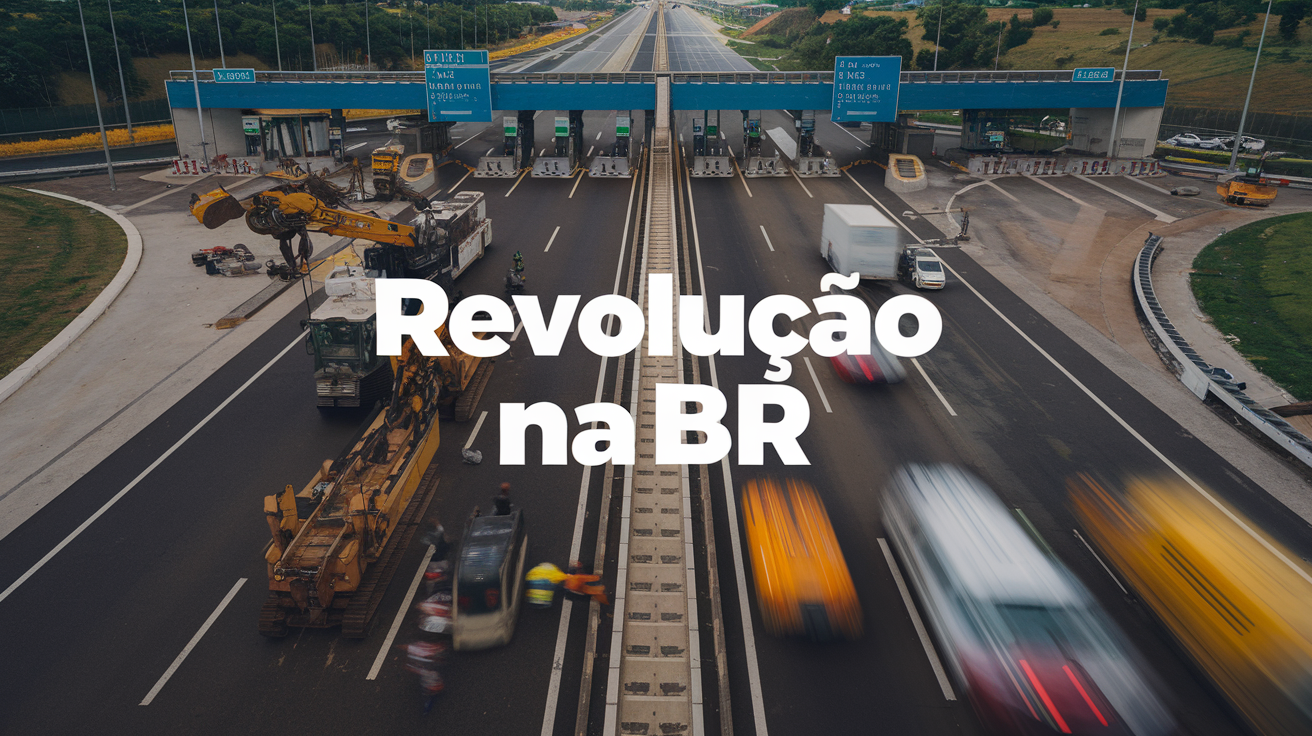


With R$ 7 Billion Invested, BR-101 Will Undergo the Biggest Transformation in Its History. There Will Be 221 km Duplicated, More Safety, and Thousands of Jobs. However, Higher Tolls Are Already Raising Concerns. Will Progress Come at a High Cost for Drivers? Discover All the Details of This Historic Project That Promises to Change the Infrastructure of Espírito Santo.
Get ready for one of the biggest transformations ever seen on a Brazilian highway.
With a billion-dollar investment and the promise of economic development, the duplication of BR-101 in Espírito Santo comes with high expectations.
However, alongside progress, there is a growing concern: the financial impact that this modernization will bring to drivers.
-
Sagrada Família Becomes World’s Tallest Church at 172.5 Meters, Surpassing German Church with Gaudí’s Design

-
Major Brazilian Supermarkets, Including Carrefour and Assaí, May Close Earlier to Prevent Price Increases

-
Inspired by São Paulo’s Vila Reencontro, Rio Grande do Sul invests $8 million to provide 18 m² micro-homes for homeless families in four cities, offering amenities and up to two years of housing.
-
Brazil’s Piauí State Invests Over $2 Million in Road Restoration and Urban Asphalt Projects


The project, which promises to enhance road infrastructure and create thousands of jobs, will also cause a considerable increase in toll prices, raising intense debate about accessibility and economic fairness. Will the benefits outweigh the costs?
The Billion-Dollar Project and Its Impacts
The duplication project for BR-101 plans to modernize 221 kilometers of the highway, with a total investment of R$ 7.07 billion.
The work will be carried out by Eco101, the concessionaire responsible for the road, which will have its concession contract extended by another 10 years.
According to the Federal Court of Accounts (TCU), the project’s main objective is to improve the safety and efficiency of the highway, which is one of the busiest and most important in the country.
In the first three years of construction, it is expected that 96 km will be duplicated.
In addition, the plan includes the construction of two new bypasses in Ibiraçu and Fundão, in Espírito Santo, totaling more than 15 km of new lanes.
These bypasses are expected to ease traffic, reduce travel time, and improve safety for both drivers and pedestrians.
However, the initially planned Linhares bypass has been excluded from the project due to lack of environmental licensing.
Minister Walton Alencar Rodrigues from TCU emphasized that there is a possibility for the future inclusion of the Linhares bypass, which could extend Eco101’s contract to up to 40 years.
Toll Increases: Who Will Foot the Bill?
One of the main controversies surrounding the duplication of BR-101 is the significant increase in toll rates.
Starting from the sixth month of construction, the toll on single lanes will rise from R$ 0.05525 to R$ 0.071 per kilometer traveled.
With the completion of the duplication and the reclassification to double lanes, the rate could reach R$ 0.156 per kilometer traveled by 2034.
This means that for every 100 km traveled on duplicated lanes, drivers could pay up to R$ 16.55.
This increase is particularly concerning for truck drivers and workers who rely on the highway daily for freight transport or routine commutes.
According to infrastructure experts, the adopted model could create an excessive dependence on the private sector for highway maintenance, while burdening low-income drivers.
Critics also point out that the increase in tolls may make access to the highway unaffordable for some groups, especially truck drivers.
On the other hand, Eco101 argues that the adjustment in toll rates is necessary to enable investments and ensure the quality of the infrastructure.
Jobs and Economic Development with the Highway
Despite the criticisms, the duplication of BR-101 brings promises of a positive impact on the job market and local economy.
The project envisions the creation of 102,464 jobs, divided as follows:
- 34,000 direct jobs;
- 16,000 indirect jobs;
- 52,000 jobs generated by indirect economic impacts.
According to TCU, these jobs will contribute to the development of the cities near the highway, stimulating sectors such as commerce and services.
Furthermore, the modernization of the highway promises to reduce accident rates, increase safety, and expedite freight transport, aspects that could benefit both the regional and national economies.
For Eco101, the financial return will come not only from tolls but also from greater operational efficiency of the highway.
The concessionaire highlights that the improvements will help reduce maintenance and accident costs, as well as optimize travel time for users.
Controversies and Criticisms of the Adopted Model
Although the modernization of BR-101 is celebrated by many, the project is not without criticisms.
Experts question the extension of Eco101’s concession contract, which has gone from 25 years to up to 40 years, should the Linhares bypass be included in the future.
Critics argue that this extension prioritizes the interests of the concessionaire at the expense of drivers, who will face higher tolls until the 2040s.
Additionally, there are concerns about the concession model, which concentrates control of essential highways in the hands of the private sector.
Despite this, Eco101 defends that the contract extension is necessary to guarantee that the works are completed on time and that the promised benefits are delivered to the public.
The Future of BR-101
With a billion-dollar investment and promises of modernization, BR-101 is about to enter a new era of highway infrastructure.
The duplication and improvements on the highway could transform mobility in Espírito Santo, bringing significant economic and social benefits.
However, the costs associated with these changes raise questions about who will truly benefit.
As the project moves forward, drivers and experts continue to debate whether the price of progress will be affordable for all.
Will drivers be willing to pay more for a safer and more modern road? Or will the elevated tolls limit access for part of the population to BR-101?



E a BR 153 no interior do estado de São Paulo?
Onde início?
Onde terá fim?
Qual o valor do pedágio hoje?
Multiplicação por 100 é uma conta “MUITO” difícil…. Mas um dos vários problemas dos textos do clickpetroleogas. Ninguém revisa o texto?