






 Portuguese
  Spanish


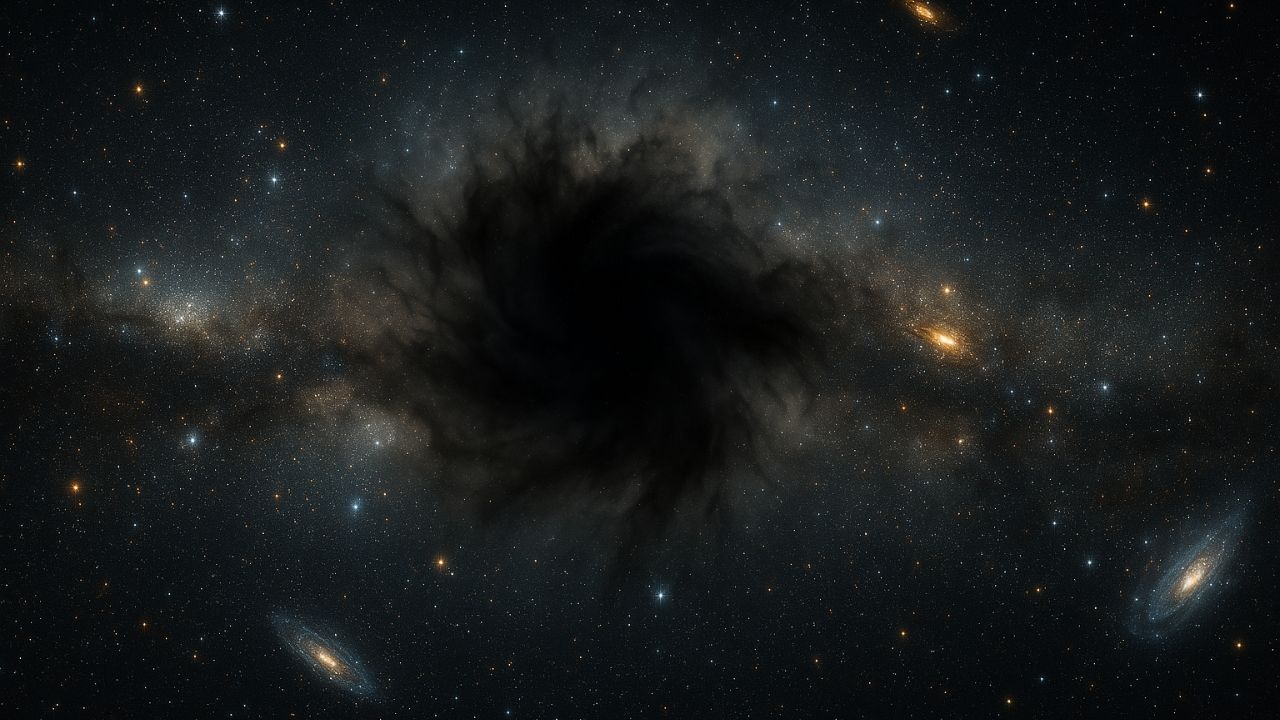

New Data From The Largest 3D Map Of The Cosmos Suggest That The Force Accelerating The Expansion Of The Universe May Not Be Constant As Previously Thought
Scientists from the international collaboration of the Dark Energy Spectroscopic Instrument (DESI) have found evidence that dark energy, responsible for about 70% of the universe’s energy content, may not be a constant force as previously believed. The analysis of data from over 15 million galaxies revealed signs that this mysterious force is weakening over time, which could completely change the standard model of how the universe expands. The revelation was reported by CNN Brazil based on the latest results from DESI, in a discovery considered one of the most impactful in modern cosmology.
The Mysterious Force That Shapes The Universe
Dark energy is an invisible force that is believed to be accelerating the expansion of the universe. Discovered in the 1990s, it was incorporated into the standard cosmological model as a “cosmological constant,” meaning it is unchanging in time and space. However, new data collected by DESI suggest that this acceleration may be decreasing, and that dark energy may be more dynamic and complex than previously thought.
The DESI And Why Its Data Is So Important For Understanding Dark Energy
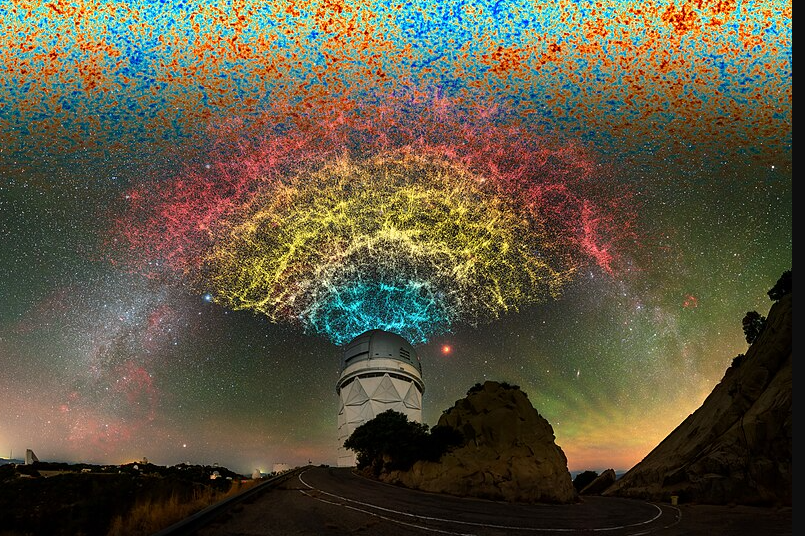
Installed at the Mayall Telescope in Arizona (USA), DESI is one of the most powerful tools in modern astronomy. With 5,000 optical fibers, it can simultaneously observe thousands of galaxies and construct the largest 3D map of the universe ever created. Since 2020, DESI has been measuring the light from galaxies and quasars, allowing scientists to view the cosmos as it was at different moments in the past, up to 11 billion years ago. Recent analysis, coordinated by Mustapha Ishak-Boushaki and other scientists, revealed patterns that indicate a possible weakening of dark energy.
-
China Develops Custom 140-Ton Electric Mining Truck with 770 kWh Swappable Battery, Deploys 290 Units in Xinjiang’s Largest Zinc Mine

-
Meta to Launch Arena, a New Prediction App Targeting 3.56 Billion Users, Competing with Polymarket and Kalshi

-
Scientist Challenges Famous Human Evolution Theory, Argues Homo Sapiens Evolved Gradually Over Thousands of Years
-
15-Year-Old American Builds Ocean Generator with PVC Pipe and 3D-Printed Propeller for $12, Wins National Prize, Presents at White House, and Makes Forbes 30 Under 30 List




Growing Evidence Challenges The Current Cosmological Model
The data collected by DESI has been cross-referenced with other measurements, such as supernovae, cosmic microwave background, and gravitational effects from distant galaxies. The cross-referencing of this evidence points to a slight, yet persistent, discrepancy between the expected behavior of dark energy and what is being observed. “If this continues, the accelerated expansion of the universe may stop or even reverse in the future,” explained Ishak-Boushaki to CNN Brazil. Even though these scenarios are billions of years in the future, the immediate implication is clear: it may be necessary to rewrite the fundamentals of cosmological physics.
What Comes Next In The Research On Dark Energy
There is still not enough data to confirm a revolution in the understanding of dark energy, but the coming years should be decisive. New projects such as the ESA’s Euclid telescope, NASA’s Nancy Grace Roman, and Spec-S5 (which promises to map up to 10 times more galaxies than DESI) are expected to provide answers. According to scientist Jason Rhodes from NASA’s Jet Propulsion Laboratory, DESI’s data suggests that “a more complex model of dark energy is preferred,” which opens the door to a new era of cosmology based on still-unknown physical laws.
The confirmation that dark energy evolves over time would mean a drastic change in the way we understand the universe, from its origin to its ultimate fate. Models that once predicted infinite expansion now consider possibilities such as deceleration, stagnation, and even collapse of the universe. As Michael Levi, director of DESI, stated, “whatever the nature of dark energy, it will shape the future of our universe.”





