





 Portuguese
  English
  Spanish
  4 min of reading
  0 comments


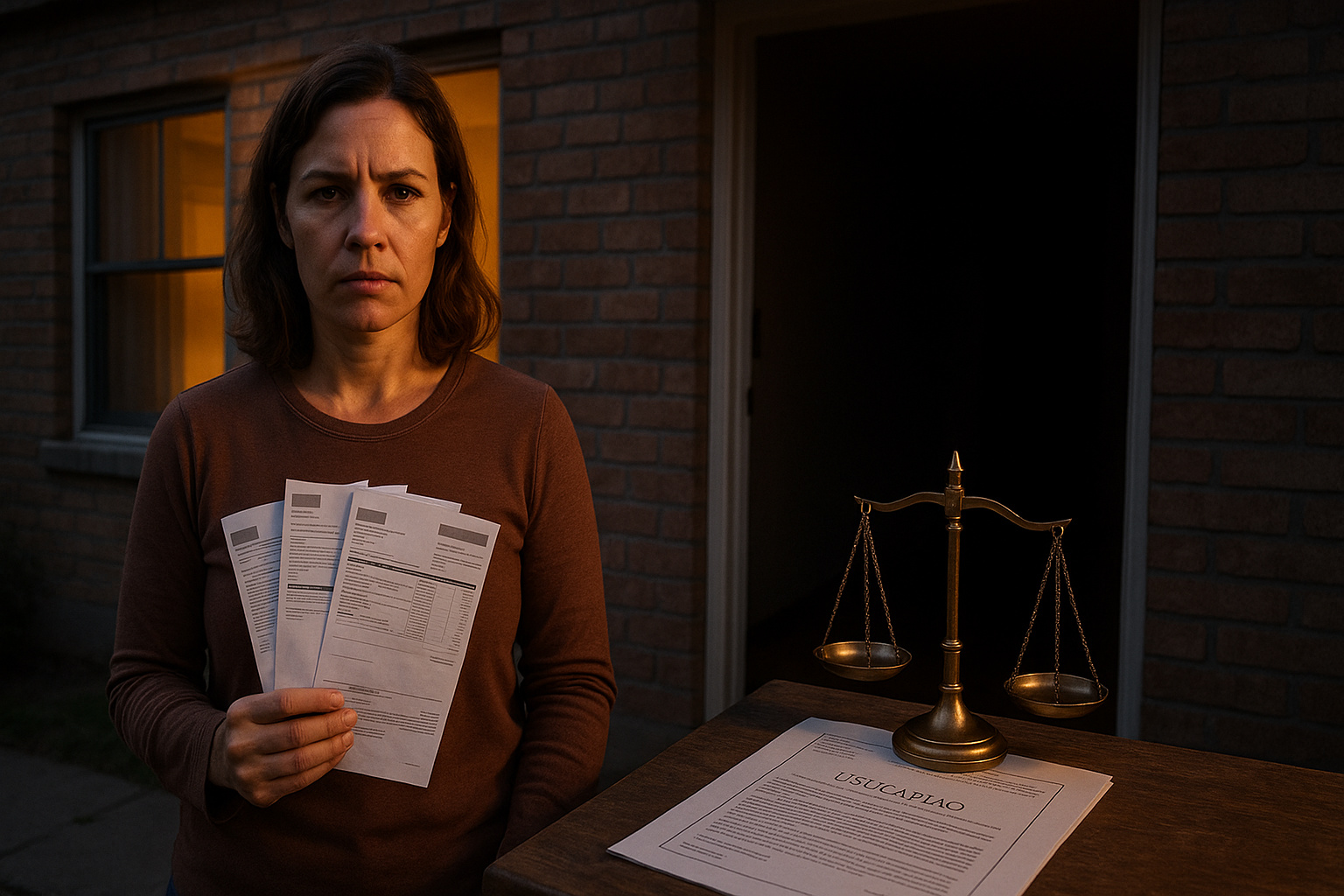
Brazilian Courts Have Recognized Family Usucaption for Spouses Who Remain Alone in the Property After Separation, Paying IPTU, Water, and Electricity, According to Article 1.240-A of the Civil Code.
The number of decisions recognizing the right to usucaption for those who remain alone in a property after marital separation has been increasing in Brazilian courts. The thesis, once seen as controversial, is now increasingly accepted by judges and is based on the Law No. 12.424/2011, which added Article 1.240-A to the Civil Code, creating the so-called family usucaption.
According to the law, anyone who lives alone in the property for more than two years after the departure of the ex-spouse, and who continues to pay IPTU, water, electricity, and other expenses, can request full ownership of the property, provided it is up to 250 m² and used as a regular residence.
In simple terms, the Justice recognizes that those who maintain and preserve the property have the right to become the legitimate owner, even if the other ex-partner is still listed on the deed. This understanding is reinforced by the social function of property, a principle set forth in Article 5 of the Federal Constitution.
-
Justice condemns truck driver to pay R$ 87,000 after leaving truck with soybean cargo unattended at a gas station for two days: insurance company refused to cover and the loss fell entirely on the driver.

-
Considered Trump’s last ally in Europe, Giorgia Meloni has just suspended a military agreement of over 20 years with Israel and rejected Italy’s entry into the blockade of Hormuz.
-
Little-known law allows pregnant women to receive a pension even before the baby is born, without a DNA test, and the amount can cover exams, food, and medical expenses throughout the entire pregnancy, exceeding thousands of reais per month and potentially being converted into a pension after birth.
-
Those who earn up to R$ 5,000 no longer pay Income Tax since January 2026, and retirees over 65 years old are exempt up to R$ 6,903 in a change that benefits 16 million Brazilians.

When Family Usucaption Applies
The courts make it clear that the measure provided in the Article 1.240-A of the Civil Code, introduced by Law No. 12.424/2011, is not automatic: the interested spouse must prove that the other has definitively left the home, that the property is their sole residence, and that they do not own other assets in their name.
Recent cases decided by state courts, such as the Court of Justice of Minas Gerais (TJMG) and the Court of Justice of Paraná (TJPR), recognize this right when there is evidence of prolonged abandonment and continuous payment of expenses.

In one of these cases, a woman obtained judicial recognition of full ownership of the house where she had lived alone for more than five years, after her ex-husband abandoned the home and never contributed financially again. The court emphasized that prolonged possession, care for the property, and payment of taxes demonstrated the so-called “animus domini” — that is, the intention to act as the true owner of the asset.
Understanding of Lawyers and Specialists
According to lawyer Leandro Mello, a specialist in Family Law and Successions, this type of decision reinforces the social function of housing and the recognition of those who effectively exercise possession:
“The Justice has understood that the property needs to serve a social purpose. If the ex-partner abandoned the home and the other maintained the property, paid the bills, and took care of it, it is fair that this right is legally recognized,” explains the specialist.
He emphasizes that the process does not dispense with documentary evidence. “It is essential to keep utility bills, IPTU, and bank statements, as well as witnesses who can confirm abandonment and exclusive possession,” he advises.
Social Function of Property and Warning to Ex-Couples
These decisions also serve as a warning for couples in separation: leaving the home and abandoning the property can mean losing the right to half of it in the future. The law understands that those who stop exercising possession and do not participate in expenses demonstrate disinterest, which allows the other, over time and upon meeting the requirements, to request recognition of full ownership.

Family usucaption is not just a technical rule — it is a way to ensure housing and social justice for those who truly maintained the asset. While one side abandons, the other supports — and it is this behavior that the law rewards.
What Changes in Practice
In practice, these decisions indicate that those who pay for the property alone and live in it for more than two years after abandonment can regularize the situation through a family usucaption action, guaranteeing full ownership.
The ex-spouse who abandons the home and stops contributing may lose the right to share, even if their name is still on the deed.









-

Uma pessoa reagiu a isso.