






 Portuguese
  Spanish


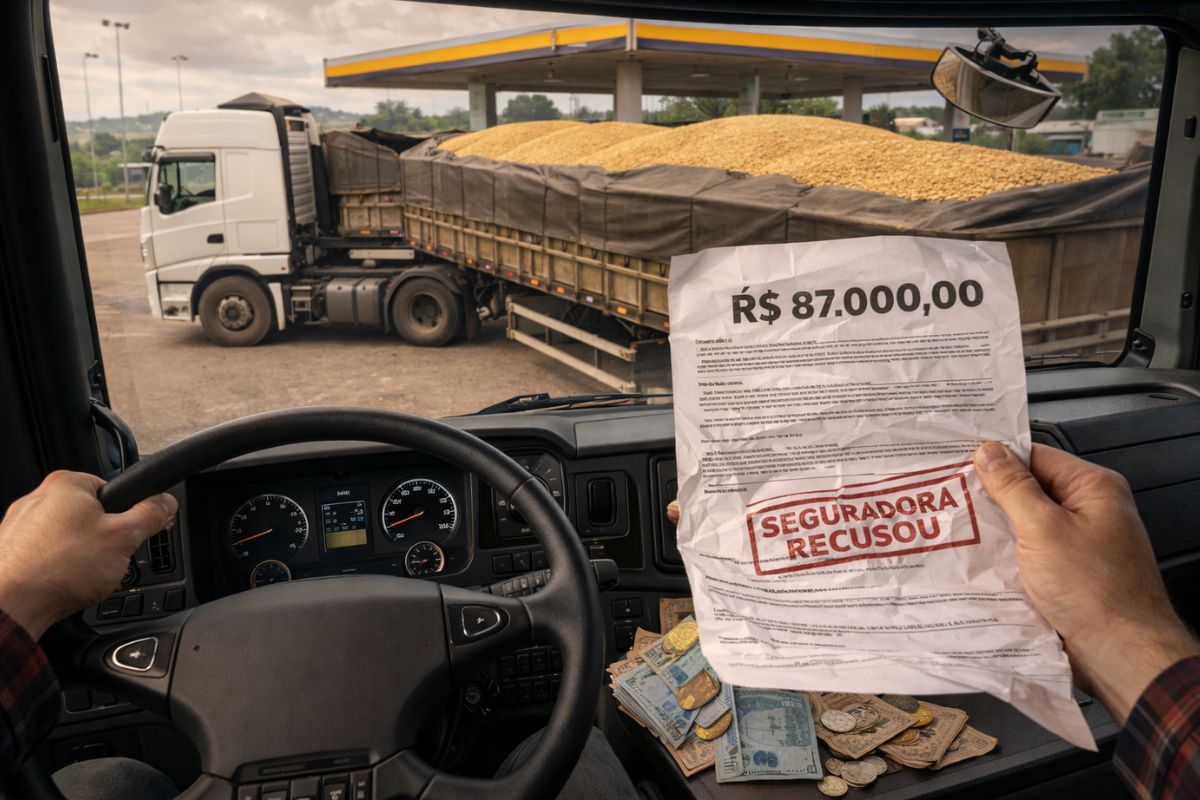

A driver hired to take soy from Maracaju, in Mato Grosso do Sul, to the Port of Paranaguá, in Paraná, parked the loaded truck at a gas station in Campo Grande, traveled to his city, and returned two days later to discover that the vehicle and the load had been stolen.
The incident occurred in March 2022, but the court decision was issued now in April 2026. The driver was ordered to reimburse R$ 87,600 to the transport company, plus legal costs and attorney fees. The company’s insurer refused to pay the compensation, arguing that there was negligence on the part of the driver. Without insurance coverage and without the load, the entire loss fell on the one who was supposed to make the delivery.
The judge understood that the driver had a legal obligation to ensure that the load arrived at its destination safely. By leaving the loaded vehicle in a public place, without any type of protection or supervision, he directly caused the theft. The owner of the truck was not held responsible, as he had no involvement in the transport or the incident.
Why did the insurer refuse to pay and the driver ended up with the full bill?
The cargo insurance contract provides coverage against theft and robbery, but not against negligence of the carrier.
-
Brazil Approves Proposal to Cap Vehicle Tax at 1% of Car Value

-
Brazilian Senate Approves Bill to Automate Child Support Payments Directly from Debtors’ Accounts

-
Brazilian Congress Advances Bill to Ensure Full Pension Benefits for Families Receiving Reduced INSS Death Benefits
-
Unusual Traffic Signs in Brazil: Wheelbarrow Ban, Crosswind Warning, and Customs Stop


When the driver parks the loaded truck, travels to another city, and leaves the vehicle unattended for two days, the insurer interprets this as voluntary abandonment of the cargo. In this view, the incident was not caused by an unpredictable event, but rather by a decision made by the driver himself.
Since 2023, Law 14.599 has made it mandatory to contract three types of insurance for road cargo transport in Brazil: RCTR-C (civil liability of the carrier), RC-DC (disappearance of cargo), and RC-V (civil liability of the vehicle).
Even with the mandatory requirement, coverage does not apply when the loss results from the driver’s fault. It is this detail that turned R$ 87,000 in business loss into the driver’s personal debt.
What is the size of the theft and robbery problem in Brazil?
Brazil recorded 8,570 cargo thefts in 2025, a decrease of 16.7% compared to 2024, according to a survey by NTC&Logística.
Even with the reduction, the estimated direct loss reached R$ 900 million, which could exceed R$ 1 billion when indirect costs such as insurance, rerouting, and delivery delays are added. In 2024, the number was even worse: 10,478 occurrences and R$ 1.2 billion in losses, according to Agência Brasil.
The Southeast accounts for 86.8% of the cases, with Rio de Janeiro and São Paulo as epicenters. In Rio alone, there were 3,114 occurrences in 2025, an average of 8 trucks stolen per day, according to Firjan.
Companies in the sector spend an average of 14% of their revenue on theft prevention, including tracking, blockers, armor, escort, and heavy insurance.
In March 2026, the government enacted Law No. 15,358, which establishes the Legal Framework for Combating Organized Crime and expands punishment mechanisms for receiving stolen cargo.
What changes for the independent truck driver after this decision?
The case in Campo Grande does not create automatic jurisprudence but reinforces a principle already present in the Civil Code: those who transport have the duty of custody of the cargo.
If the independent driver accepts the freight, they assume the responsibility of delivering the goods to the destination. Any deviation, unjustified stop, or abandonment of the vehicle can be interpreted by the Justice system as negligence, and the bill will fall on the driver’s personal account.
For the truck driver traveling across Brazil, the message is clear. Parking a loaded truck and leaving it unattended can cost the equivalent of months of work.
The mandatory insurance does not cover decisions made by the driver themselves. And the Justice system, as shown in this case, does not forgive those who abandon the cargo.
And you, who are a truck driver or work in transportation, have you ever faced a similar situation on the road? Do you think the driver should have shared the blame with the carrier, or was the decision fair? Share your thoughts.








