Portuguese
  Spanish


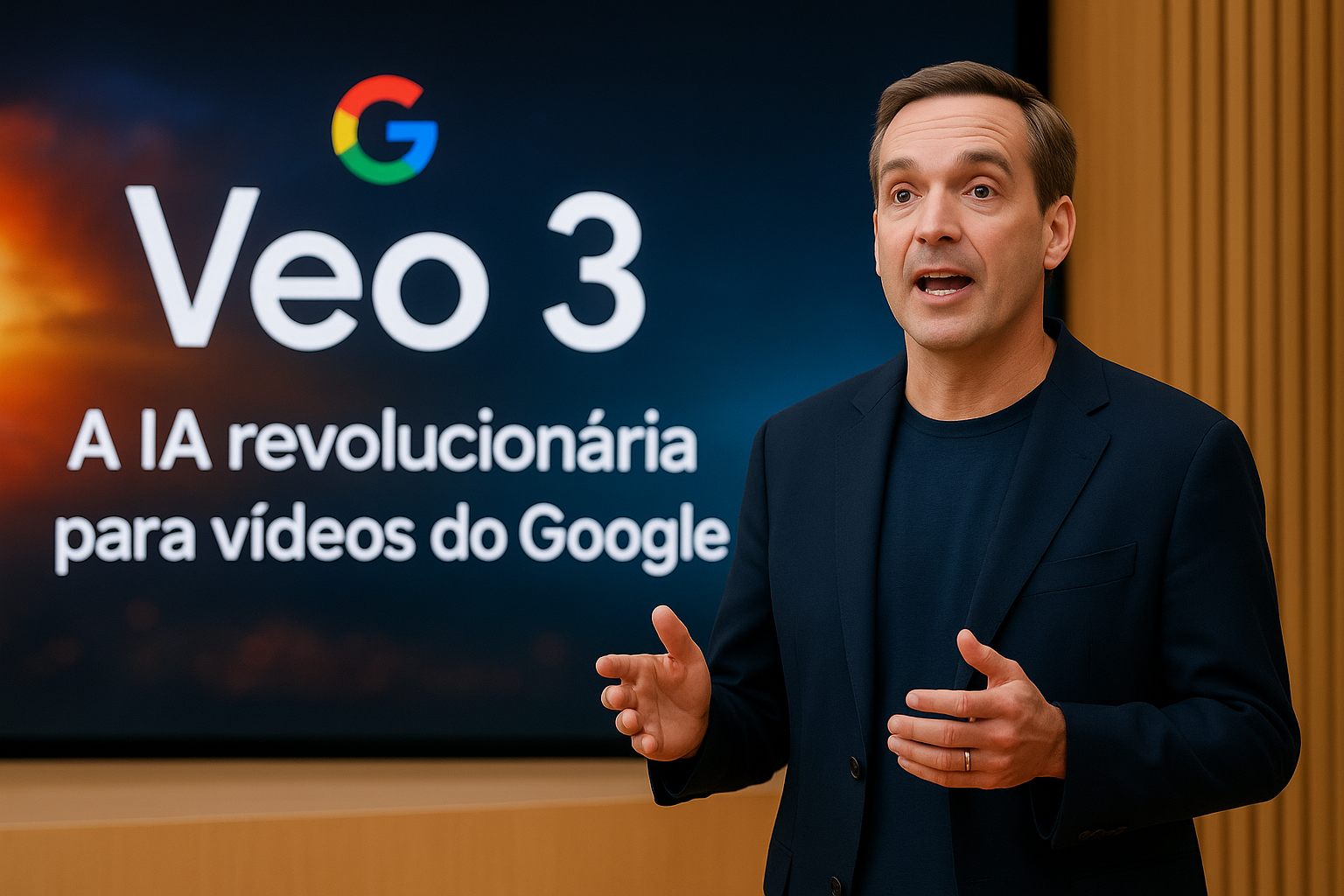

New Artificial Intelligence Transforms Text Descriptions into 4K Videos with Integrated Audio and Animates the Global Audiovisual Sector
Google recently announced its most powerful artificial intelligence for video creation.
Called Veo 3, the new system is capable of transforming text commands into videos with 4K resolution and native sound, which includes voices, soundtracks, and effects.
The tool was introduced to the public during the Google I/O event on May 20, 2025, and has since been celebrated by professionals in film, marketing, and education.
Developed by the DeepMind team, the company’s AI division, the model represents a new milestone in automated audiovisual creation.
-
World’s Largest Particle Accelerator Begins Four-Year Hiatus for Magnet Overhaul, Aiming to Hunt Dark Matter by 2030

-
“Sahara Dust Turns Rain Red, Startling Residents Across Europe”
-
Stanford Scientists Develop 20-Cent Paper Centrifuge Inspired by Ancient Toy, Spins at 125,000 RPM Without Electricity, Separates Plasma in 1.5 Minutes, Aiding Diagnostics in Remote Areas

-
World’s Largest Vaccine Manufacturer, Immunizing Two-Thirds of Global Infants, Originated in a Pune Horse Farm





Model Combines Image and Sound for Impressive Results
The difference of Veo 3 lies in its ability to generate complete videos with image and sound synchronized, without the need for post-editing.
According to Google, the AI understands complex natural language commands.
This allows any user to describe what they want to see and hear, and the platform delivers a realistic visual result, with smooth camera movements and cinematic settings.
The technology also recognizes visual styles, tones of voice, emotions, and even background tracks, delivering professionally-looking productions in seconds.


Flow: The Platform Integrating Veo 3 for Creators
Together with Veo 3, Google launched a new platform called Flow.
It allows creators to organize, edit, and develop videos with even more control and quality.
Flow integrates Veo, Imagen (image model), and Gemini (language model), allowing for a more comprehensive production workflow.
This way, users can build storyboards, define camera angles, control transitions, and ensure consistency between scenes.
The proposal is to facilitate the creation of longer, more complex projects, with an intuitive interface and collaborative features.
AI Available in the United States with Paid Plans
For now, access to Veo 3 is limited to users of the Google AI Pro and AI Ultra plans, available only in the United States.
The AI Ultra plan costs US$ 249.99 per month and offers full access, including unlimited videos with sound and high resolution.
The AI Pro plan includes only 10 video generations per month, serving as a trial phase for new users.
Despite this, Google has already indicated plans to expand the service to other countries in the coming months.
Market Celebrates Innovation, but Raises Ethical Debates
Since the presentation of Veo 3, the audiovisual community has been divided.
On one side, there is celebration among independent creators, educators, and marketing professionals, who see the tool as a means to democratize audiovisual production.
On the other hand, experts in ethics and copyright warn of the risks of automation in art and journalism.
There are concerns about authorship, use of synthetic images and voices, as well as worries about deepfakes and content manipulation.
For Google, the AI was developed with a focus on responsibility and includes embedded limits and filters to prevent abuse.
Veo 3 Marks the Beginning of a New Era in Audiovisual Creation
With the arrival of Veo 3, Google takes the lead in the race for creative artificial intelligences.
The tool combines natural language, automatic editing, sound design, and video rendering into a single platform.
Experts believe the technology can transform the video production market and open new possibilities in education, advertising, cinema, and digital communication.
There is no confirmed date for a global launch yet, but analysts indicate that expansion should occur by the end of 2025.
In the meantime, the first users in the United States are already testing the potential of the AI, which could usher in a new era of creativity assisted by artificial intelligence.