






 Portuguese
  Spanish



In The Coldest Inhabited Place On The Planet, Everyday Tasks Require Hours Of Preparation, Physical Strength, And Constant Adaptation To Survive Months Of Absolute Cold
The cold still dominates everything when the day begins in Yakutia, in the far east of Siberia. In the middle of winter, when temperatures plunge below −50 °C and, in historical records, have reached −71 °C, the routine of families follows its own rhythm, dictated not by the clock, but by the need to survive. There, simple activities like taking a bath, washing clothes, or preparing a hot meal become long processes, occupying practically the entire weekend.
These practices have been documented in recent audiovisual records produced by local residents, showing how daily life is organized around the extreme cold. More than cultural habits, they are survival strategies consolidated over decades, in one of the coldest permanently inhabited regions on Earth.
The Bath That Begins Hours Before And Only Happens Once A Week
Even before any drop of water touches the skin, the bath needs to be planned in advance. The houses in Yakutia do not have running water. Therefore, hygiene takes place in small wooden bathhouses, built outside the main residence.
-
Brazilian Innovator Uses 3D-Printed Device to Cool Two Rooms with One Air Conditioner
-
China Uses 432 Robots to Move a 7,500-Ton Historic Building in Shanghai, Preserving Architecture While Creating Space for Underground Center
-
Dutch Initiative Swaps Cigarette Butts for Food to Clean Streets, Combat Pollution, and Turn Waste into Recycled Furniture

-
Kenyan Company Recycles Over 10 Million Flip-Flops from Indian Ocean Beaches into Elephant and Giraffe Sculptures Sold for Up to $1,200

Heating is done by wood stoves, and the process can take up to five hours, consuming a large amount of wood. Only after this time does the sauna reach around 70 °C, the necessary temperature to make bathing possible in an environment where the exterior remains dozens of degrees below zero.
Given this effort, taking a bath once or twice a week becomes the rule, not the exception. While the sauna heats slowly, father and son take turns feeding the stove, as the fire cannot stop. For approximately nine months of the year, heating the house also requires that the wood stove be refueled twice or even three times a day.
Water Drawn From Snow And Laundry Done By Hand
While heat accumulates in the bathhouse, the water needed for the entire day is drawn directly from the snow. Buckets are filled in the garden, ensuring enough volume for both personal cleaning and laundry.
Every Sunday, mother and daughter take on the task of washing the family’s clothes by hand. The load is heavy, especially in houses with many residents. Still, the work needs to be done carefully, as clean clothes are essential to face the following week in such a hostile environment.
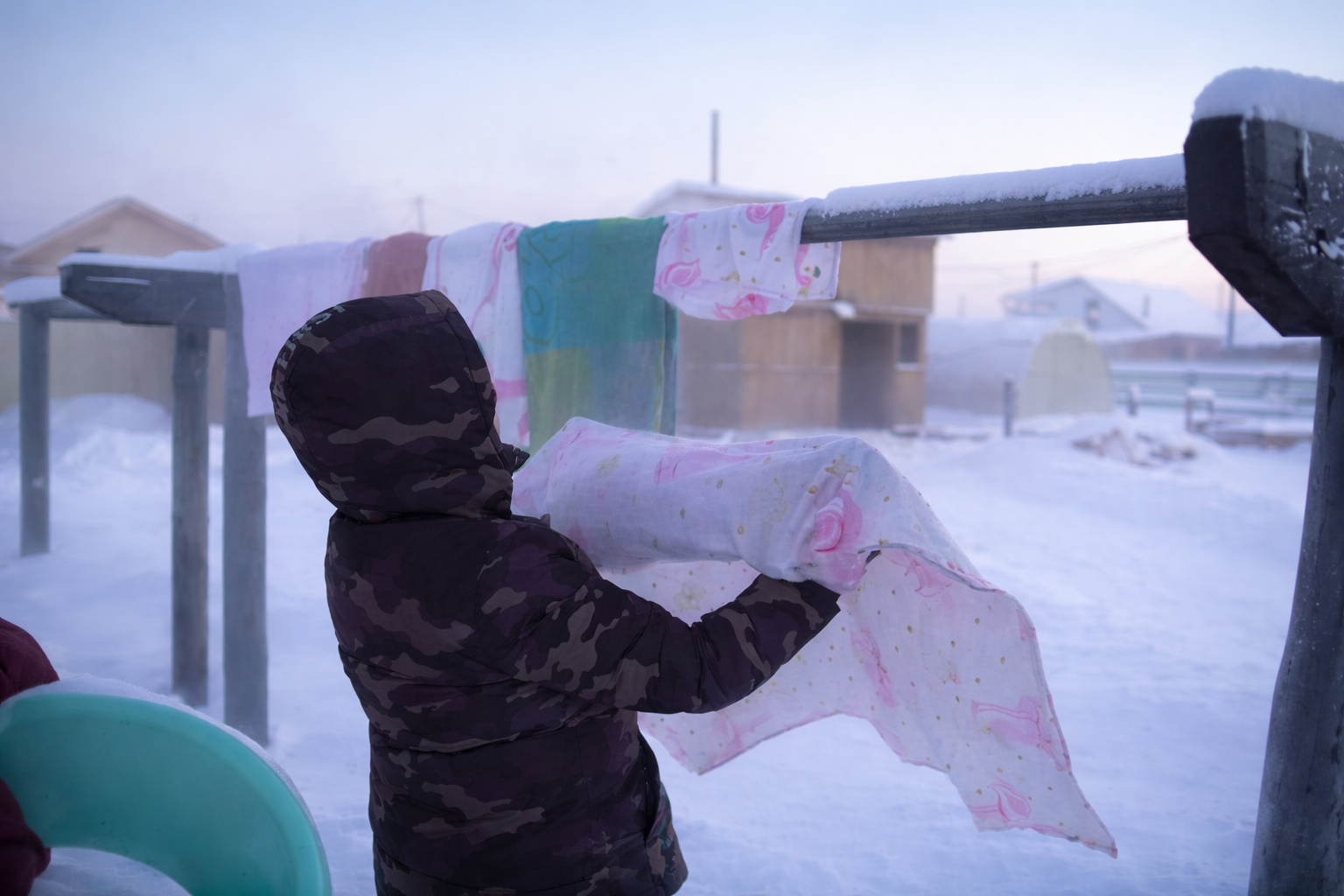
Even with the intense cold, the freshly washed items are hung outside, exposed to the cutting wind of the Siberian winter.

Freezing To Dry: The Traditional Method That Defies Logic
In a few minutes, wet clothes harden, becoming stiff as boards. However, the extremely dry air of Yakutia allows moisture to evaporate slowly, even with the fabrics frozen.
This traditional method not only dries the clothes but also helps eliminate remaining germs, leaving the pieces clean and refreshed. After some time, the frozen clothes are collected and brought inside, retaining a fresh scent of winter, considered ideal for sleeping.
External Toilets, Thermal Shock, And Health Beliefs
The routine also includes the use of external toilets, installed in small sheds over pits. Although it may seem uncomfortable, this solution is considered more hygienic, as internal systems would easily freeze and become impractical.
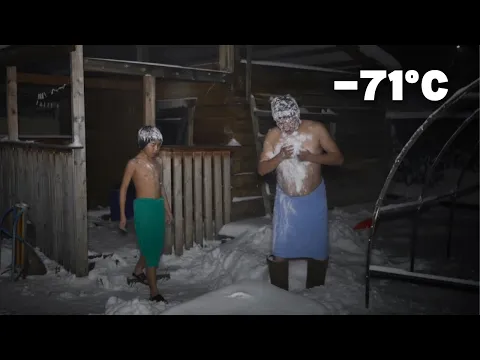
After a hot bath in the sauna, men go directly out into the freezing air, creating an intense thermal shock. According to local beliefs, this alternation between extreme heat and absolute cold improves circulation and revitalizes the body. Then, the final cleaning is done with melted snow water and soap, removing any residual sweat.
Kitchen, Natural Preservation, And The End Of Sunday
While the bath is taking place, the preparation of dinner begins in the kitchen. Meat-filled dumplings are shaped and then placed outside, where the cold acts as a natural freezer, ensuring preservation until it is time to cook.
The main meal is usually a hot soup, consumed daily in Yakutia. The dish is valued for helping with hydration and warming the body in a cold and dry climate.
At the end of Sunday, the family finally slows down. After hours of intense physical work, fire, ice, and silence mix together. Thus, another week begins to be faced in Yakutia, where surviving means turning the impossible into routine, and where every bath, every clean piece of clothing, and every hot meal are real achievements in the face of extreme cold.


