






 Portuguese
  Spanish


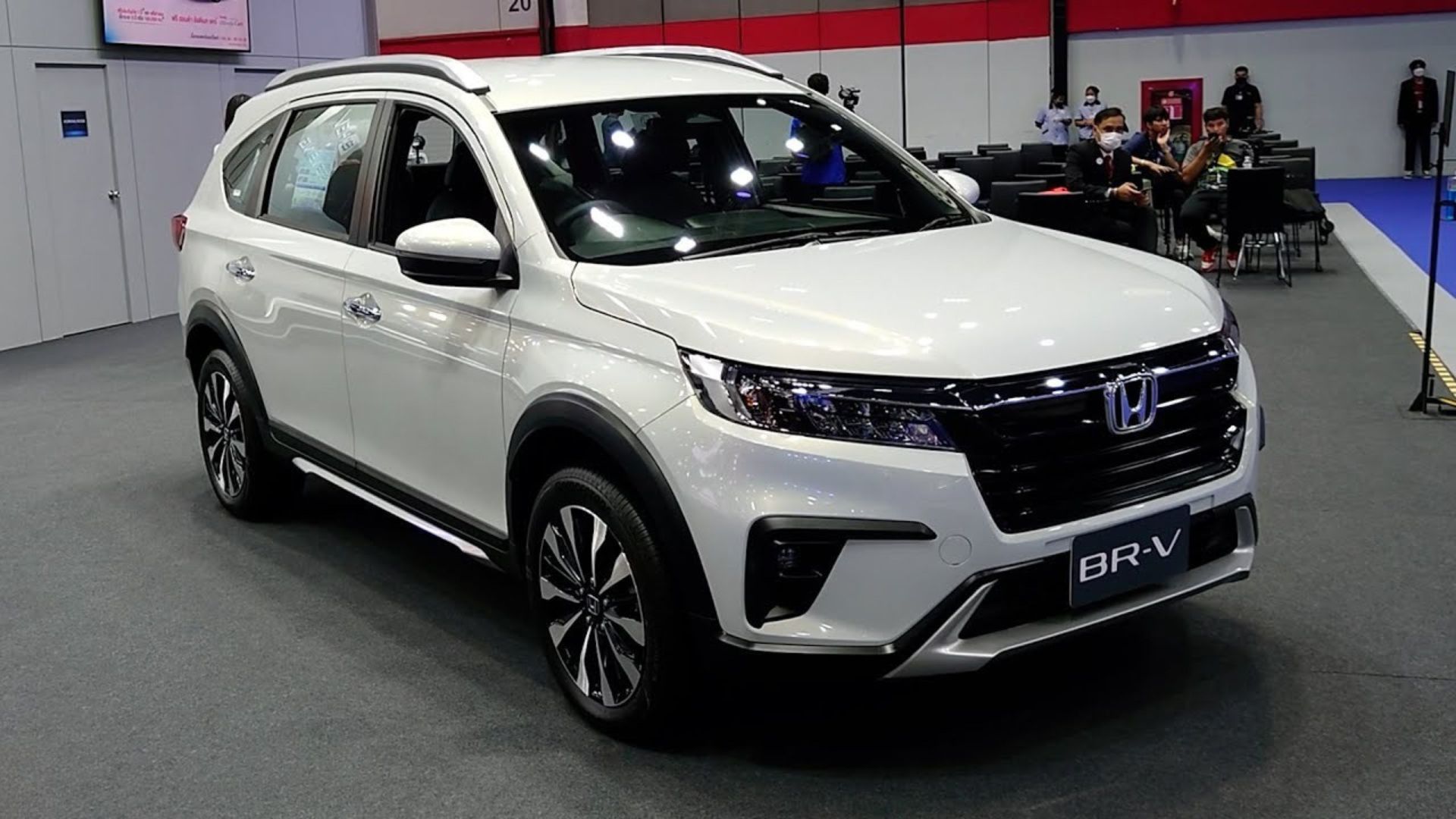

Honda BR-V sold in Indonesia has 7 seats, 1.5 engine, Honda Sensing, and a converted price below Spin, Aircross, and Tiggo 8 Pro.
Brazil has Honda WR-V, HR-V, City, Civic, ZR-V, Accord, and CR-V, but it does not have an affordable 7-seater option from the Japanese brand. This space exists in another Asian market: Indonesia, where the Honda BR-V N7X is sold as a compact family SUV with three rows of seats. The model starts at Rp 302.1 million on the official Honda Indonesia website, equivalent to about R$ 85.7 thousand by direct conversion of 1 real = 3,524.27 Indonesian rupiahs. This value does not include Brazilian taxes, shipping, importation, homologation, dealership margin, or adaptation to the national market.
Even the N7X Prestige with Honda Sensing CVT version, listed by local automotive base at Rp 381.2 million, is close to R$ 108.2 thousand in direct conversion. The number still appears below the Brazilian prices of Chevrolet Spin, Citroën Aircross, and Tiggo 8 Pro PHEV.
Honda BR-V sold in Indonesia occupies a space that Brazilian Honda left vacant in the family segment
The BR-V is a compact family SUV with 7 seats, elevated body, aspirated engine, front-wheel drive, and a proposal aimed at families needing more seats without moving to an expensive mid-size SUV. In Indonesia, it is sold in manual, CVT, and N7X Prestige with Honda Sensing configurations.
-
Sales of Brazil’s Cheapest Electric Car Halted Before First Deliveries: E-Motors Suspends Emova Easy Due to Import Tax Increase and Rising Freight Costs

-
Nissan Discontinues Qashqai SUV Amid Cost-Cutting, Chinese Competition, and Product Line Review

-
BYD Patents Revolutionary System Using Computer Vision to Detect Animals Under Cars Before Starting, Preventing Tragedies

-
Study Reveals Why Cars Are More Expensive to Produce and Buy in Brazil Compared to Mexico, Highlighting Taxes, Logistics, and Industrial Costs as Key Factors.



In Brazil, Honda does not currently offer an official BR-V in its car lineup. The Brazilian page lists WR-V, HR-V, City Hatchback, City Sedan, Civic Advanced Hybrid, ZR-V, Accord Advanced Hybrid, CR-V Advanced Hybrid, and Civic Type R, but does not include a compact family SUV with three rows.
While Brazilian consumers find few family options below R$ 130 thousand, Indonesia has a 7-seater Honda in a price range converted close to more expensive national compact cars.
1.5 i-VTEC engine with 121 hp and CVT transmission form the technical set of the family SUV
The mechanical set of the Indonesian BR-V uses a 1.5L DOHC i-VTEC engine, with 121 PS, equivalent to about 119 hp, and 145 Nm of torque. The transmission can be manual in the entry-level versions or CVT in the automatic configurations.
The N7X Prestige with Honda Sensing CVT version has a 1,498 cm³ engine, four cylinders, 16 valves, PGM-FI injection, maximum power at 6,600 rpm, and maximum torque at 4,300 rpm.
In terms of dimensions, the same version measures 4,490 mm in length, 1,780 mm in width, 1,685 mm in height, and 2,700 mm in wheelbase, in addition to 5 doors and capacity for 7 occupants.
Consumption above 23 km/l came from a road test by Honda in the Philippines, not from Brazilian homologation
The most striking consumption data comes from a road test conducted by Honda Cars Philippines in partnership with the Automobile Association Philippines. In the test, the BR-V 1.5 VX CVT Honda Sensing recorded 23.49 km/l, while the 1.5 V CVT version reached 24.71 km/l.

Honda itself reported that the route was 128 km, without using cruise control, with an average speed between 70 and 80 km/h and air conditioning on low setting. Therefore, this number should be treated as a controlled test result, not as the official Brazilian consumption by Inmetro.
The range close to 987 km is a theoretical calculation: 23.49 km/l x 42 liters = 986.58 km. The 42-liter tank appears in the technical base of the BR-V line in Indonesia, but the actual range varies according to weight, traffic, fuel, speed, terrain, and air conditioning use.
Honda Sensing places driving assistants in a family vehicle that costs less in conversion than Brazilian rivals
The Honda Sensing package is the main differentiator of the most expensive version. Honda Indonesia describes the system as an advanced safety suite to assist in different driving situations.
In the technology description, Honda mentions features such as road departure mitigation and collision mitigation braking system, while local bases also associate the BR-V package with assistants like ACC, LKAS, RDM, CMBS, and automatic high beam.
The point that draws attention is the converted price. The Honda Sensing version is close to R$ 108.2 thousand, while the Chevrolet Spin starts at R$ 119 thousand, the Citroën Aircross appears from R$ 119,990 and the Tiggo 8 Pro Plug-in Hybrid starts at R$ 269,990 in Brazil.
Technical specifications of the Honda BR-V N7X Prestige with Honda Sensing CVT sold in Indonesia
| Item | Honda BR-V N7X Prestige with Honda Sensing CVT |
|---|---|
| Country where sold | Indonesia |
| Category | Compact family SUV |
| Capacity | 7 seats |
| Engine | 1.5L DOHC i-VTEC, 4 cylinders, 16V |
| Displacement | 1,498 cm³ |
| Power | 121 PS / about 119 hp at 6,600 rpm |
| Torque | 145 Nm at 4,300 rpm |
| Transmission | CVT |
| Drive | Front |
| Length | 4,490 mm |
| Width | 1,780 mm |
| Height | 1,685 mm |
| Wheelbase | 2,700 mm |
| Tank | 42 liters in the BR-V line |
| Front suspension | McPherson |
| Rear suspension | Torsion beam |
| Front brakes | Ventilated disc |
| Rear brakes | Drum |
| Wheels and tires | 17”, tires 215/55 R17 |
| Fuel consumption in road test | 23.49 km/l in the VX CVT Honda Sensing version tested in the Philippines |
| Theoretical calculated range | 986.58 km, using 23.49 km/l x 42 L |
| Price in Indonesia | Rp 381.2 million |
| Approximate direct conversion | About R$ 108.2 thousand |
The technical data for the Honda Sensing version comes from local specification and price bases, while the consumption was recorded in a road test by Honda Philippines with the second-generation BR-V.
BR-V shows how Honda has an affordable family vehicle outside Brazil, but did not bring this formula here
The BR-V is not a luxury SUV, it is not hybrid, and it does not try to compete at the top of the market. Its impact comes precisely from the simple and straightforward package: 7 seats, 1.5 engine, CVT transmission, Honda Sensing, and a converted price below family vehicles sold in Brazil.

For Brazilians, the absence is more noticeable because Honda has a strong brand presence in the country but does not offer a compact three-row family alternative.
The consumer who wants a new Honda here needs to look at hatchbacks, sedans, or five-seater SUVs, while larger models rise significantly in price.
In the end, the BR-V reveals an uncomfortable question for the national market: if Honda can sell a compact 7-seater family car in another emerging country, why did Brazilians end up without a similar option at dealerships?









