Portuguese
  Spanish


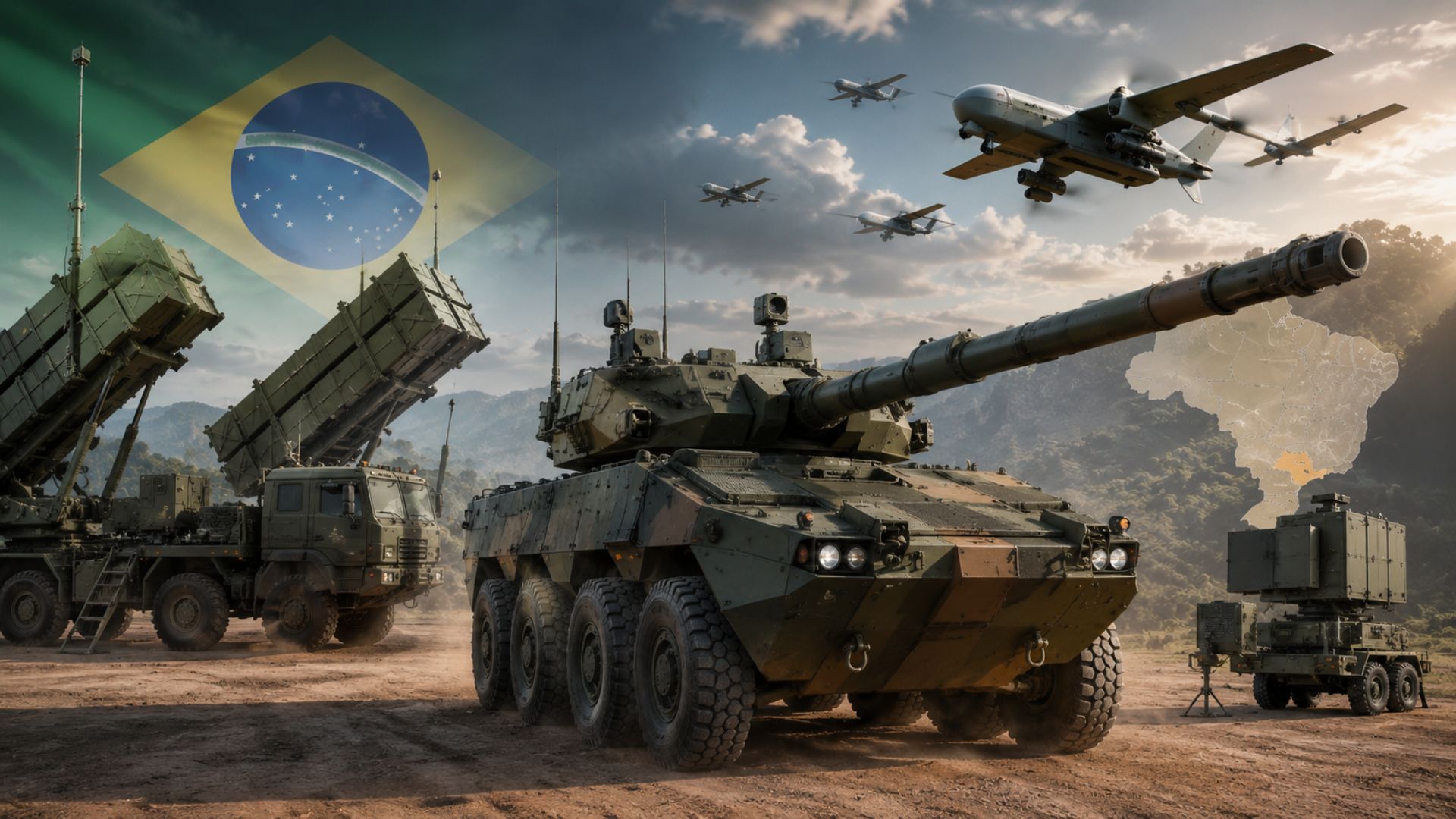

On May 20, the Brazilian Army held a bilateral meeting with the National Directorate of Armaments of the Italian Ministry of Defense to advance the acquisition of 96 Centauro II armored vehicles equipped with a 120 mm cannon, three batteries of the EMADS anti-aircraft system from MBDA, and category 3 armed drones. The armored vehicle contract, signed in 2022 for 900 million euros, provides for delivery over 15 years. The EMADS system will be the first medium-range anti-aircraft defense operated by armed forces in Latin America.
The Brazilian Army is negotiating with Italy a weapons package that could exceed R$ 8 billion and transform the operational capacity of the country’s ground forces. On Tuesday (20), representatives of the Brazilian Army’s Logistics Command met with the National Directorate of Armaments of the Italian Ministry of Defense at the Army Headquarters in Brasília to align details on three simultaneous acquisitions: 96 Centauro II combat armored vehicles with a 120 mm cannon, three batteries of the EMADS anti-aircraft defense system, and armed remotely piloted aircraft systems.
The meeting is the most concrete step so far in a negotiation involving unprecedented military technology in Brazil and Latin America. The Brazilian Army already operates two units of the Centauro II acquired as an initial test batch, delivered in May 2025 at the Santa Maria garrison. The results of the tests and the implementation of the combat doctrine with a 120 mm cannon paved the way for the purchase of the remaining 96 units, completing the contract of 900 million euros signed in December 2022.
The 96 Centauro II armored vehicles and what they change

The Centauro II is an 8×8 armored combat vehicle, manufactured by the Italian consortium Iveco-Oto Melara, equipped with a 120 mm cannon and armor capable of resisting landmines, improvised explosives, and kinetic munitions. Each unit costs approximately R$ 51 million, and the Brazilian Army plans to use the 96 armored vehicles to modernize the mechanized troops that operate in border regions and in force projection scenarios.
-
U.S. Air Force Launches Air-to-Air Missile Project with Range of Up to 1,850 km for Indo-Pacific Operations

-
Australia to Deploy Up to 8 Nuclear-Powered Submarines in Indo-Pacific, Establishes Billion-Dollar Naval Chain Through AUKUS, Joining Elite Group Capable of Extended Underwater Missions

-
Indonesia Begins Construction of 2,000-Ton Scorpène Stealth Submarines with Advanced Weaponry and French Steel

-
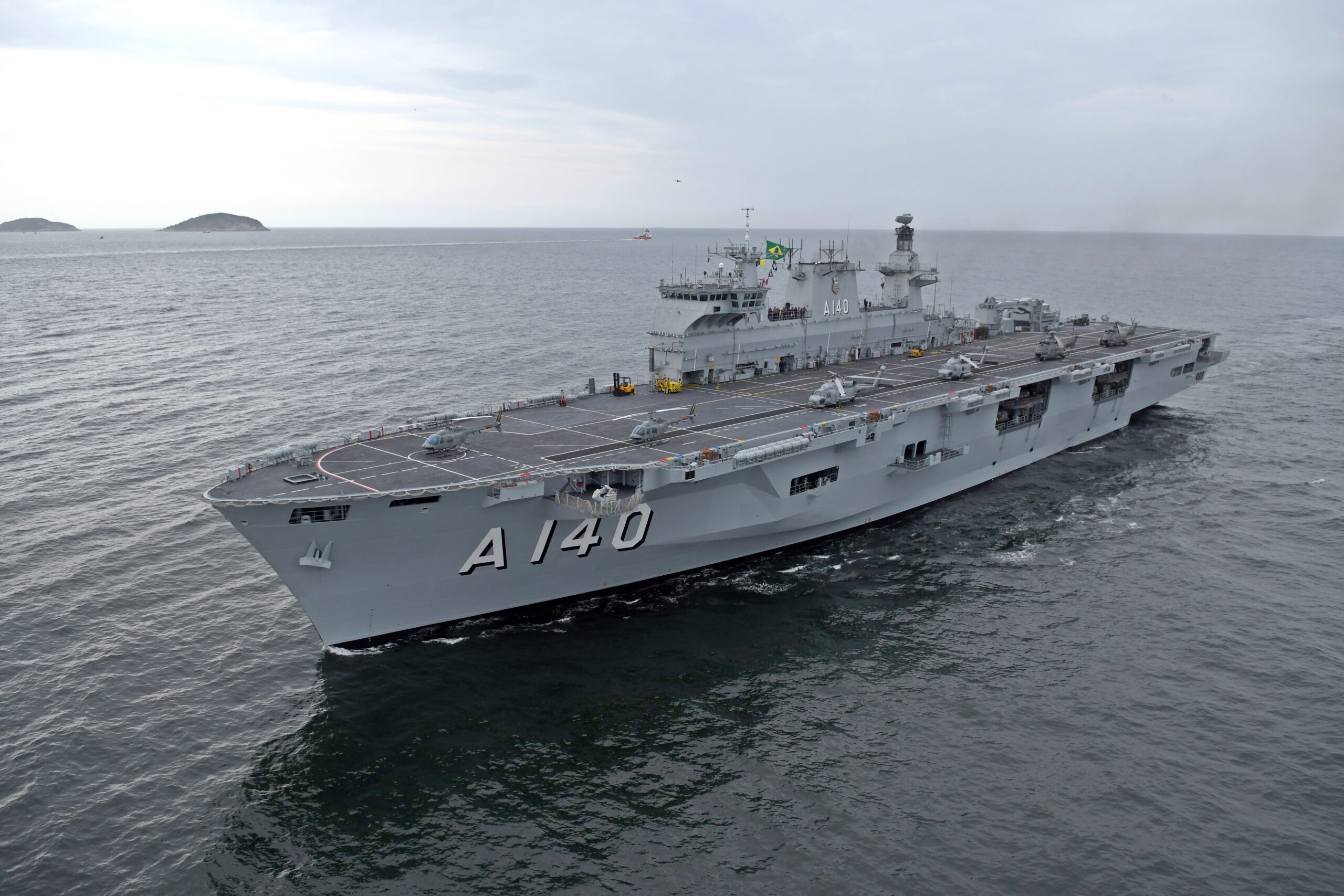
Brazil’s Largest Navy Ship, NAM Atlântico, Transforms into Field Hospital During National Crises




The first confirmed destination for the Centauro II is Roraima, where the Brazilian Army reinforces military presence on the border with Venezuela and Guyana amid the dispute over the Essequibo territory. The armored vehicle combines wheel mobility with firepower equivalent to that of a conventional tank, capable of operating on roads, rough terrain, and urban environments. The acquisition is part of a program that foresees annual expenditures of R$ 3 billion between 2026 and 2031 in the modernization of ground forces.
The EMADS system and the air defense that Brazil never had

The second piece of the negotiation is the EMADS (Enhanced Modular Air Defence Solutions) system, from the Italian MBDA. The Brazilian Army formalized the choice of the system through Ordinance EME/C Ex nº 1.086, published on December 22, 2025. EMADS will be the first medium-range air defense system operated by any armed force in Latin America, with the capability to intercept drones and cruise missiles.
The Brazilian Army is negotiating the purchase of three batteries, each composed of six launcher vehicles, radars, and auxiliary vehicles. Each launcher can hold up to eight CAMM missiles, with a range of approximately 25 kilometers. The extended range version, the CAMM-ER, can hit targets at about 45 kilometers. The system’s open architecture allows for the integration of radars from different manufacturers, and the expectation is that, in a second phase, Brazil will use domestically manufactured radars. The total investment in the air defense system could reach R$ 3.4 billion.
The armed drones that Italy presented to Brazil


The third front of the negotiation involves armed remotely piloted aircraft systems, classified as category 3. At the Tuesday meeting, the Italian delegation presented to the Brazilian Army the armed drone systems available in the Italian defense industry’s portfolio, but this stage is still in the presentation phase, with no values or quantities defined.
The inclusion of armed drones on the agenda reflects the paradigm shift caused by conflicts in Ukraine and the Middle East, where unmanned aerial vehicles have become decisive on the battlefield. The Brazilian Army currently does not operate drones with attack capability, and the eventual acquisition would represent a significant technological leap for the ground forces. The Italian delegation highlighted the receptiveness and pragmatic nature of the meeting in Brasília.
Where the money for the Brazilian Army’s purchases comes from
The financing for this modernization was made possible by a complementary law that authorizes the exclusion of up to R$ 30 billion from the fiscal framework for defense spending. With this budgetary space, the Brazilian Army has practically doubled its annual investments in modernization, from R$ 1.4 billion to approximately R$ 3 billion per year between 2026 and 2031.
The increase allows projects that were stalled or moving slowly to advance simultaneously. In addition to the Centauro II and EMADS, the program includes the continuation of the Guarani armored vehicle production, the development of the Guaicuru 4×4 vehicle, and the integration of new weapon turrets on existing platforms. The negotiation with Italy falls under the government-to-government model, which offers better commercial conditions, logistical security, and the possibility of Brazilian industrial participation in production.
Do you think Brazil should invest R$ 8 billion in armaments, or would the money be better spent in other areas? What impresses you the most: the 96 armored vehicles with 120 mm cannons, the unprecedented anti-aircraft system in Latin America, or the armed drones? Tell us in the comments.