






 Portuguese
  Spanish
  3 min of reading
  0 comments


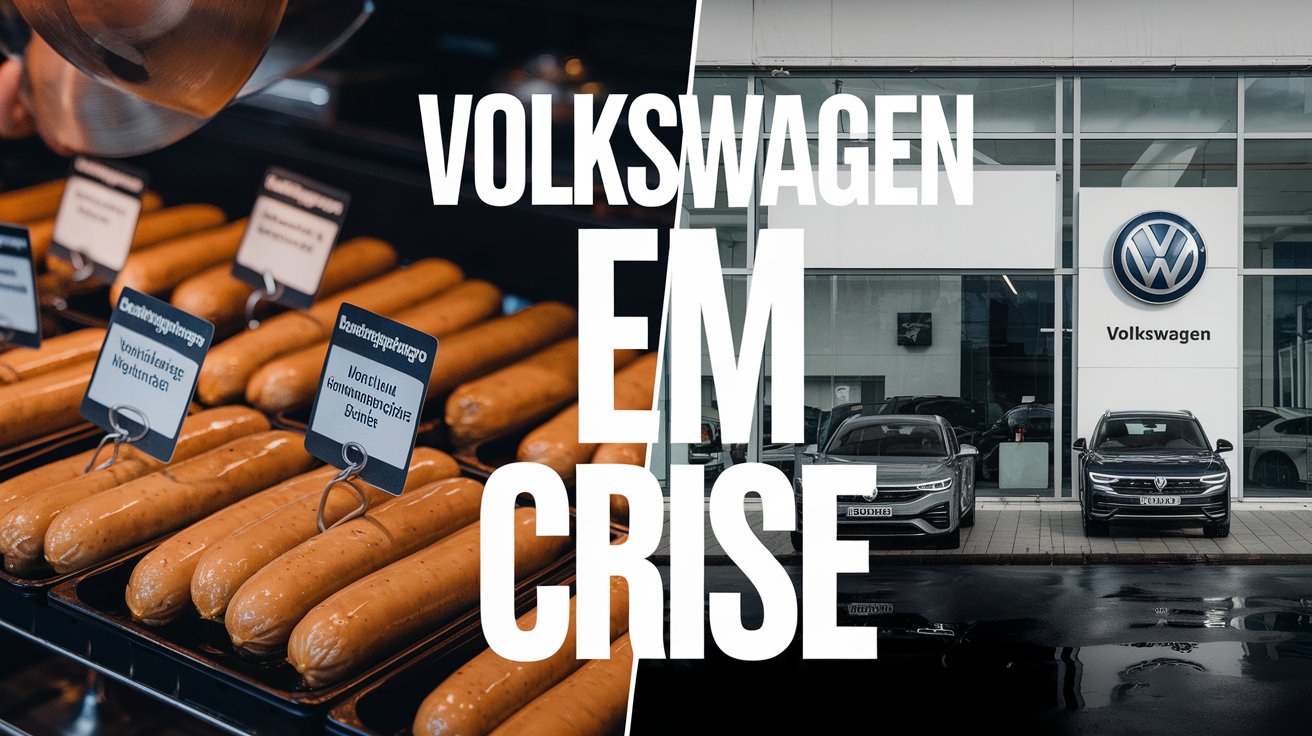
Volkswagen’s Crisis Took an Unexpected Turn! The Iconic Automaker Sold More Sausages Than Cars, Revealing an Alarming Scenario for the German Automotive Industry.
The Volkswagen, an automotive giant, reached an unusual record: it sold more sausages than cars last year, according to The Times.
While the company delivered 5.2 million vehicles bearing its logo, the number of currywurst sold reached 8.5 million units.
This curious data reveals both the popularity of the iconic German snack and the challenges faced by the automotive industry.
-
Brazilian Joins Homeownership Consortium, Faces Decade of Dual Payments Totaling $141,000, Surpassing Traditional Mortgage

-
Land Rover to Halt Production in July, Putting 371 Jobs at Risk, as Chinese Automaker Negotiates to Convert Factory to 100,000 Vehicles Annually by 2027

-
Uber Faces Shareholder Scrutiny as Board Accused of Ignoring Safety, Compliance, and Harassment Warnings Amid Over 3,500 U.S. Lawsuits
-
Mexican Pest Threatens U.S. Cattle Herds at Historic Lows, Potentially Boosting Brazilian Beef Exports as Burger Prices Soar


Volkswagen’s Currywurst: A Phenomenon in Germany
Currywurst is a typical street food dish from Germany, made of a sausage seasoned with special ketchup and curry, usually served with fries.
But the connection between the dish and Volkswagen goes far beyond popular consumption: the company has been producing its own sausage since 1973.
The snack has become a true icon in the company’s cafeterias, comparable to the classic meatballs sold at Ikea’s restaurant.
The success has been so great that Volkswagen began selling its sausages in supermarkets, expanding distribution beyond the internal cafeterias.
In 2024, currywurst sales achieved a growth of about 200 thousand units compared to the previous year, consolidating the product’s position in the food market.
Volkswagen’s food line also includes hot dogs, which have also contributed to the sales record.
The Crisis in the German Automotive Sector
Despite the success in the food sector, Volkswagen is facing a challenging phase in car sales.
The group reported a 2.3% decline in total vehicle sales, considering all brands under its control, such as Audi, Porsche, Lamborghini, SEAT, and Škoda. Even with this number included, the company delivered only 9 million units.
The situation worsens with a drastic 30% drop in the automaker’s profit.
In 2024, Volkswagen had a profit of 12.4 billion euros, a significantly lower figure than in previous years, despite total revenue of 345 billion euros.
The main factors driving this decline include a contraction in the Chinese market and heavy investments, such as the construction of a new Audi factory in Brussels.
The German automotive industry faces strong competition in the electric vehicle sector, especially from Chinese and American automakers, which puts additional pressure on Volkswagen.
Job Cuts and Tensions within the Company
The crisis has also led Volkswagen to make controversial decisions.
The automaker announced it will eliminate 35,000 jobs in Germany by 2030, marking the first major mass layoff in its history.
This measure sparked outrage among workers and politicians who criticize the company’s strategy.
Despite the difficulties, employees with collective agreements will still receive a bonus of 4,800 euros each, benefiting about 120,000 employees in Germany.
Executives, as reported by the dpa agency, have agreed to forgo 11% of their earnings over the next two years.
The Sausage Is Untouchable: The Currywurst Controversy
While the company faces challenges in the automotive sector, the currywurst remains untouchable.
The popularity of the sausage within Volkswagen is so great that in 2021, when the company decided to remove it from one of the cafeterias, the reaction was explosive.
Former German Chancellor Gerhard Schröder even publicly criticized the decision, stating that “the currywurst is the workers’ chocolate to give strength”.
With the negative backlash, the automaker reversed its decision and kept the sausage on the menu.
To further strengthen the market, Volkswagen plans to launch new varieties of currywurst in supermarkets and cafeterias, especially in Lower Saxony, where its headquarters in Wolfsburg is located.
The Currywurst Even Has a Serial Number
One of the most curious facts about Volkswagen’s sausage is that it has an official production number, just like car parts.
The registered code for the currywurst manufactured by the company is 199 398 500 A.
This detail reinforces Volkswagen’s commitment to product quality, which has become a symbol of the company’s culture.
Even in the face of economic challenges and cuts in the automotive industry, Volkswagen’s currywurst remains one of the brand’s best-selling items, carving out its space on shelves and in consumers’ favor.
Do you think that Volkswagen’s crisis in Europe could impact the Brazilian market?





Be the first to react!