






 Portuguese
  Spanish
  4 min of reading
  0 comments


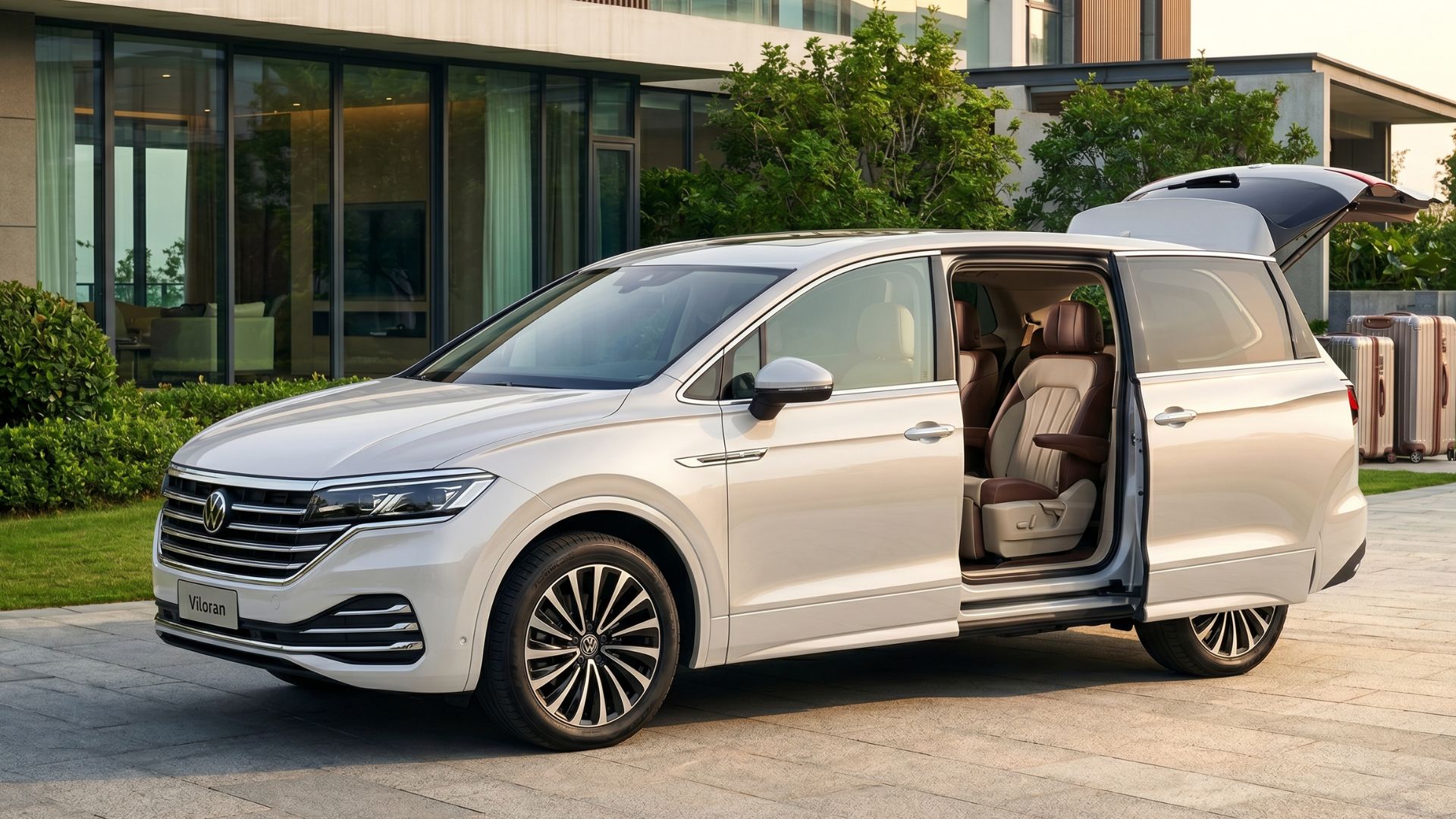
Volkswagen Viloran costs around R$ 215,000 in China, seats 7 people, has a 2.0 turbo engine with 220 hp, DSG, and over 5.3 meters.
While the Brazilian market has practically abandoned large minivans in favor of SUVs, Volkswagen continues to heavily invest in this segment in China with a model that combines luxury, interior space, and limousine stature. The Volkswagen Viloran appears in the Chinese market in versions starting at around ¥289,800, equivalent to approximately R$ 215,000 in direct conversion, excluding taxes, freight, homologation, dealership margins, or import costs to Brazil.
Even costing less than models like Kia Carnival, Toyota SW4, and Jeep Commander sold in Brazil, the Viloran offers a gigantic body of over 5.34 meters in length, space for 7 occupants, sliding side doors, and a mechanical set based on the well-known 2.0 EA888 turbo engine from Volkswagen.
In practice, it functions as a kind of modern “executive Kombi,” aimed both at families and premium executive transport, something that has practically disappeared from the Brazilian market.
-
Uber Faces Shareholder Scrutiny as Board Accused of Ignoring Safety, Compliance, and Harassment Warnings Amid Over 3,500 U.S. Lawsuits

-
Ferrari’s First Electric Car Divides Fans, Priced at $630,000, Amid Concerns Over Limited Editions; Brand Clarifies It’s Not Just for Future Perks
-
BYD Dolphin Mini: The Electric Car That Defies Depreciation, Losing Only 3.58% in a Year and Becoming the Best-Selling Retail Model Under $22,000

-
Electric Car JAC E-JS4 Loses $19,000 in Value in One Year, Leading Record Depreciation of Used Cars in Brazil Due to Expensive Battery and New Models


Volkswagen Viloran uses 2.0 turbo EA888 engine with up to 220 hp and 350 Nm
The Viloran is equipped with the well-known 2.0 turbo EA888 four-cylinder engine, used in various global models of the Volkswagen Group. In the strongest “380 TSI” version, the power reaches 220 hp, while the torque reaches 350 Nm.


The set works with a 7-speed DSG/DCT automated transmission, always with front-wheel drive. Depending on the configuration, there are less powerful variants with about 186 hp and 320 Nm, but the most striking version is precisely the 220 hp used in the top-of-the-line configurations.
According to data published in Chinese catalogs, the minivan can accelerate from 0 to 100 km/h in about 8.3 seconds, something unusual for a vehicle of this size and weight.
Chinese Volkswagen minivan measures over 5.3 meters and surpasses many large SUVs
One of the most impressive points of the Viloran is its size. The minivan measures approximately:
- 5,346 mm in length
- 1,976 mm in width
- 1,781 mm in height
- 3,180 mm wheelbase
This means it is larger than many seven-seater SUVs sold in Brazil. The wheelbase of 3.18 meters places the Viloran in the territory of luxury executive vehicles, with an absolute focus on the interior space of the second row.

The international press itself described the minivan as a kind of “executive lounge on wheels,” precisely because of its focus on rear passenger comfort.
Volkswagen Viloran bets on executive seats, panoramic roof, and premium cabin
The Viloran’s proposal is not just to be a common family minivan. The more expensive versions receive individual captain-type seats in the second row, leather finish, panoramic roof, and a strong focus on travel comfort.

Depending on the version, the model may also include:
- Electric seats
- Massage seats
- Digital dashboard
- Large multimedia center
- Electric side doors
- Adaptive cruise control
- Lane-keeping assist
- Automatic braking
- Traffic jam assist
The positioning is above a common minivan and closer to premium executive vans used by hotels, companies, and VIP transport in various Asian markets.
Viloran shows a type of car that has practically disappeared in Brazil
The Brazilian market once had large family models and strong minivans in the past, but almost all of this segment has been replaced by seven-seater SUVs.
In China, however, brands like Volkswagen, Buick, Toyota, and Denza continue to heavily invest in large luxury minivans, mainly for urban families and executive transport.

The Viloran fits exactly into this space: more comfortable for rear passengers, easier to get in and out of than many tall SUVs, and with a greater focus on long trips and internal comfort.
Volkswagen built the Viloran on the MQB platform and made the minivan the largest model of the architecture
The Viloran was developed by the joint venture SAIC-Volkswagen and uses the MQB platform, the same modular base used by various Volkswagen models around the world.
According to technical data published about the model, it has become the largest vehicle ever built on this modular architecture of Volkswagen.
This helps explain how the brand managed to combine an extremely large body with relatively efficient engine performance for the vehicle’s size.
Technical specifications Volkswagen Viloran 380 TSI
| Item | Volkswagen Viloran |
|---|---|
| Country of sale | China |
| Reference price | ¥289,800 |
| Approximate conversion | R$ 215,000 |
| Platform | MQB |
| Engine | 2.0 EA888 Turbo |
| Displacement | 1,984 cm³ |
| Cylinders | 4 |
| Power | 220 hp |
| Torque | 350 Nm |
| Transmission | 7-speed DSG/DCT |
| Drive | Front |
| Doors | 5 |
| Seats | 7 |
| Length | 5,346 mm |
| Width | 1,976 mm |
| Height | 1,781 mm |
| Wheelbase | 3,180 mm |
| Weight | about 2,190 kg |
| Trunk | 436 to 2,100 liters |
| Top speed | up to 200 km/h |
| WLTC consumption | about 8.17 L/100 km |
| Wheels | Up to 20-inch |
| Suspension | Independent |
| Side doors | Electric sliding |
| Executive seats | Yes |
| Panoramic roof | Yes |
Data compiled based on SAIC-Volkswagen, AutoCango, Carsales, Car News China, and international technical catalogs.

The Volkswagen Viloran shows that there is still a market for large, luxurious family vehicles focused on absolute comfort.
The problem is that while China receives giant executive minivans with strong turbo engines and plenty of space, Brazil is practically restricted to increasingly expensive SUVs with cramped third rows.





Be the first to react!