Portuguese
  Spanish


Technology developed by Brazilian researchers aims to detect pesticides, heavy metals, and other contaminants in water more quickly, at lower cost, and for direct use in the field
The presence of pesticides in water is a problem that is difficult to see, expensive to measure, and slow to respond to. Now, Brazilian researchers are working on nanosensors capable of identifying contaminants at very low concentrations, with the potential to make environmental monitoring faster and more accessible.
The technology has not yet reached large-scale rivers, reservoirs, and rural communities. Even so, the results presented by scientists linked to the National Institute of Science and Technology in Nanotechnology for Sustainable Agriculture indicate a promising path to reduce the dependence on analyses conducted only in central laboratories.
The advancement gained prominence in 2026 with the publication of a technical chapter on the use of nanosensors to detect pesticides in water. The work brings together applications of electrochemical sensors, optical sensors, and biosensors aimed at identifying substances that can reach water bodies through surface runoff, soil leaching, or improper disposal.
-
The battery that promises to change cell phones and electric cars still has a microscopic enemy: researchers discover how lithium dendrites pierce the solid electrolyte and are already testing ways to prevent cracks and short circuits.

-
An old ferry rusted for more than 10 years in New York, almost sank after the engine room was flooded, and now volunteers are rushing to clean the hull, remove wires, life jackets, and loose paint before sinking it in the Atlantic to become an artificial reef full of marine life.

-
SpaceX launch turned Falcon 9 into a giant jellyfish in the night sky, with a colorful plume illuminated by the Sun at high altitude, confusing observers and showing how a routine flight can become a rare spectacle of atmospheric physics over Earth.
-
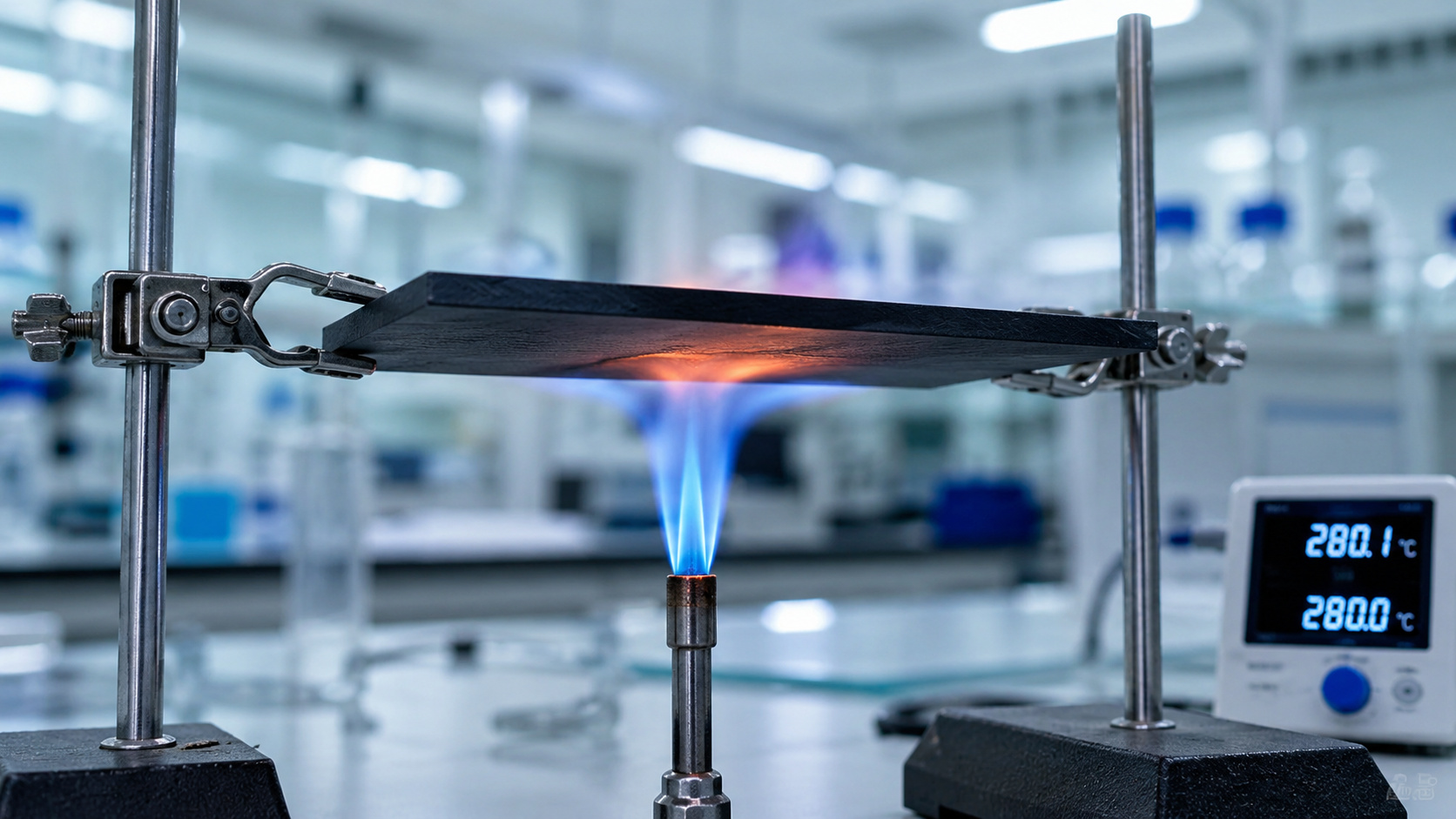
Advancement in science: a new plastic developed by researchers in the USA combines structural strength and thermal blocking in a single technology, opening new possibilities for construction, transportation, electronics, and sustainable solutions with a direct impact on global energy efficiency.


According to a report by Um Só Planeta published on June 12, 2026, researchers have already managed to detect compounds such as atrazine, glyphosate, and lead in real water samples. The difference lies less in the promise of replacing the entire current system and more in the possibility of bringing the analysis closer to the point where the problem appears.
Brazilian nanosensors target a problem that the human eye cannot see in water
Water contamination by pesticides is not usually perceived by color, smell, or taste. In many cases, the compounds appear at very low levels, but still require technical monitoring because they can accumulate in the environment and enter the human consumption chain.
Today, more comprehensive analyses generally depend on expensive equipment, such as chromatographs, as well as sample collection, transportation, and specialized professionals. This increases the time between the suspicion of contamination and the response from environmental agencies, supply companies, or affected communities.
The nanosensors aim to shorten this path. The idea is to use materials at the nanometric scale to increase the sensitivity of the device and allow a faster reading of specific substances. In practice, it would be an important step to know, more quickly, whether certain water shows signs of pesticides, heavy metals, or other emerging contaminants.
How Nanotechnology Increases Sensitivity in Pesticide Detection
According to the chapter published by Springer Nature in January 2026, electrochemical, optical, and biorecognition sensors can gain performance when combined with nanomaterials. This is because materials at this scale increase the contact area and favor electron transfer or signal amplification.
In simple terms, the sensor starts to “perceive” better small changes caused by the presence of a substance. That is why materials like graphene, graphene oxide, gold nanoparticles, and specific enzymes are studied for this type of application.
The proposal is not just to detect an isolated contaminant in the laboratory. The greater goal is to develop integrated systems capable of gathering multiple sensors in a portable platform and, in the future, indicating results in real-time or near real-time at the collection site itself.
This point is crucial because the problem of contaminated water usually requires speed. When there is suspicion of contamination in a river, lake, well, or reservoir, each day of waiting can delay prevention measures, risk communication, and investigation of the problem’s origin.
From the Laboratory to the Field, There is Still a Technological Bottleneck
Despite the progress, the technology still faces a critical stage. Researchers have already demonstrated the ability to detect different molecules, but transforming these prototypes into robust, portable, and easy-to-operate equipment outside the laboratory requires further development.
This is one of the main challenges for the innovation to stop being just a scientific tool and become a solution available for municipalities, rural communities, producers, concessionaires, and regulatory agencies. A sensor used in the field needs to withstand temperature variations, chemical interferences, different types of water, and continuous use.
There is also the challenge of validation. For a reading made by a nanosensor to have technical weight, it needs to be comparable to recognized methods and follow quality standards. In other words, the technology can accelerate the alert, but it needs to be safely incorporated into environmental monitoring protocols.
According to INCT NanoAgro, the integration of nanomaterials with traditional sensor technologies can contribute to on-site analyses, with greater precision and potential cost reduction. The institute’s technical page also emphasizes that these sensors should go hand in hand with broad programs of monitoring and sustainable management of pesticides.
Why This Advancement Matters for Public Health and Agriculture
The discussion goes beyond technological innovation. FAO data released in 2025 shows that the agricultural use of pesticides worldwide reached 3.73 million tons of active ingredients in 2023, a number that helps to measure the pressure on soils, rivers, and reservoirs.
Pesticides are used to protect crops against insects, fungi, weeds, and other threats to production. The problem arises when part of these substances leaves the applied area and reaches water bodies, whether by rain, erosion, soil drainage, or inadequate management practices.
The World Health Organization highlights that safe and available water is essential for public health and that contaminated or chemically polluted water exposes populations to avoidable risks. In the case of pesticides, the risk depends on the type of substance, concentration, exposure time, and the vulnerability of each population.
In Brazil, Ordinance GM/MS No. 888, of May 4, 2021, establishes procedures for controlling and monitoring the quality of water for human consumption and its potability standard. Even with control rules, faster technologies can help identify critical points and guide actions before the problem spreads.
Sensors can also reduce the use of insecticides in crops
The same logic of detecting with precision can be applied within agricultural production. Researchers are also studying sensors capable of identifying pest signals, such as pheromones released by stink bugs in soybean plantations.
Today, many producers end up applying insecticides over large areas for prevention or due to difficulty in locating exactly where the infestation is. With more precise sensors, it would be possible to direct the application only to the necessary points.
This type of use can reduce costs, decrease waste, and limit the amount of pesticides in the environment. The indirect consequence is important: the less unnecessary application, the lower the pressure tends to be on the soil, water, and organisms that are not targets of chemical control.
Technology, therefore, should not be seen only as a tool to “find problems” after contamination occurs. It can also help prevent part of the contamination at the source, bringing environmental monitoring closer to so-called precision agriculture.
Technology does not replace oversight, but it can change the speed of response
Nanosensors do not solve water contamination alone. Risk reduction depends on oversight, good agricultural practices, proper treatment, control of polluting sources, and transparency in monitoring data.
Even so, technology can change an essential part of the process: the response time. If a community near a river can have a quick screening for the presence of lead, glyphosate, atrazine, or other compounds, the alert can arrive earlier and protective measures can be taken more safely.
The advancement also opens a discussion about access. If only large centers can afford complex analyses, rural areas and smaller municipalities may be at a disadvantage. A portable and cheaper device would have an impact precisely where laboratory infrastructure is more limited.
The path, however, requires continuous investment, team formation, and partnership between universities, research institutes, the public sector, and companies. Without this bridge, the risk is that innovation remains confined to the laboratory, even when the problem is already in the rivers, fields, and reservoirs.