






 Portuguese
  Spanish


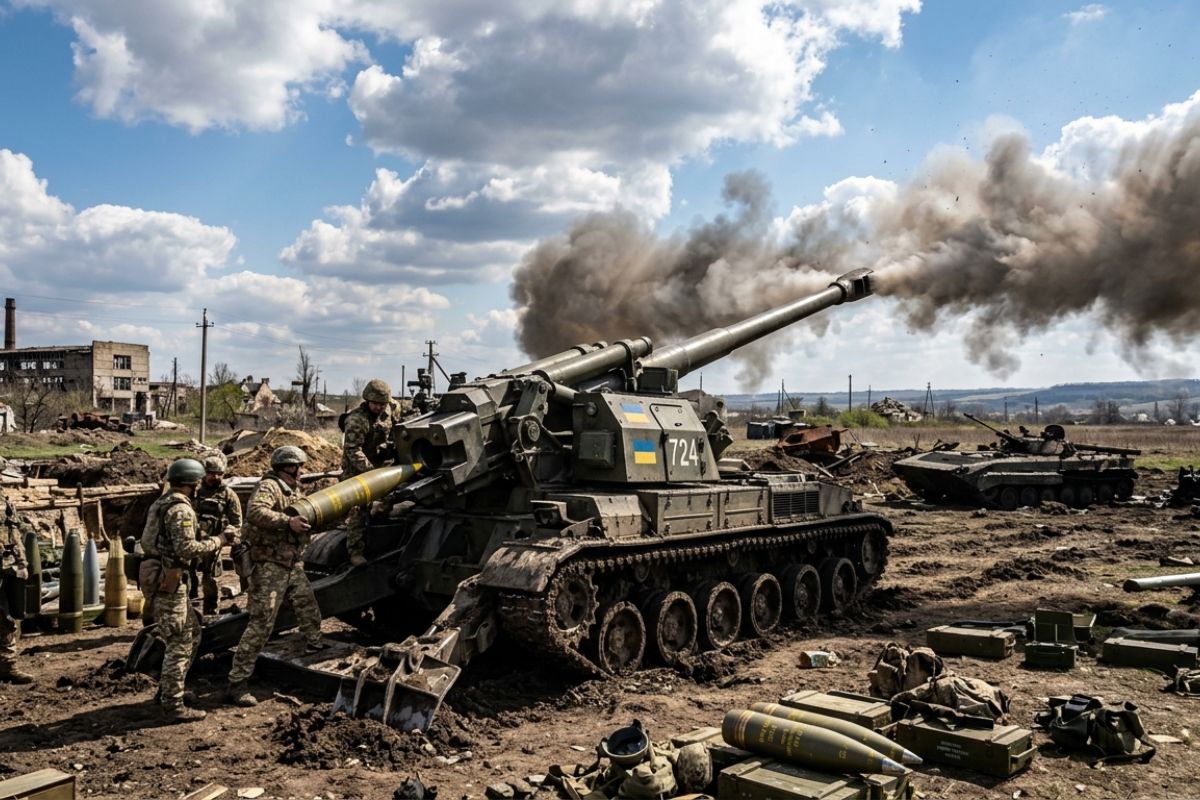
M110A2 reappears in Ukraine after agreement with Greece and support from the Czech Republic, and its nuclear history returns to the debate with 90-kilogram projectiles.
The nuclear history of the M110A2 is the detail that transforms an “old cannon” into a symbol of another era that suddenly makes sense in the present. Created at the height of the Cold War, the system was designed for an extreme scenario: to stop a Soviet offensive with tactical destruction.
Now, with the M110A2 reappearing in Ukraine and operating against Russia, the shock is not in cutting-edge technology. It is in the scale of the impact. These are 90-kilogram projectiles, with a range of up to 30 kilometers and a capability to “fire, move, and fire again” before becoming a target.
What is the M110A2 and why did it return
The M110A2 is described as the largest self-propelled howitzer that the United States has fielded. In practice, it is a artillery gun mounted on a tracked vehicle, like a tank, focused on delivering heavy fire.
-
U.S. Navy’s Ticonderoga-class Cruiser Becomes a 9,800-Ton Missile Fortress with Advanced Aegis System Capable of Tracking Hundreds of Targets

-
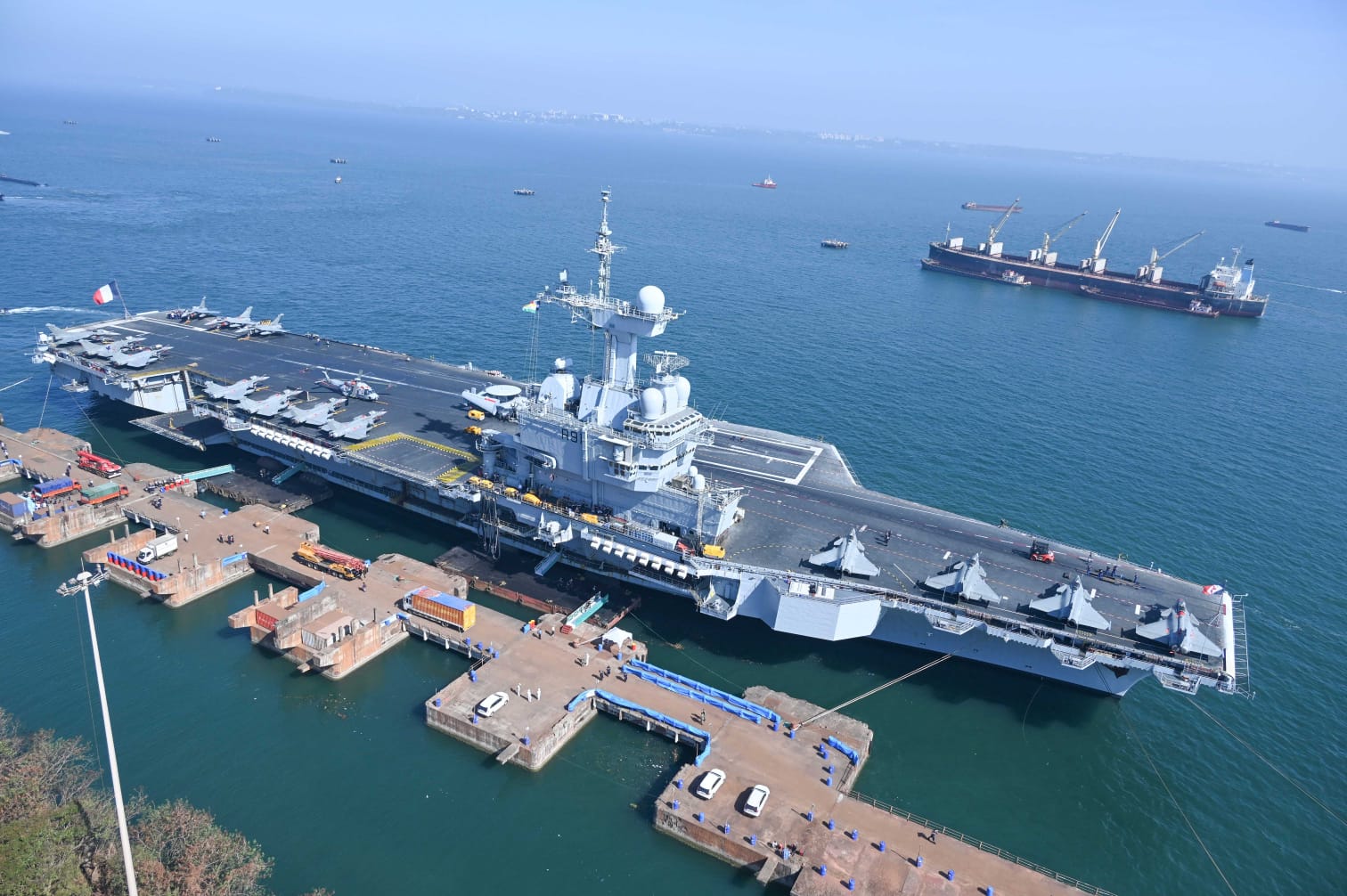
France’s Charles de Gaulle: The Sole Nuclear-Powered Aircraft Carrier Outside the US, Weighing 42,500 Tons and Equipped with Two Atomic Reactors

-
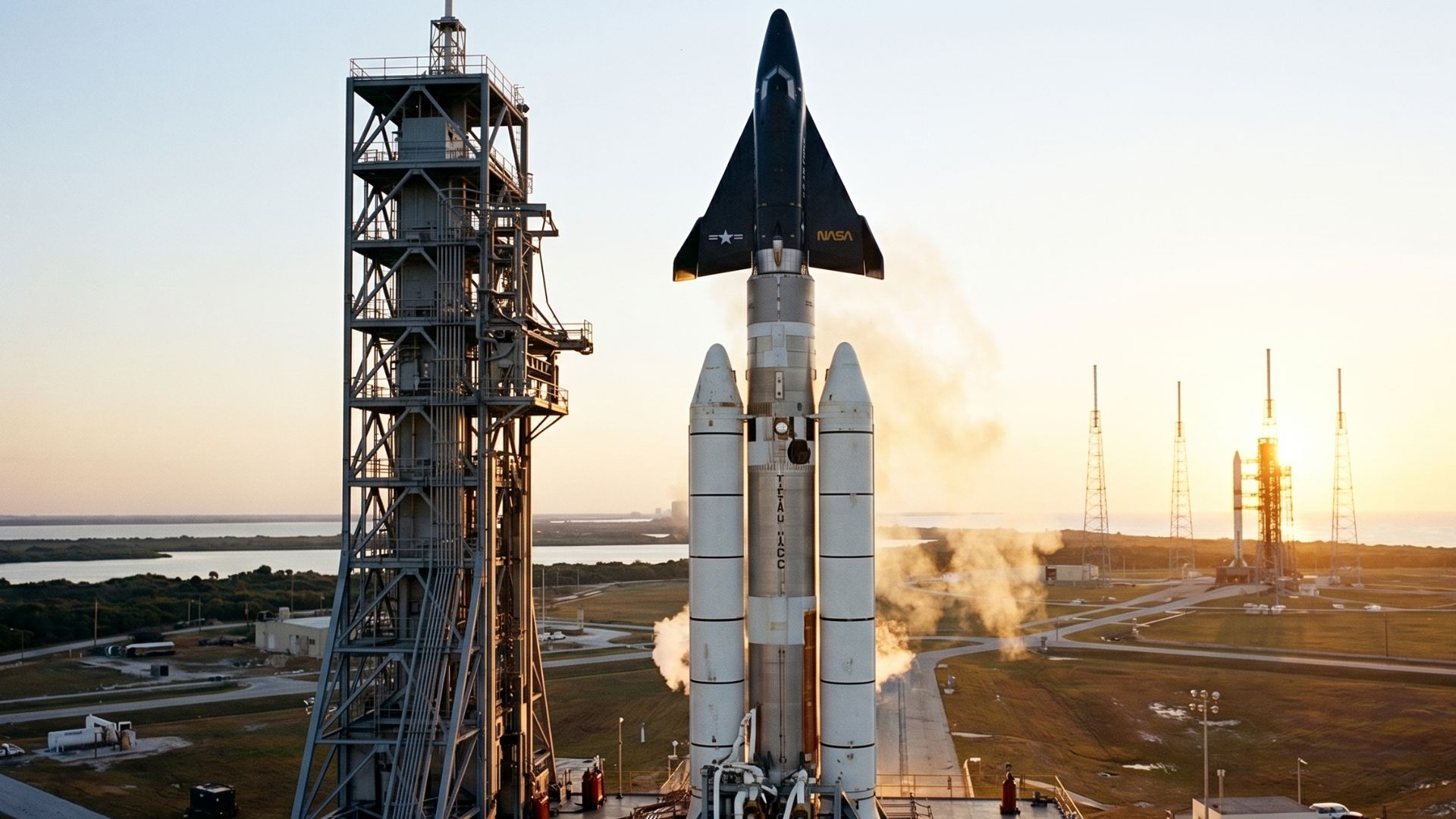
The military spaceplane that almost took the Cold War into orbit: Boeing X-20 Dyna-Soar was designed to re-enter above Mach 20, fly for up to 40 hours, land like a plane, and transform Titan rockets into a gateway to a new era of orbital warfare.
-
FAB bets on national drones and increases investments to strengthen the Brazilian aerospace industry



For decades, many armies treated this type of weapon as obsolete. However, Ukraine began to view it differently: an old system that still delivers destruction in volume, something that can weigh heavily when war turns into attrition.
90-kilogram projectiles and range of up to 30 kilometers
The most straightforward aspect of the M110A2 is the weight of the shot. It fires projectiles weighing 90 kilograms, almost the weight of an adult person, at a distance of up to 30 kilometers. The unit is tracked and has a 405-horsepower engine, allowing for quick repositioning after firing.
It is not a system described as modern or “pretty.” Its strength lies in another logic: brute impact and repetition, especially when there is enough ammunition to sustain the pace.
The nuclear history that kept the M110A2 relevant for decades
The nuclear history of the M110A2 is the main reason cited for its longevity. The system was designed to fire tactical nuclear warheads. The United States is said to have manufactured 2,000 W-33 nuclear projectiles specifically for this weapon.
Estimates cited for these projectiles reach up to 40 kilotons, with a direct comparison to the power of the Hiroshima bomb, described as 15. That was the original function: if the Soviet Union advanced, the M110A2 would be a response of tactical nuclear destruction, launched by a tracked cannon. This nuclear history is not being used today, but it explains why the weapon has always been treated as something out of the ordinary.
When the Cold War ended, history did not end
The M110A2 was retired in the 1990s, but the barrels did not become scrap. The described trajectory includes a surprising reuse: the barrels were cut, filled with explosives, and used as the casing of a bomb.
This reuse became a new chapter of the same object and reinforces the idea that, in the case of the M110A2, the “end” is never simple. The nuclear history begins the story, but it is not the only point that makes the weapon reappear as a symbolic piece.
From howitzer barrel to GBU-28, the “bunker buster”

The account places the barrels of the M110A2 at the center of the creation of the GBU-28, a bomb developed in two weeks during the Gulf War, when the U.S. sought a way to penetrate fortified underground shelters.
The GBU-28 is described as capable of penetrating over 30 meters of earth or 6 meters of solid concrete. Two were reportedly launched in the conflict, with the second hitting an Iraqi shelter and detonating inside. Later, Israel is said to have purchased 100 of these bombs, associated by many with the possibility of use against Iran’s nuclear facilities. This section reinforces the contrast: the same project that carries nuclear history also became the basis for extreme penetration ammunition.
How 60 M110A2 left Greece and arrived in Ukraine
The path to Ukraine goes through Greece. The country reportedly had 145 M110A2 in storage, systems from the 1980s that became obsolete with the modernization of the arsenal to NATO standards. The mentioned sale includes 60 howitzers and 150,000 projectiles, for 199 million euros.
The cost argument appears as a central point: each M110A2 would have cost around 520,000 euros, while a modern tank can cost between 5 to 10 million euros. The agreement generated internal debate, especially since some of these weapons were on Greek islands in the Aegean Sea, near Turkey. Nevertheless, the Greek military leadership reportedly classified the M110A2 as “militarily unnecessary” and proceeded with the transfer.
The Czech Initiative and the logistics that accelerate deliveries
The Czech Republic comes in as a logistical piece. The account describes a program called Czech Initiative, created to purchase ammunition and weapons from third countries and deliver them directly to Ukraine.
The scale presented is large: about 4.4 million units of heavy ammunition delivered, coming from 14 countries. It is also mentioned that, at the beginning of the war, Russia was firing “ten to one” against Ukraine and that this disadvantage has been reduced to “two to one.” In this flow, the M110A2 arrived accompanied by varied ammunition, including 50 thousand explosive projectiles, 40 thousand rocket-propelled, and 60 thousand fragmentation munitions.
Why an old weapon may gain relevance in 2026
The logic presented is one of attrition. The “quick” war did not happen, and artillery has become one of the centers of the conflict. The text describes significant losses of Russian systems and also Ukrainian goals to increase pressure, with the idea that weapons that deliver destruction in volume, consistently, may be more decisive than futuristic weapons in small numbers.
In this context, the M110A2 becomes useful again for a simple reason: lots of ammunition, heavy fire, and repositioning. And the nuclear history serves as an extra layer of symbolic weight, because it reminds us of what the system was created for.
What changes with drones, “shoot and move” and the heavy strike

The account also positions drones as “eyes” that identify positions and transmit coordinates in real-time to artillery. In this framework, the M110A2 appears as the “heavy strike,” operating alongside other systems, with the goal of saturating positions and maintaining constant pressure.
Here, the detail is operational, but the result is strategic: when artillery can strike and change position quickly, the cost of responding increases, and each old system that returns to the field increases the total volume of fire.
What the nuclear history represents now
The nuclear history of the M110A2 does not mean that the weapon is being used with nuclear warheads. The narrative itself reinforces that, today, this is not happening and does not “need” to happen to have an impact. Even so, the nuclear history explains why the M110 has always been treated as something more than a common cannon, and why its return draws attention.
If war is made of volume, logistics, and attrition, an old weapon with a nuclear history and abundant ammunition can weigh in again, even without modernization.
Do you think the return of a system with nuclear history like the M110A2 is more a symbol of the Cold War reappearing, or is it a sign that “old” artillery still decides a lot in long wars?






Be the first to react!