






 Portuguese
  Spanish
  4 min of reading
  0 comments


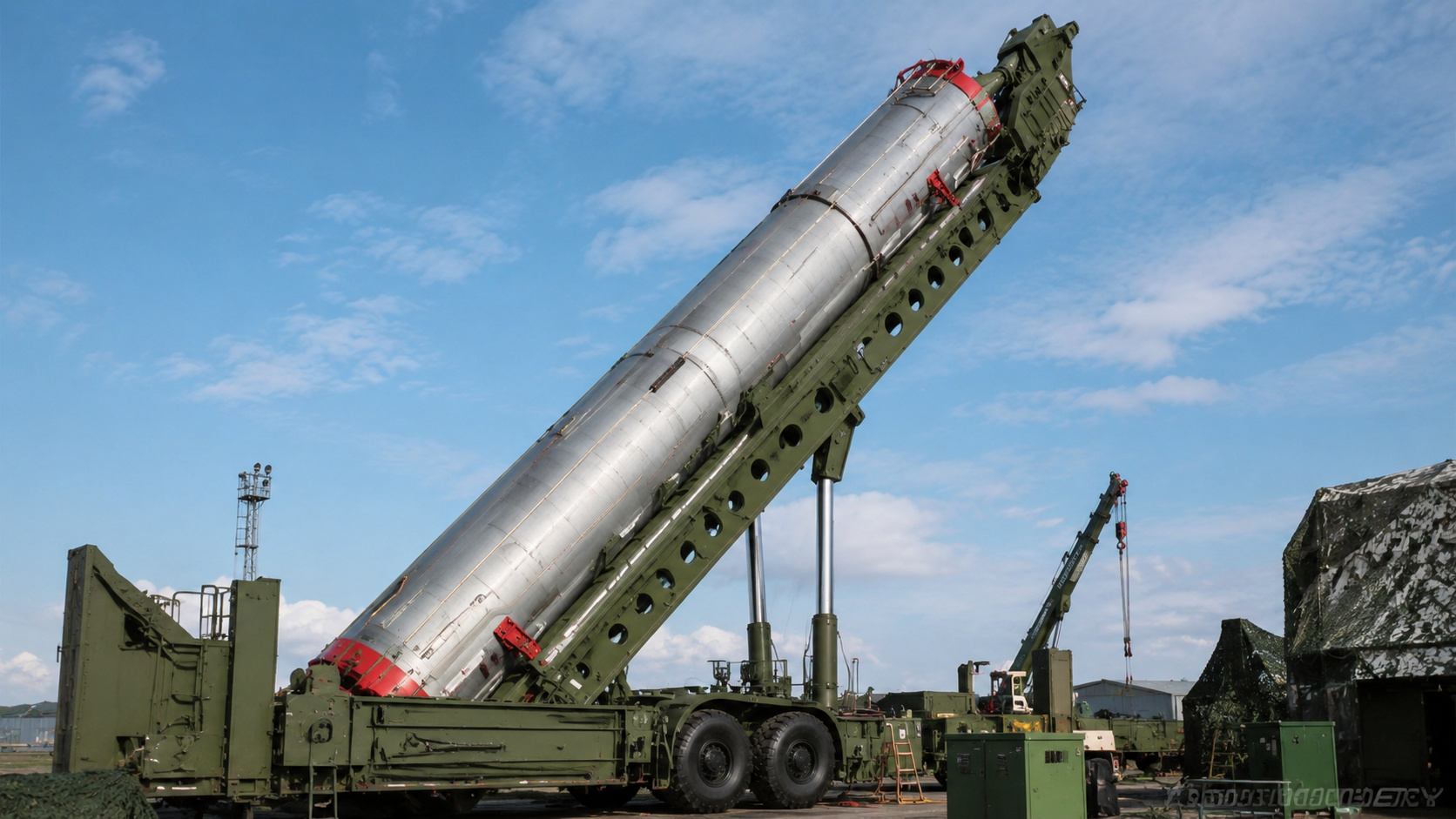
Avangard is the Russian hypersonic glider launched by ICBM that reaches Mach 27, maneuvers in the atmosphere, and complicates interception by missile defenses.
According to Army Recognition, the Avangard is a hypersonic glide vehicle developed by NPO Mashinostroyenia and manufactured at the Votkinsk Machine Building Plant, the same facility that produces Russian intercontinental ballistic missiles. The system weighs about 2,000 kg, is 5.4 meters long, and is carried as a payload by a ICBM UR-100N UTTH, maintained by Russia as a launch platform.
The speed claimed by the Kremlin is Mach 27, about 32,202 km/h, which would place the Avangard among the fastest operational weapon systems ever deployed. The difference, however, is not just in speed, but in the ability to maneuver laterally and vertically during descent through the upper atmosphere, making its trajectory much less predictable than that of a conventional ballistic missile.
Avangard combines hypersonic speed and unpredictable trajectory to complicate interception
A conventional ICBM follows a predictable ballistic trajectory. After launch, it ascends, reaches an apogee, and then descends in a calculable arc, allowing early warning radars and antimissile systems to estimate the route and attempt interception.
-
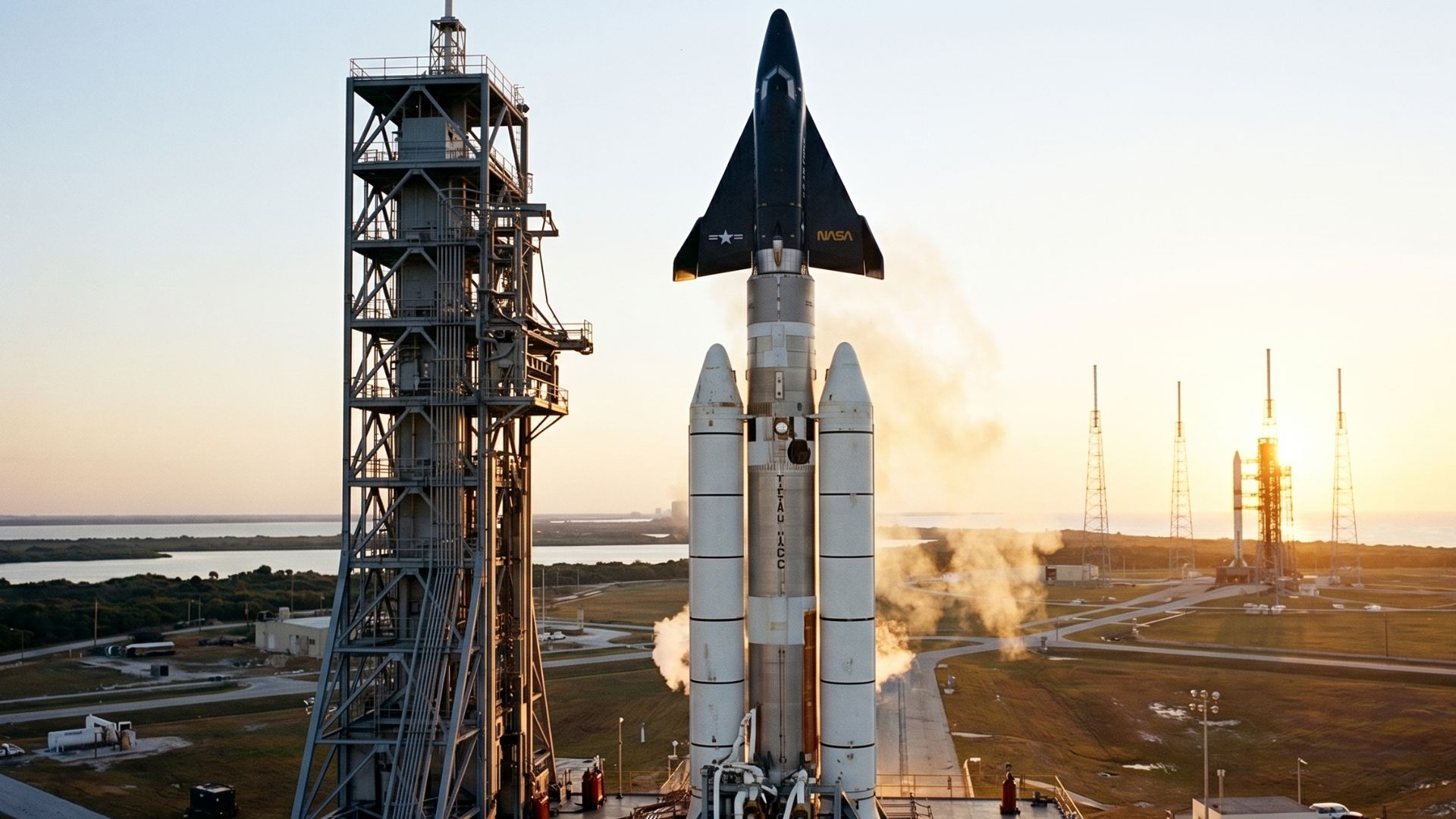
The military spaceplane that almost took the Cold War into orbit: Boeing X-20 Dyna-Soar was designed to re-enter above Mach 20, fly for up to 40 hours, land like a plane, and transform Titan rockets into a gateway to a new era of orbital warfare.

-
FAB bets on national drones and increases investments to strengthen the Brazilian aerospace industry

-
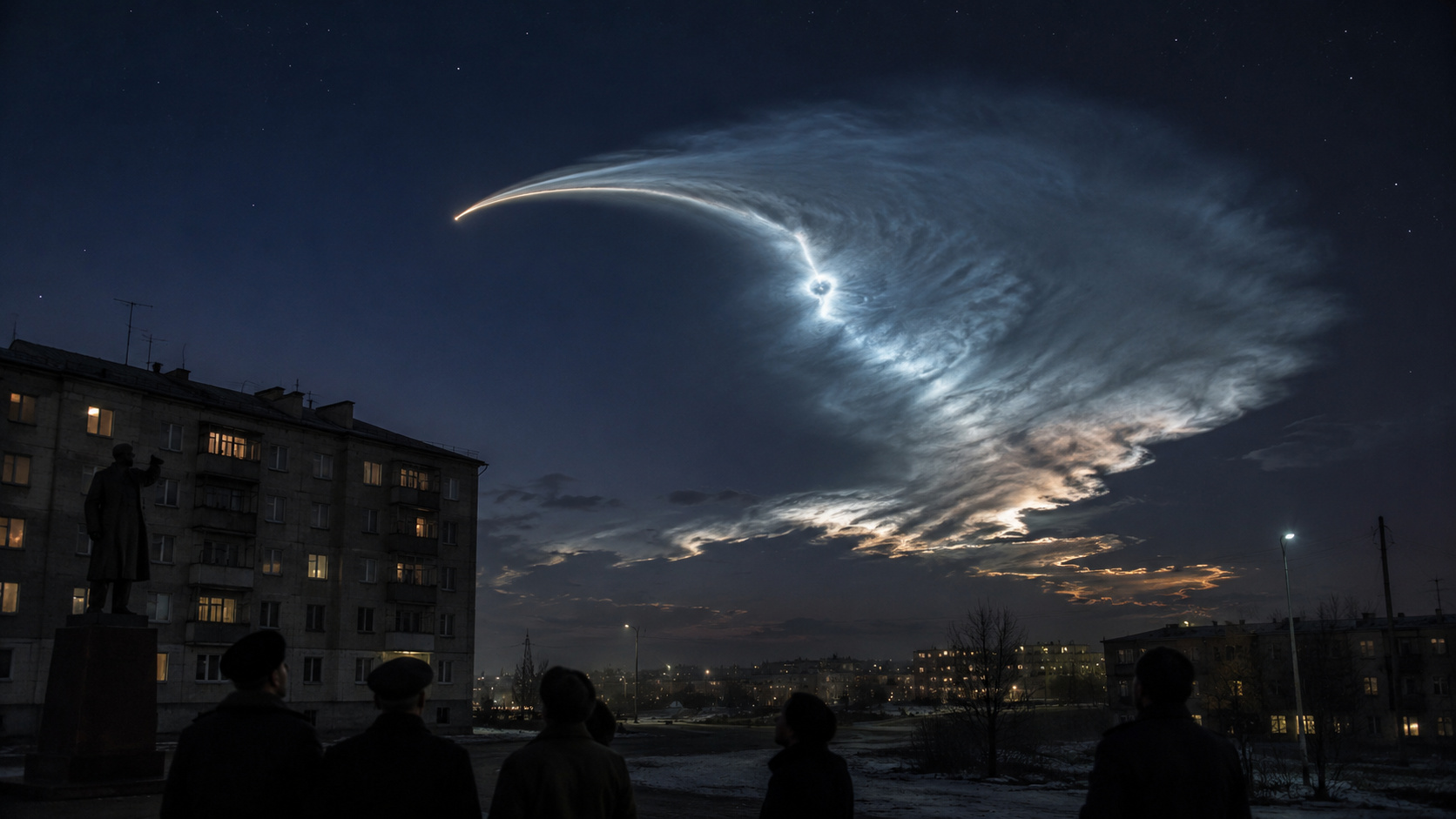
Six times, a luminous crescent the size of the Moon startled the Soviet sky at dusk: it seemed like a wave of UFOs, but it was a secret orbital weapon created to attack the United States via the South Pole and evade Cold War radars.

-
The United States government approved a potential sale of 100 portable Stinger anti-aircraft missiles to the Brazilian Army, in a package estimated at around 330 million dollars that still depends on negotiations between the two countries.


The Avangard changes this pattern. After being launched by the UR-100N, the vehicle separates from the rocket and enters a gliding flight in the upper atmosphere at hypersonic speed, performing trajectory changes during the course. This makes it difficult to calculate the future impact point and reduces the useful window for defensive response.


According to Army Recognition, it is precisely the combination of extreme speed and maneuverability that makes the system challenge current missile defense architectures. Instead of following a stable and predictable path, the vehicle can alter its course during the terminal phase of flight.
Flight at Mach 27 generates plasma, extreme heat, and new tracking challenges
Flying at Mach 27 within the atmosphere means facing extreme physical conditions. The text states that the vehicle’s surface can exceed 2,000 degrees Celsius, a temperature sufficient to ionize the surrounding air and create a plasma sheath.
This plasma sheath has two main operational effects. On one hand, it makes radar tracking difficult because it interferes with signal reflection.

On the other hand, it also complicates radio communication between the vehicle and external systems, making guidance in a hypersonic environment a highly complex engineering problem.
Army Recognition highlights that the Avangard has reportedly solved this challenge sufficiently to be declared operational. This means the system would need to maintain control and precision even enveloped in an ionized gas environment and extreme heating during flight.
Revelation of the Avangard had military and political weight in Russian nuclear doctrine
The Avangard was publicly revealed by Vladimir Putin during a speech to the Federal Assembly of Russia, accompanied by a video simulation showing the vehicle on a trajectory to a target in the United States. The presentation was described as both a political and military message.
The context was the Russian perception that the expansion of U.S. missile defense systems, such as Patriot, THAAD, and Aegis, could compromise the balance of nuclear deterrence.

In strategic logic, each side needs to believe it can retaliate even after suffering an attack, maintaining the credibility of the response and avoiding the incentive for a first strike.
In this scenario, the Avangard appears as a technical response to this problem. By being presented as a system difficult to intercept, it reinforces the idea that Russia would still maintain strategic penetration capability against any existing missile defense shield.
Russia maintains Avangard in Yasny and plans future integration with Sarmat
According to Army Recognition, the Avangard is operational with the Russian Strategic Rocket Forces at the Thirteenth Red Banner Rocket Regiment in Yasny, in the Orenburg region. The launch platforms are underground silos with UR-100N equipped to carry the system.
The cited number is 12 UR-100N units equipped with the Avangard at this facility. Although this total seems limited, the strategic logic of the text is that even a few platforms capable of penetrating missile defenses would be sufficient to maintain nuclear deterrence.
Russia also intends to integrate the Avangard with the RS-28 Sarmat, a new generation ICBM with greater payload capacity.
If this integration progresses, a single launch could, in theory, release multiple maneuverable hypersonic vehicles on independent trajectories.
Current anti-missile systems were made for predictable ballistic missiles, not for hypersonic gliders

The anti-missile defense systems in use today, such as THAAD, Aegis with SM-3, and Ground-Based Midcourse Defense, were designed based on the behavior of conventional ballistic missiles. The entire interception logic depends on detecting the launch, calculating the trajectory, and launching interceptors to the predicted collision point.
The Avangard, according to Army Recognition, compromises this chain at several points simultaneously. The plasma sheath makes tracking difficult, the lateral and vertical maneuvers reduce predictability, and the cruising altitude in the upper atmosphere also escapes the ideal range of some interceptors.







Be the first to react!