






 Portuguese
  Spanish
  4 min of reading
  0 comments


Wesley Batista stated that JBS sees acquisition opportunities in Europe and that the fragmentation of the European market creates ground to capture operational synergies and expand the portfolio of local brands.
JBS, the world’s largest meat company, signaled a new cycle of inorganic growth on the European continent. In a live-streamed event this Tuesday, September 16, 2025, controlling shareholder Wesley Batista said that the European animal protein market is “fragmented”, which opens up space for consolidation through acquisitions. According to him, there are several buying windows in the short and medium term.
The executive emphasized that the global strategy targets regions where regulatory barriers are more manageable. In Europe, the assessment is that business can advance with lower risk of concentration than in other mature markets. “Without a doubt” there will be a search for assets, Batista stated, without naming specific targets.
On the same stage, Marcos Molina, controlling shareholder of Marfrig and BRF, participated in the debate about the prominence of Brazilian companies in the three proteins (beef, pork, and chicken) and the global competitive landscape. The presence of both reinforced the interpretation that the sector is going through a new cycle of consolidation.
-
Brazilian Joins Homeownership Consortium, Faces Decade of Dual Payments Totaling $141,000, Surpassing Traditional Mortgage

-
Land Rover to Halt Production in July, Putting 371 Jobs at Risk, as Chinese Automaker Negotiates to Convert Factory to 100,000 Vehicles Annually by 2027

-
Mexican Pest Threatens U.S. Cattle Herds at Historic Lows, Potentially Boosting Brazilian Beef Exports as Burger Prices Soar

-
Brazilian Freight Bill Progresses in Congress with $5,000 Minimum Wage, 70% Advance Payment, and Fines Up to $1 Million, as Agriculture and Industry Warn of Rising Costs and Legal Uncertainty


“Fragmented” Europe: Where Are the Acquisition Opportunities in Animal Protein
For JBS, the fragmentation of the European market creates ground to capture operational synergies and expand the portfolio of local brands. In several countries, regional slaughterhouses compete with mid-sized groups, which can allow for scale gains for those that bundle production and distribution.
Batista indicated that the priority is to advance where antitrust regulation does not impose immediate restrictions and where the cost of integration is compatible with cash generation. The logic includes strengthening processed and value-added segments, which are less cyclical than fresh meat.
The company has not disclosed names of potential targets or a timeline. Still, the executive’s tone suggests appetite for assets that strengthen local presence and exports to Europe itself, reducing dependencies and diversifying revenues.
NYSE: Listing in New York Reduces Cost of Capital and Brings JBS Closer to Tyson
The listing of JBS on the NYSE, completed on June 13, 2025 under the ticker JBS, was presented as a central piece for the new cycle. According to the company, the dual listing (B3 and NYSE) expands the investor base, reduces the cost of capital, and facilitates potential M&A moves. This financial boost is pointed out by Batista as a differentiator to compete with American giants like Tyson Foods.
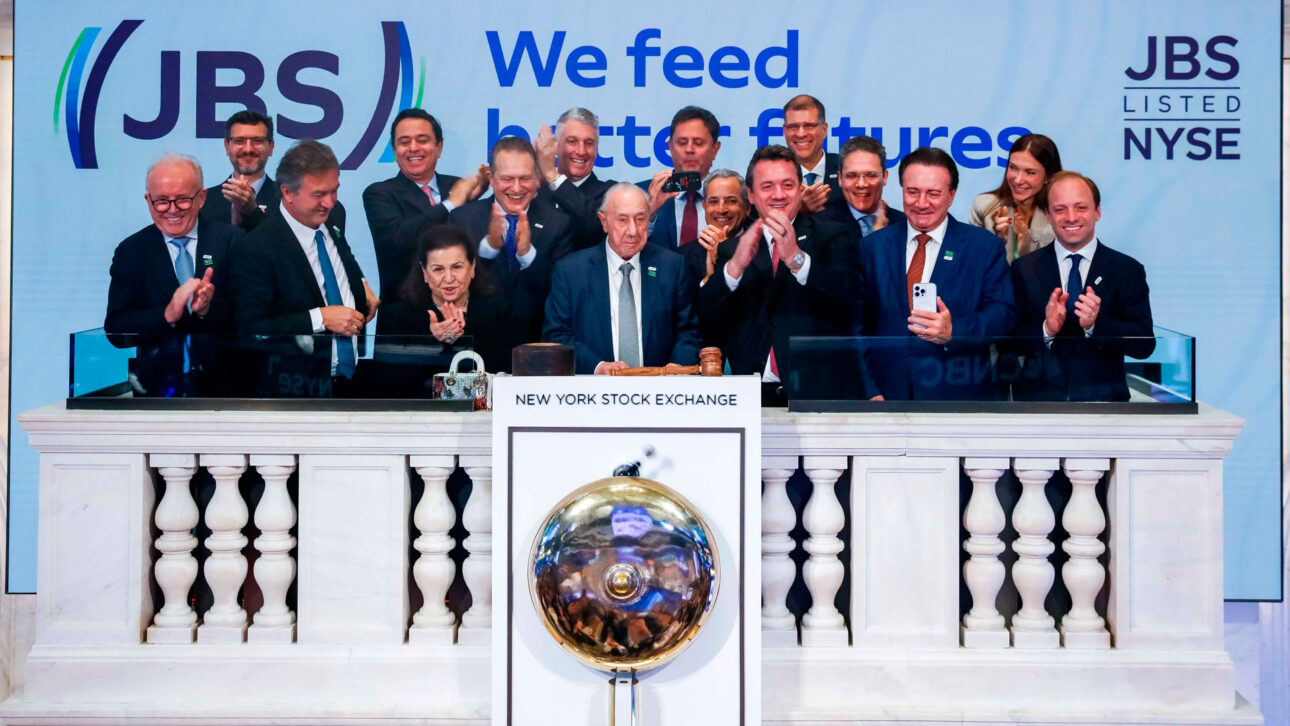
The process was preceded by minority approval in May, after years of ups and downs. Analysts highlighted at the time the potential for repricing of shares with international exposure and improved governance, although NGOs and part of the market have maintained ESG pressures on the company.
In practice, being in New York provides more bargaining power for acquisitions, either through cash or through globally listed shares, in addition to increasing access to cheaper debt. For European consolidation, competitive financing is decisive.
Antitrust Hinders Acquisitions in the US and Brazil (20%–25% in the Three Proteins)
If in Europe JBS sees space, in the US and Brazil the landscape is different. Batista stated that in beef, pork, and chicken, the company already has between 20% and 25% of market share in the US, which limits new purchases due to antitrust issues. In Brazil, the perspective is similar, especially in processed foods, where relevant acquisitions tend to face resistance from regulators.
This situation explains why the M&A agenda should focus outside these two markets. Growing without hitting concentration has become a condition for the capital raised with the dual listing to translate into business.
The backdrop is the increasing global competitive scrutiny in food, with authorities in the US and Brazil more attentive to moves that reduce rivalry among players—this context helps understand the European focus of the strategy.
Should JBS accelerate purchases in Europe or wait for more data on the impact of GLP-1 on meat demand? Do you agree with the assessment that antitrust in the US and Brazil pushes growth outward? Share your views below.





Be the first to react!