






 Portuguese
  Spanish
  5 min of reading
  0 comments


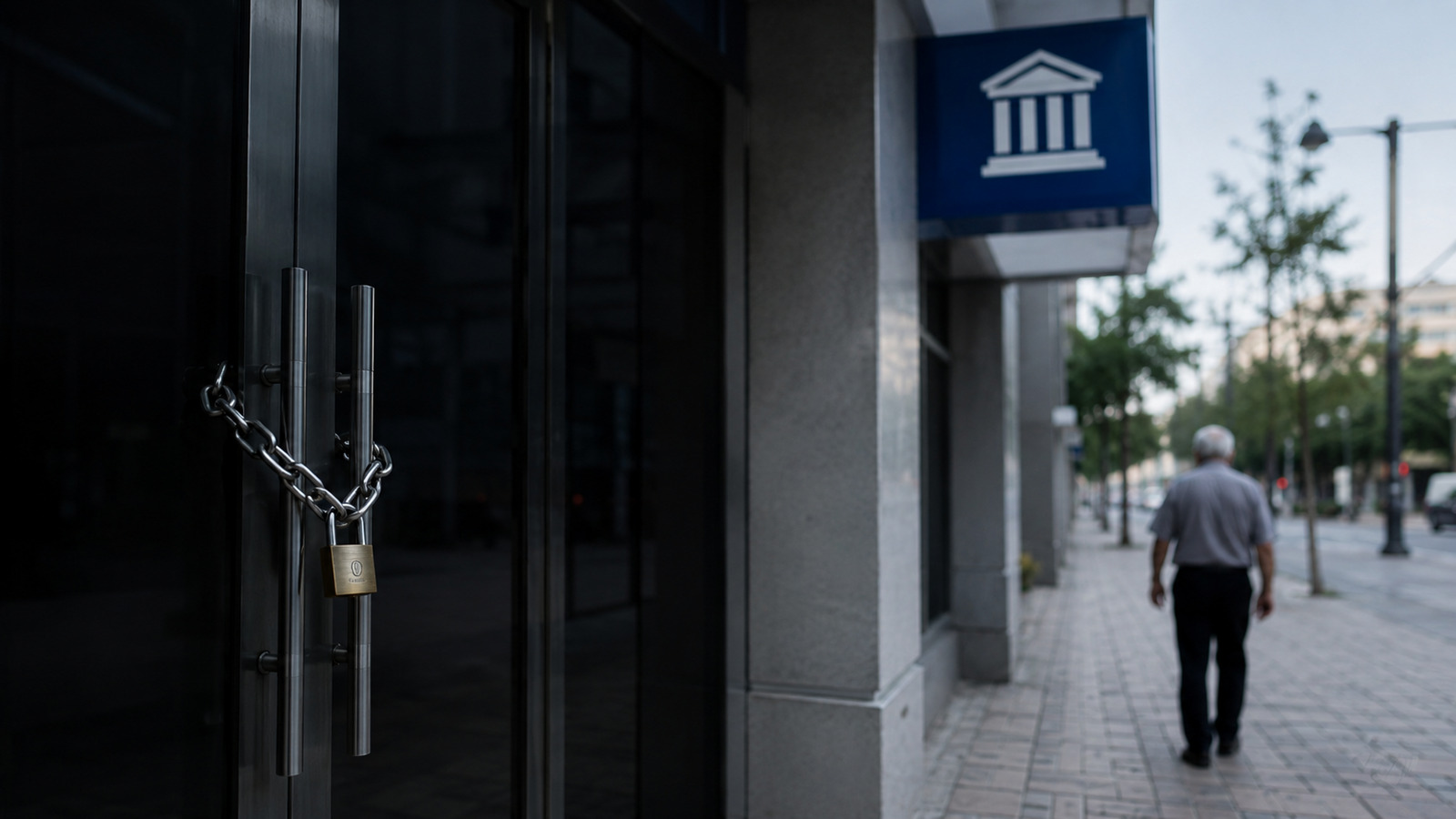
The accelerated closure of bank branches in Brazil advanced after the pandemic and Pix, increasing the impact on the elderly, residents of small towns, and regions where digital service still does not replace in-person service
Brazil lost 37% of bank branches in ten years, reducing the network to just over 14,000 units. The change follows the advancement of digital service, Pix, and the banks’ strategy to cut costs, but it already leaves 19.7 million Brazilians without a branch in the municipality where they live.


Closure of bank branches advanced and reached almost half of the municipalities
Since 2015, 638 Brazilian municipalities have been left without a bank branch. The movement left 6.9 million people without this type of in-person service in their cities, according to calculations by Dieese, based on data from the Central Bank.
Currently, 2,649 municipalities do not have bank branches. The number represents 48% of the total cities in the country. Ten years ago, this proportion was 36%, which shows the expansion of the banking void in part of the national territory.
-
Government wants to pay up to R$ 8,000 to more than 2,300 traditional families in over 100 communities in Acre and Amazonas for environmental services provided to the Amazon.

-
Coal mine purchased for $2 million in Wyoming, the Brook Mine holds rare earth elements and critical minerals estimated at up to $37 billion, in an asset that the US is competing for with China.

-
In the year Brazil won the World Cup, gasoline cost R$ 1.77, the cheapest car was worth R$ 13,000, there were no flex-fuel cars, SUVs were rare, and no Chinese brand sold a single vehicle in the country.
-
Neighboring Balneário Camboriú will receive a R$ 1 billion airport with 225 hangars, an area of 2.2 million m², a technology park, and an export zone that promises to transform the economy and generate thousands of jobs.


In population terms, the lack of a branch in their own municipality affects 9% of Brazilians today, or 19.7 million people. In the past decade, this group represented 3.4% of the population.
The closure intensified after the pandemic and following the arrival of Pix. During this period, almost 6,000 traditional branches were closed, while banks increased investments in remote service, apps, and units focused on specialized services.
Digitalization changed the relationship with banks, but physical service is still used
Febraban states that banks are adjusting their structures to the new consumer profile, in a market where digital channels have become the preferred choice. The entity says that currently, practically all banking operations can be done electronically.
Even so, the data shows that physical service still plays a relevant role. In 2024, 27% of bill payments, 14% of investment contracts, and 5% of transactions were made through physical channels, according to a survey by Deloitte in partnership with Febraban.
There are still services that have grown in branches compared to the previous year. Credit contracting rose 11%, reaching 45 million operations. Insurance contracting advanced 6%, to 55.5 million.
Deloitte points out that in-person demand is linked to the complexity of some products. For some clients, clarifying doubts, receiving clear guidance, and maintaining a close relationship with a specialist are still important factors.
The fear of scams and fraud, especially in higher-value operations, also weighs in. Difficulty with apps, the internet, and digital services appears as an obstacle for the elderly and people with less access to technology.

Elderly, small towns, and peripheral areas feel the impact more
For Edilson Julian, president of the Bank Workers’ Union of Marília and Region, the closures affect employees and residents. He states that the digital trend exists, but it is necessary to ensure service for those who are still not familiar with technology.
In the Marília region, in the interior of São Paulo, the reduction was significant. The city once had 50 units and now has 20. At the beginning of each month, according to the union, there are lines before the branches open.
The entity cites the case of Oscar Bressane, a rural municipality in São Paulo with 2,470 inhabitants, which was left without a physical service point. Residents need to travel about 40 km to Marília to find a bank.
In Ceará, the closure also gained speed. Since 2022, 117 locations have been closed, according to the state’s Bank Workers’ Union. In 2025 alone, there were 62 closures.
José Eduardo Rodrigues, president of the Ceará union, states that part of the population not only faces difficulty with apps. There are residents who also do not have a sufficient internet data package to make transactions via mobile phone.
Rosângela Vieira, an economist at Dieese who works at the Bank Workers’ Union of São Paulo, assesses that the policy of closing branches mainly affects the elderly and peripheral population. For her, this increases difficulties in accessing credit and may increase exposure to digital scams.

Banks reduce costs and invest in more specialized models
The reduction of the physical network is also linked to the cost of maintaining branches. Rent, security, staff, money transport, and maintenance weigh on the accounts, especially when most operations migrate to digital channels.
In 2024, 75% of banking transactions were made via mobile phone. For banks, this change reinforces the strategy of concentrating everyday services in the app and reserving part of the physical structure for consultative services and more profitable businesses.
Marcelo Noronha, CEO of Bradesco, told Folha that transporting money is expensive and that revenues linked to checking accounts and card annual fees have fallen. According to him, it is difficult for a branch to be profitable in cities with less than 20,000 inhabitants.
Bradesco has been reallocating and retraining managers from closed units for remote service. The bank also transforms strategic points into Principal units, a line aimed at high-income clients, with service similar to an investment boutique.
At Santander, employees who serve small businesses have started visiting clients outside the branches. The bank maintains 17 WorkCafé units, a model that mixes coworking, café, and investment office.
Banco do Brasil bets on .BB, called Ponto BB. The Marco Zero unit in Recife was transformed in 2024, with a receptionist robot, tablets, in-person and online attendants, ATMs, store, and event area. The bank maintains 3,955 physical branches.
Itaú Unibanco inaugurated this year the Espaço Uniclass on Paulista Avenue, in São Paulo, with specialized service, financial guidance, events, store, and café. Banking services operate until 7 PM, in addition to the store opening on weekends and holidays.
Caixa had the smallest reduction among the large banks. Since 2019, its service network has decreased by 5%. With low-income government programs and real estate financing, the institution claims to maintain in-person service where it is essential.
Empty properties become a new problem for cities
The closure of branches also affects the urban real estate market. Many bank properties are large, have low demand, and can remain closed for months or years, subject to vandalism and invasions.
In Santos, one of the municipalities that lost the most branches in 2025, there were 14 closures. Adriano Leocadio, Secretary of Finance and Management, states that there are branches with more than 1,000 square meters deactivated, especially in the historic center.
São José do Rio Preto lost 11 branches last year. The city hall is working on a downtown revitalization plan, with exemption from IPTU and ITBI for owners who renovate and repurpose closed or abandoned properties.
This article was prepared based on information from Folha de S.Paulo, Dieese, Banco Central, Febraban, Deloitte, bank unions, cited banks, and municipal managers mentioned in the provided material, with data, numbers, and statements preserved as per the consulted material.



Be the first to react!