Portuguese
  Spanish


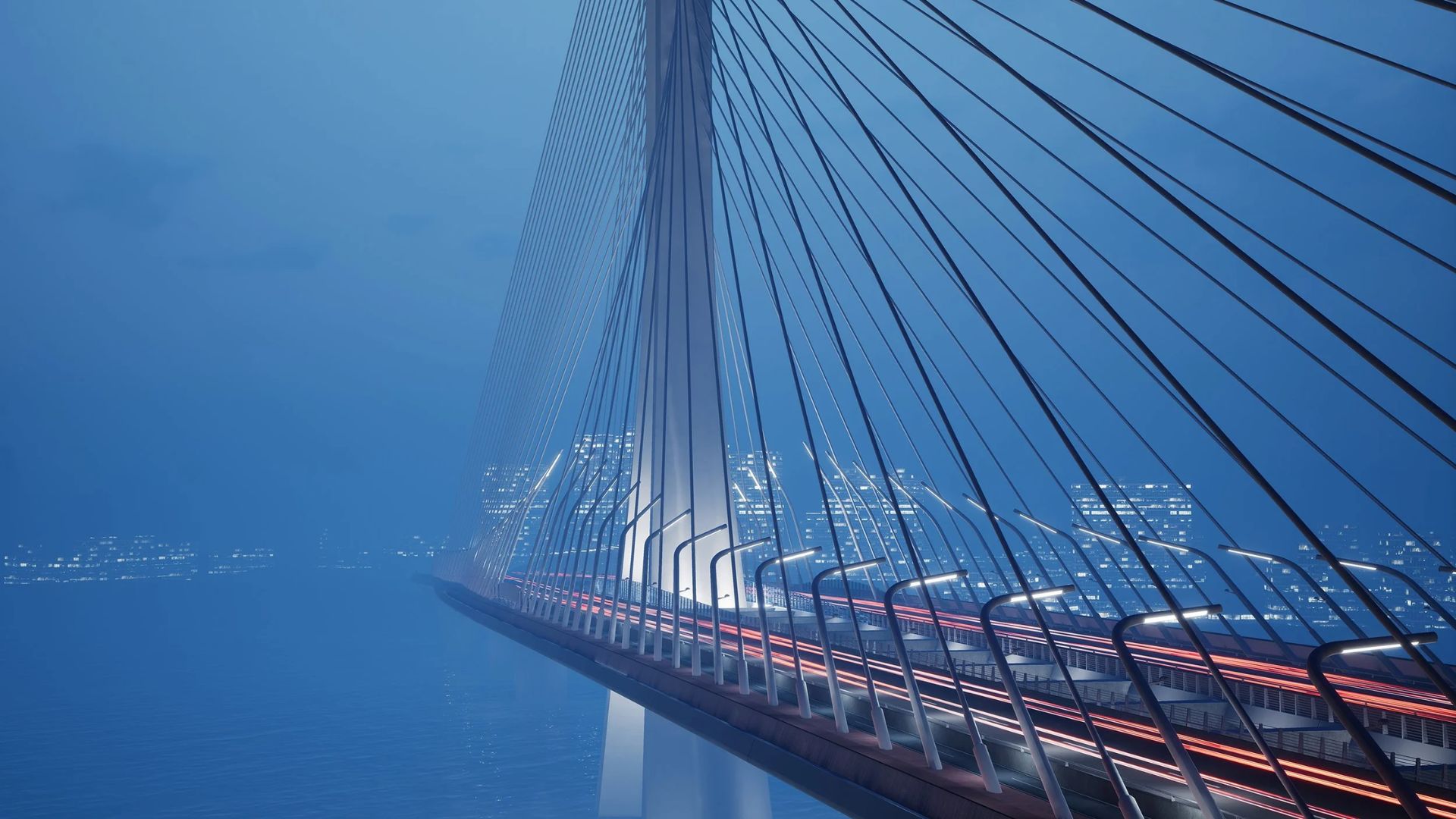

It is 920 meters long, a design that looks like it’s straight out of a movie, and was one of Zaha Hadid’s last ideas before she died in 2016. Just note the exact category of the record, because it is not the largest bridge on the planet, and many headlines out there will get this wrong.
The bridge is the Danjiang, in northern Taiwan, and opened to traffic on May 12, 2026, concluding one of the most talked-about engineering works in recent times. The project is signed by the office of British-Iraqi architect Zaha Hadid, winner of an international competition in 2015, as reported by the Olhar Digital portal.
According to the specialized publication Global Construction Review, in May 2026, the structure claimed the title of the world’s largest asymmetrical single-tower cable-stayed bridge, with a central span of 450 meters and a concrete mast 200 meters high. The bridge in Taiwan took almost thirty years from the first proposal to its inauguration.
A single mast holding almost a kilometer of bridge

Instead of several pillars embedded in the riverbed, it relies on a single slender central tower, from which the cables asymmetrically extend to support the deck. It is 920 meters long in total, with the longest section reaching 450 meters on one side of the mast.
-
Brazil to Convert 80 Public Properties into 11,000 Affordable Homes Across 44 Cities to Address Housing Shortage

-
Brazilian Company Develops Wall Panels from Recycled Refrigerator Foam with Comparable Thermal and Acoustic Performance

-
Brazil’s São Paulo Region Unveils Latin America’s Largest Timber Shopping Mall, Built in 7 Months, Capturing Carbon and Preventing 900 Tons of Emissions
-
Danish Island Uses Seaweed for Durable, Centuries-Old Roofing Solution


This single tower is not an aesthetic whim; it is an engineering solution. Positioning just one mast in the right place keeps the river navigable, reduces the impact on the estuary ecosystem, and, as a nice detail, avoids obstructing the view of the sunset on the Tamsui River, a famous activity among locals and tourists in the region. The bridge in Taiwan was also designed to withstand typhoons and earthquakes, with a seismic damping system touted as the first of its kind in the country.
The signature of Zaha Hadid, who did not see the work standing

Zaha Hadid won the competition to design the bridge in 2015 and died the following year, in 2016, at the age of 65. She was known worldwide for her fluid and futuristic forms, which resulted in breathtaking museums, airports, and skyscrapers, and the Danjiang was one of the last creations bearing her signature.
In other words, the architect dreamed up the structure, won the competition, and departed before seeing a single cable in place. It was completed by the firm bearing her name, Zaha Hadid Architects, turning the design into concrete and steel a decade later. It’s her work coming to life without her around.
The record that many headlines will exaggerate
Now for the honest brake, which is worth gold. The Danjiang is not the largest bridge in the world, not by a long shot. The absolute champions in length span dozens of kilometers. Its record is specific: the largest single-tower and asymmetrical cable-stayed bridge in the world. Removing “single-tower and asymmetrical” and selling it as the “largest bridge on the planet” is a lie, even if it gets more clicks.
And here’s a technical detail that many reports confuse: the Danjiang is a cable-stayed bridge, not a suspension bridge. They seem the same, but they are not. In a cable-stayed bridge, the cables connect the deck directly to the tower in straight, inclined lines. In a suspension bridge, the cables hang the deck from large curved cables. Calling this largest cable-stayed bridge “suspended” is swapping the category, so here is the correct record.
What is it for, besides impressing


Beauty doesn’t pay the bills, and the Danjiang also has a practical function. It connects the districts of Tamsui and Bali in New Taipei and is expected to shorten this route by about 15 kilometers, saving around 25 minutes for those crossing the region. Additionally, it relieves about 30 percent of the traffic on the Guandu Bridge, a few kilometers upstream, and improves access to Taoyuan International Airport and the Port of Taipei.
The project still includes lanes for pedestrians and cyclists and has reserved space for a future light rail line. After almost three decades of promises, delays, and a pandemic along the way, the bridge has come to fruition. For an idea that was orphaned by its own creator for ten years, it’s not a bad way to finally stand tall.