Portuguese
  Spanish


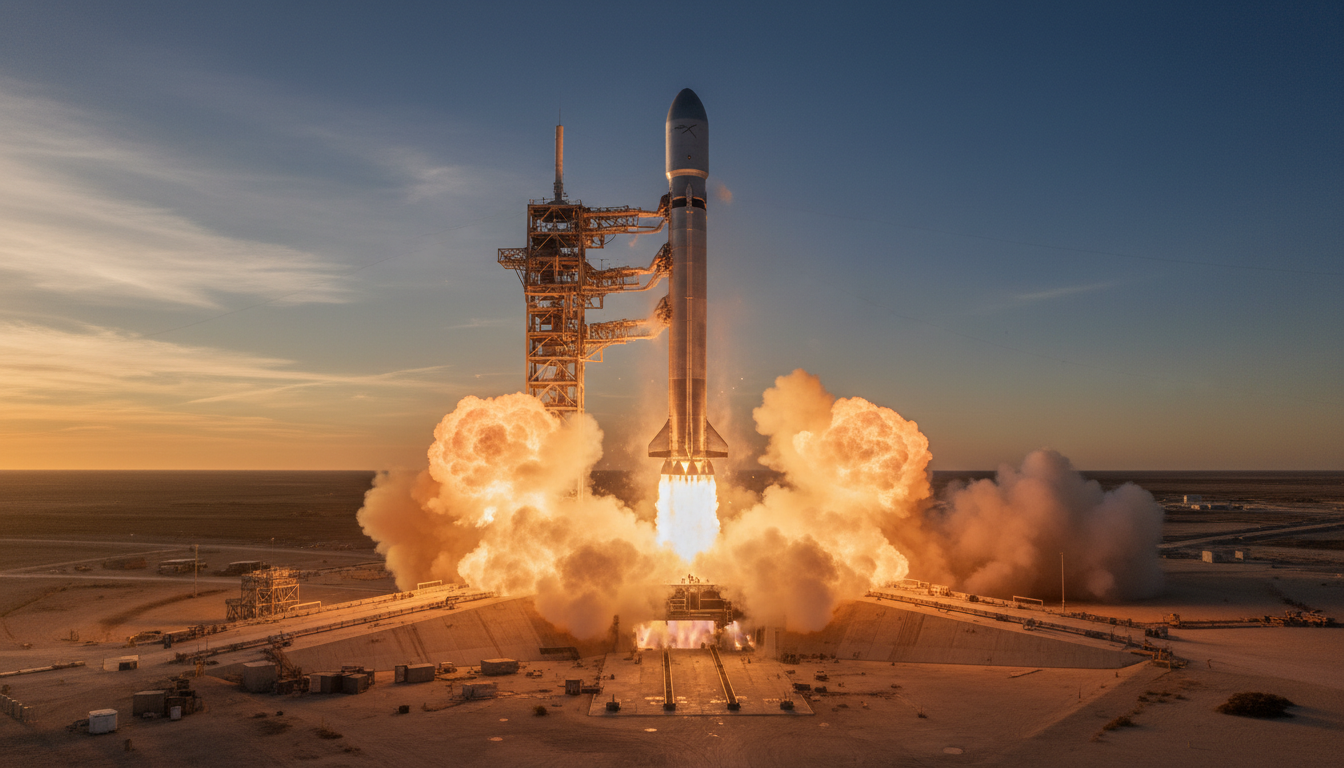


While European space agencies continue to discuss funding for new rockets in 2027, SpaceX ignited 33 Raptor 3 engines in a Super Heavy static fire test. The Starship V3 arrives at the launch pad.
The first flight is scheduled for next Tuesday. It is the most ambitious leap since the program began.
As reported by NASASpaceflight, the static fire occurred on May 7, 2026. The launch window opens on May 12 at 10:30 PM UTC.
-
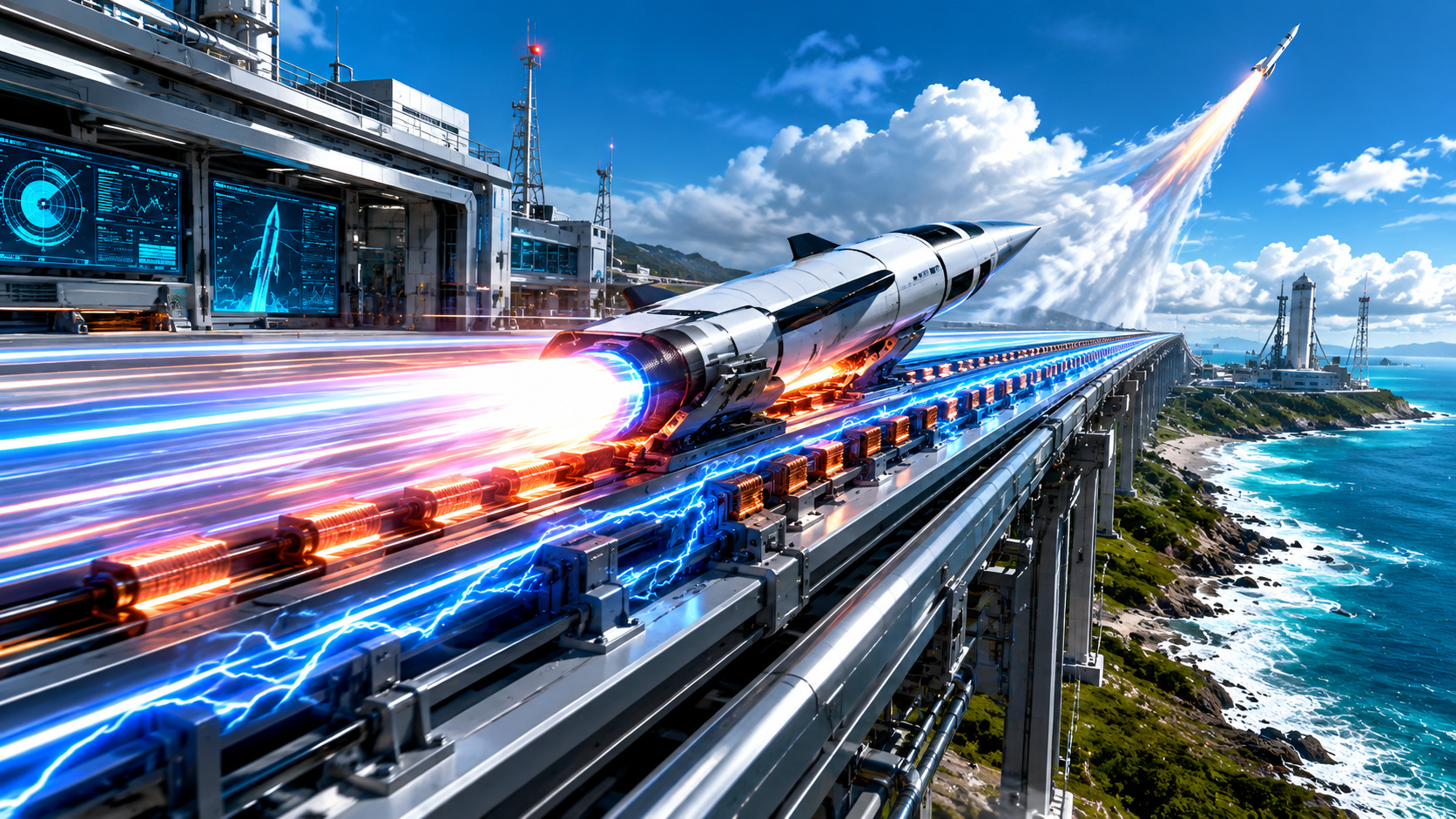
California Startup Develops Giant “Space Sling” to Launch Vehicles at Mach 6, Reducing Fuel Use and Enabling Thousands of Satellite Deployments

-
ChatGPT Alerts FBI to Prevent Planned Murder of 8-Year-Old in Brazil’s Espírito Santo
-
Scientists Discover 125-Million-Year-Old “Pregnant Fossil” with Preserved Embryos and Microscopic Larvae Inside Mollusk in England

-
17-Year-Old Justin Bernstein Develops Bacteria to Produce Glass on Arctic Ice to Reflect Sunlight, Wins $50,000 U.S. Scholarship




In fact, it is the first time the Block 3 configuration module has undergone a full-up test. The Raptor 3 engines deliver more individual thrust and greater efficiency than previous versions.

The rocket is the complete evolution of the original Starship architecture. SpaceX has been working on this version since late 2024, according to FAA documents.
Likewise, it is considered the most powerful rocket ever built by man. The total thrust at liftoff surpasses that of the Saturn V, which carried the Apollo missions in 1969.
In fact, the Saturn V had 5 F-1 engines and a combined thrust of about 3,400 tons. The new Super Heavy delivers more than double that.
As a result, SpaceX ushers in the era of the reusable “super-heavy rocket.” Other countries continue to work on traditional expendable architecture.
“The upper stage completed a full-duration static fire on April 14, a first for any V3 vehicle,” reported Space.com.
What Makes Starship V3 the World’s Most Powerful Rocket
Starship is taller than previous versions. According to public SpaceX data, the propellant tanks have been lengthened to accommodate a larger fuel load.
Therefore, its lift capacity to low Earth orbit increases significantly. The company’s goal is to place over 100 tons of payload into LEO.
- 33 Raptor 3 engines — first V3 configuration of Super Heavy
- Combined thrust > 8,000 tons — surpasses Saturn V Apollo
- Booster 19 + Ship 39 — specific pair for Flight Test 12
- Launch window May 12 at 10:30 PM UTC — Starbase, Boca Chica, Texas
- Splashdown without tower catch — deliberate step to validate architecture
As a result, SpaceX distances itself from any direct competitor. Blue Origin with New Glenn has not yet moved past its initial orbital test configuration.
As reported by Next Big Future, the launch pace could reach one flight per week by the end of 2026.
Why Starship V3 Flies Without Tower Catch This Time
Unlike Flight 11, where the company caught the Super Heavy back with the Mechazilla tower, Flight 12 will proceed with a deliberate splashdown. It is an intentional step of caution.

In fact, SpaceX prioritizes validating the new V3 architecture before resuming capture attempts. Each modification to the landing gear and Raptor 3 engines requires review.
Likewise, the orbital acceleration and deceleration test with lengthened tanks demands its own data. The flight profile follows a suborbital arc similar to missions 7-10.
Therefore, both the booster and the upper stage will fall at planned points in the ocean. Floating recovery teams will track the trajectory.
How Starship Changes the Satellite Industry’s Calculus
The cost per kilogram sent into orbit drops drastically when Starship becomes fully operational. SpaceX estimates a reduction below US$100 per kilogram.
For comparison, the space shuttle charged about US$50,000 per kilogram to low Earth orbit. The difference is 500x — something never before seen in the industry’s history.
As a result, previously unfeasible missions become routine. Satellite constellations, deep scientific missions, and even commercial payloads gain margin.
As reported by Click Petróleo e Gás on commercial stations, the private sector is already organizing for the new scenario.
What Starship Means for the Artemis and Mars Programs
NASA has contracted SpaceX to use a derived version of Starship as the lunar lander for the Artemis program. The first crewed descent is planned for 2027.
According to the technical documentation, the lunar version requires orbital refueling before departing for the Moon.
Therefore, demonstrating in-space refueling is one of the V3 configuration’s objectives. Flight 12 does not yet include this demonstration — it is reserved for later missions.
Likewise, SpaceX maintains the goal of uncrewed landings on Mars during the 2028 transfer window. In this scenario, the V3 version would be the standard vehicle.

Flight Test 12 and Program Delays
The original schedule anticipated Flight 12 in March. The window was postponed after issues in preliminary pressurization and onboard software tests.
As reported by Applying AI, the delay also impacted SpaceX’s IPO plans. Investors are monitoring the launch pace.
In fact, the New York Stock Exchange maintains speculation about when SpaceX might go public. Each successful test increases the company’s private valuation.
Despite this, SpaceX prefers not to comment on financial plans publicly. The company’s focus remains on engineering.
On the other hand, Brazilian suppliers of special steel and high-temperature resistant alloys are monitoring the evolution of the Starship program.
Indeed, parts used in rocket engines demand advanced metallurgy. National companies with relevant industrial capacity are positioning themselves for partnerships.
Likewise, Brazilian educational and research institutions follow the development of propulsion technology as an educational reference.
Caveats and What Could Delay Starship’s Launch
However, the May 12 launch still depends on final FAA licensing. The agency needs to certify risk mitigation for the Texas coast.
Despite this, SpaceX is already working with backup windows on May 13 and 14. Each window has a limited duration due to orbital and meteorological restrictions.
However, weather conditions on the Texas coast in May could jeopardize flights. Frequent spring thunderstorms have delayed previous tests for several cycles.