






 Portuguese
  Spanish


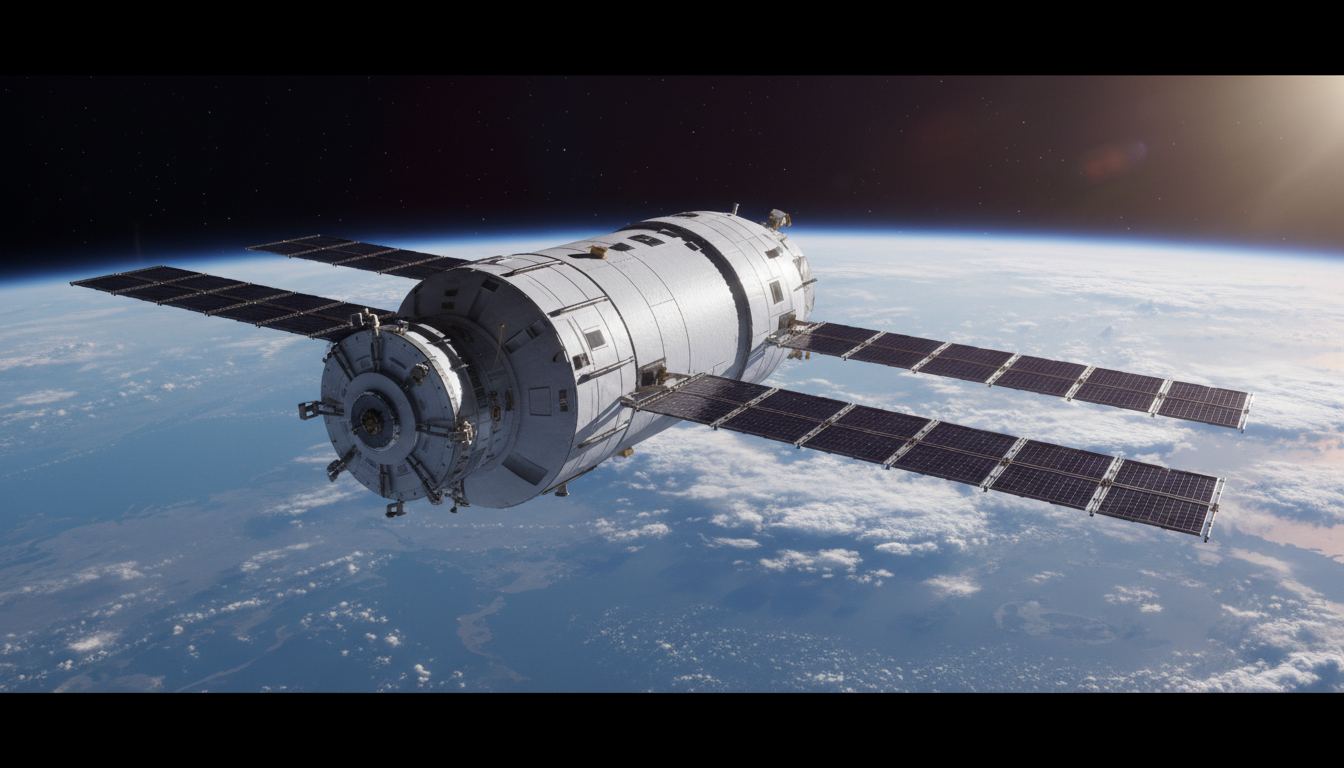
With an investment of $1 billion, a team of 950 people, and a launch scheduled for May 2026 via SpaceX’s Falcon 9, Vast’s Haven-1 will be the first fully private space station to orbit Earth — without government involvement
A startup has hired 950 people and invested $1 billion to launch the world’s first private space station in May 2026. No government, no NASA in charge. The Haven-1, developed by the American company Vast Space, will be placed in orbit by a single Falcon 9 rocket from SpaceX.
With 45 m³ of habitable volume and capacity for 4 astronauts, the station will be the largest payload ever launched by a Falcon 9 — about 14,000 kg. The fundamental difference is the concept: a single launch puts everything into orbit, without the assembly in space that the ISS required over 13 years.
“If we follow our plan, we will be the first standalone commercial platform in LEO in space with Haven-1, and this is an incredible turning point for human spaceflight”, said Drew Feustel, chief astronaut of Vast and former NASA astronaut, according to Space.com.
-
U.S. National Park Deploys Robotic Birds Near Wyoming Airport to Protect Endangered Species: Dancing and Sound-Emitting Replicas Aim to Lure Real Birds to a 100-Acre Restored Area Away from Runways After 32 Aircraft-Related Deaths

-
Russia and India Lift 320-Ton Pressure Vessel into Kudankulam Nuclear Plant Reactor, Advancing Project That Has Already Prevented 112 Million Tons of CO2 Emissions

-
Brazilian Student Wins Global Science Fair in the U.S. with Sound Wave Method to Alter Alzheimer’s-Linked Genes
-
Bosch Unveils Revolutionary 2.3 kg Hub Motor for E-Bikes with 45 Nm Torque and 400 Watts Power, Eliminating Resistance Above 25 km/h in Historic Shift for German Manufacturer


What is Haven-1 in numbers
- Habitable volume: 45 m³ (~1/8 of the ISS)
- Weight: ~14,000 kg (largest payload of a Falcon 9)
- Diameter: 4.4 meters
- Capacity: 4 astronauts per mission
- Mission duration: 10 to 14 days
- Planned missions: 4 in 3 years (160 astronaut-days)
- Dome window: 1.2 meters in diameter
- Internet: Starlink on board
- Investment: ~ $1 billion
- Vast team: grew from 200 to 950 since 2023

Single launch: how Haven-1 goes to space
The Haven-1 will be launched whole, in a single flight, inside the fairing of the Falcon 9. There will be no assembly in orbit. This reduces costs and complexity compared to the ISS, which required dozens of assembly missions between 1998 and 2011.
The Crew Dragon spacecraft, also from SpaceX, will be used to transport the crew to and from the station. The docking port of Haven-1 is compatible with the Dragon system. Inside the space station, each astronaut will have a private sleeping quarter, a retractable communal table, and access to the internet via Starlink.
In October 2025, Vast announced the completion of the final weld of the primary structure, painting, and the start of pressure testing in Mojave, California. The next step is load testing before shipping to SpaceX for integration with the rocket.

The race to replace the ISS
The International Space Station has been operating since 1998 and is expected to retire in 2030 or 2031. NASA created the Commercial LEO Destinations (CLD) program to encourage private companies to build commercial substitutes.
Haven-1 is not the only competitor. Axiom Space is assembling modules on the ISS itself. Starlab (Nanoracks/Lockheed) plans to launch around 2028. Orbital Reef (Blue Origin/Sierra Space) is also in development. However, Vast promises to be the first to place a standalone station in orbit.
The future operational costs of Haven-1 are estimated at US$ 1 to 2 billion per year — about half of what it costs to maintain the ISS (~US$ 4 billion annually). This difference could democratize access to low Earth orbit for scientific research and space tourism.

Caveats and risks
The schedule for May 2026 is ambitious. Delays in integration with SpaceX or in testing could push the launch back. The space station still needs safety certifications for human flight and collision mitigation in low Earth orbit.
The initial lifespan is only 3 years, with 4 planned missions. Success depends on clients willing to pay for stays of 10-14 days. Vast is already working on Haven-2, a modular version and candidate for NASA’s CLD program. For details, see Geocracia and Blog da Engenharia.


Be the first to react!