






 Portuguese
  Spanish


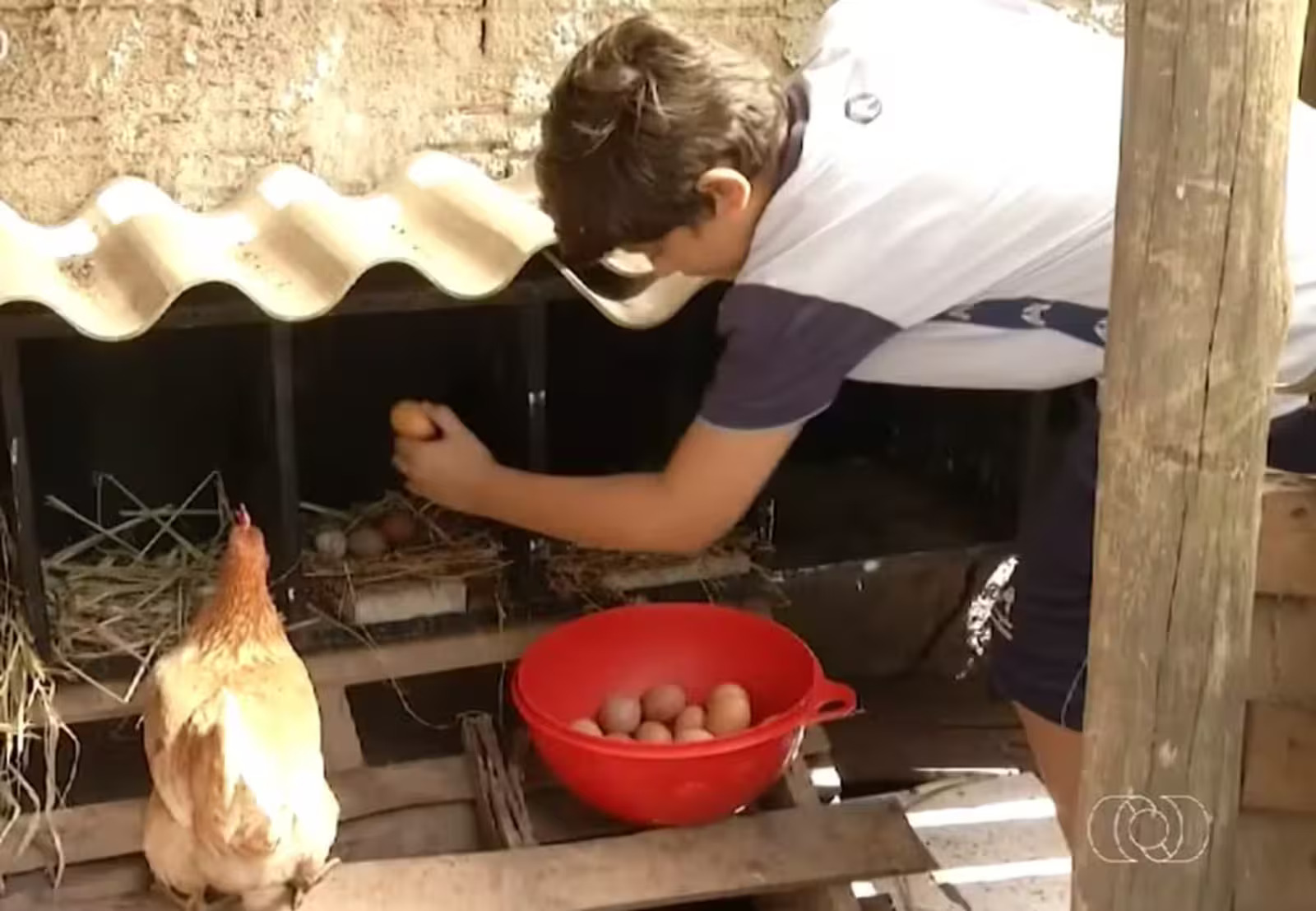
In Palmas, 11-year-old boy set up a farm with 25 chickens, sells 150 eggs per week and learns financial education
With the support of his family and planning, Davi Luís Alves, 11 years old, transformed a small farm into a source of income in Palmas, where he sells about 150 eggs per week, learns financial education, and stands out as an example of child entrepreneurship.
How the egg farm came about
The initiative was born from a proposal by his father, who wanted to show his son the importance of achieving one’s own things through effort and organization.
Today, Davi takes care of 25 improved chickens. With them, he collects about 150 eggs per week and maintains a routine related to the operation of the small business.
-
Petrobras and Engeko’s New Investment Plan Promises Billions and Thousands of Jobs, Capturing Market Attention

-
JBS Halts Beef Production for China as Brazil Exceeds 50% of 1.106 Million-Ton Quota; Tariff May Rise from 12% to 67%, Raising Concerns Over Cattle Prices.

-
Brazil’s Social Security Alters Biometric Rules for Pensions and Benefits, Sets 30-Day Deadline, Expands Requirements, and Clarifies Who Is Exempt from Immediate Update
-
Major Brazilian Supermarkets, Including Carrefour and Assaí, May Close Earlier to Prevent Price Increases


The sales started among acquaintances but began to reach other people after his mother recorded videos of the farm’s cleaning and published the content on the family’s Instagram.

Learning about costs
Before making a profit, Davi needed to understand that every business requires investment and maintenance. Therefore, his parents calculated the initial costs and set a monthly amount for him to repay the invested money.
Bruna Alves explained that this measure was adopted to show her son that any commercial activity depends on expenses to continue operating.
In the beginning, the money Davi received from selling the eggs was used to cover these expenses. He mentioned that during this phase, he often had no balance in his account.
Now, according to the boy, the situation has changed. The amount received from sales is kept for him, and when he needs to buy feed, the payment comes from his own saved money.
Plans to expand production
The family’s expectation is to expand the farm in the coming months. Davi is preparing 40 chicks, which should become laying hens in about five months.
Additionally, he also plans to buy 40 more birds. However, the growth will be done with planning to keep up with the sales capacity and maintain the organization of the business.
Bruna stated that the clientele is gradually growing. At first, it was mostly close friends. Now, people from outside are also seeking the family to buy the boy’s eggs.
Customers and recognition at school
Among the clients is the teacher Roberta Bianca Lelis. She met Davi’s work when he needed money to buy a movie ticket.
Since then, Roberta has become a regular customer and stated that every 15 days, she receives fresh eggs at home.
At school, Davi’s child entrepreneurship also gained visibility. In a solidarity action, he used his own money to help donate milk to underprivileged children.
For the director Priscila Patrícia Silva, such actions show that teaching the value of money helps children become more financially balanced adults.
With information from G1.




-

-

-

-

-

-

95 people reacted to this.