






 Portuguese
  Spanish


Empty parking lots and unused land turned into affordable housing in New York, and churches accelerate exit from the crisis supported by technical networks, new urban regulations, and projects that already deliver real units in city neighborhoods
In New York, where finding housing has become a brutal competition for space and money, part of the solution has begun to emerge where many least expected: behind temples, in empty parking lots, on forgotten lots, and in areas that have gone years without real use. Churches, synagogues, mosques, and other religious institutions are putting these areas into play to create affordable housing and hold entire communities in increasingly expensive neighborhoods.
The city is out of space, but not out of land
The urgency helps explain the strength of this movement. New York ended 2023 with a rental vacancy rate of 1.4%, the lowest since 1968, according to official city data.
At the same time, a report from the planning department shows that religious organizations spread throughout the city control more than 84 million square feet and have over 80% of the available area unused.
-
China’s Engineered Bamboo: The “Material of the Future” Stronger Than Steel and a Sustainable Wood Alternative

-
Egypt’s “New Nile”: 170 km Artificial River Aims to Turn Desert into Farmland, but Water Supply Concerns Loom
-
Unable to secure a mortgage as a self-employed single mother, she designed her own floating home from a 20-meter boat and now lives “off-grid” with her two children and solar panels on an English canal.
-
Man Transforms Rusty Shipping Container into Luxury Home with Insulated Walls, Large Windows, and Drywall Finish, Surprising Onlookers


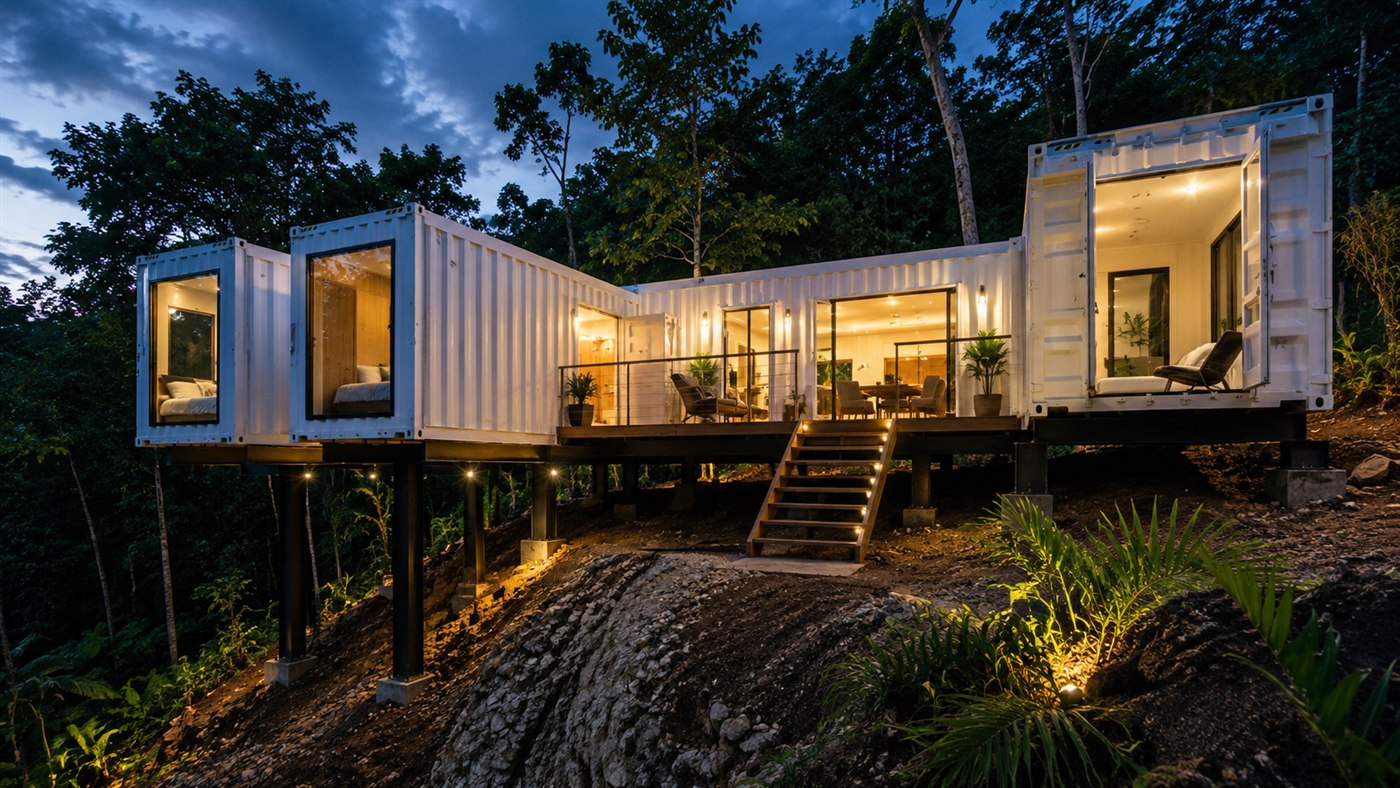
In a city squeezed by the lack of housing, this transforms unused land into one of the most promising fronts for opening space for new affordable homes.
Churches decided to move the unused land
To turn this land from paper into reality, a unique mechanism emerged in New York. The Interfaith Affordable Housing Collaborative, created in 2017, was set up to help religious institutions develop affordable housing on their properties with technical assistance, guidance, and support even before choosing a construction partner.
The group also operates a pre-development fund with forgivable loans of up to $30,000, used for studies, feasibility, preparation of RFPs, and contract negotiation.
The difference lies in control. Instead of pushing a congregation into a rushed deal, the initiative organizes the process so that the institution knows the value of the land it has, enters negotiations with protection, and keeps its mission alive while the project advances.
This design gained strength precisely because many faith communities had land but lacked the staff, funds, or knowledge to navigate complex real estate development in New York.
New York changed the rules of the game for empty parking lots
Public policy began to move in the same direction. The city approved in December 2024 the City of Yes for Housing Opportunity package, which simplified rules for housing on religious properties, facilitated conversions of underutilized buildings, and removed the parking requirement for places of worship, paving the way for empty parking lots to compete for space with new housing.
At the state level, the Faith-Based Affordable Housing Act is still active, a project that aims to accelerate this type of construction on religious land and which, according to the campaign supporting the measure, could unlock 60,000 new homes over the next decade, with the capacity to serve up to 180,000 New Yorkers.
Queens already shows the size of this turnaround
In Jamaica, Queens, one of the most symbolic cases is the Covington Garrett Intergenerational Home. The project linked to Calvary Baptist Church brings together 52 affordable units in a rare model in the state: 33 one-bedroom apartments for seniors and 19 two-bedroom units for grandparents living with their grandchildren.
The case has also become a reference because the legal structure was designed to protect the church’s financial position within the venture.
In the same Queens, the Tree of Life has taken the scale to another level. The project in Jamaica brings together 174 apartments, community areas, and space for education and services, with part of the units permanently affordable.
The initiative has been presented as the largest of its kind in the neighborhood and shows that the use of religious land or land linked to community institutions has moved from discourse to the real map of housing production in New York.
The movement has moved from good intentions to a housing pipeline
The expansion does not depend solely on an isolated project. Enterprise Community Partners states that it has received nearly $3 million to support up to 15 religious organizations in New York, aiming to create more than 1,000 affordable homes in five years.
Prior to this, the New York Land Opportunity Program had already selected churches in Manhattan, the Bronx, and Queens for technical assistance, targeting hundreds of units on underutilized land.
When the numbers add up, the church preserves its presence in the neighborhood, and the city gains housing where there was previously idle asphalt, vacant lots, or aging buildings.
New York is still far from solving its housing crisis, but the message is clear: empty parking lots and unused land can cease to be urban leftovers and become affordable homes in areas where the city needs them most.
And when this happens on land of institutions that already have ties to the neighborhood, the effect goes beyond the construction and helps to maintain community, services, and permanence in areas that have long expelled residents due to high prices.
Comment on what you think about this solution for New York and share this article with those who follow housing, cities, and real solutions to create affordable homes.







