Portuguese
  Spanish


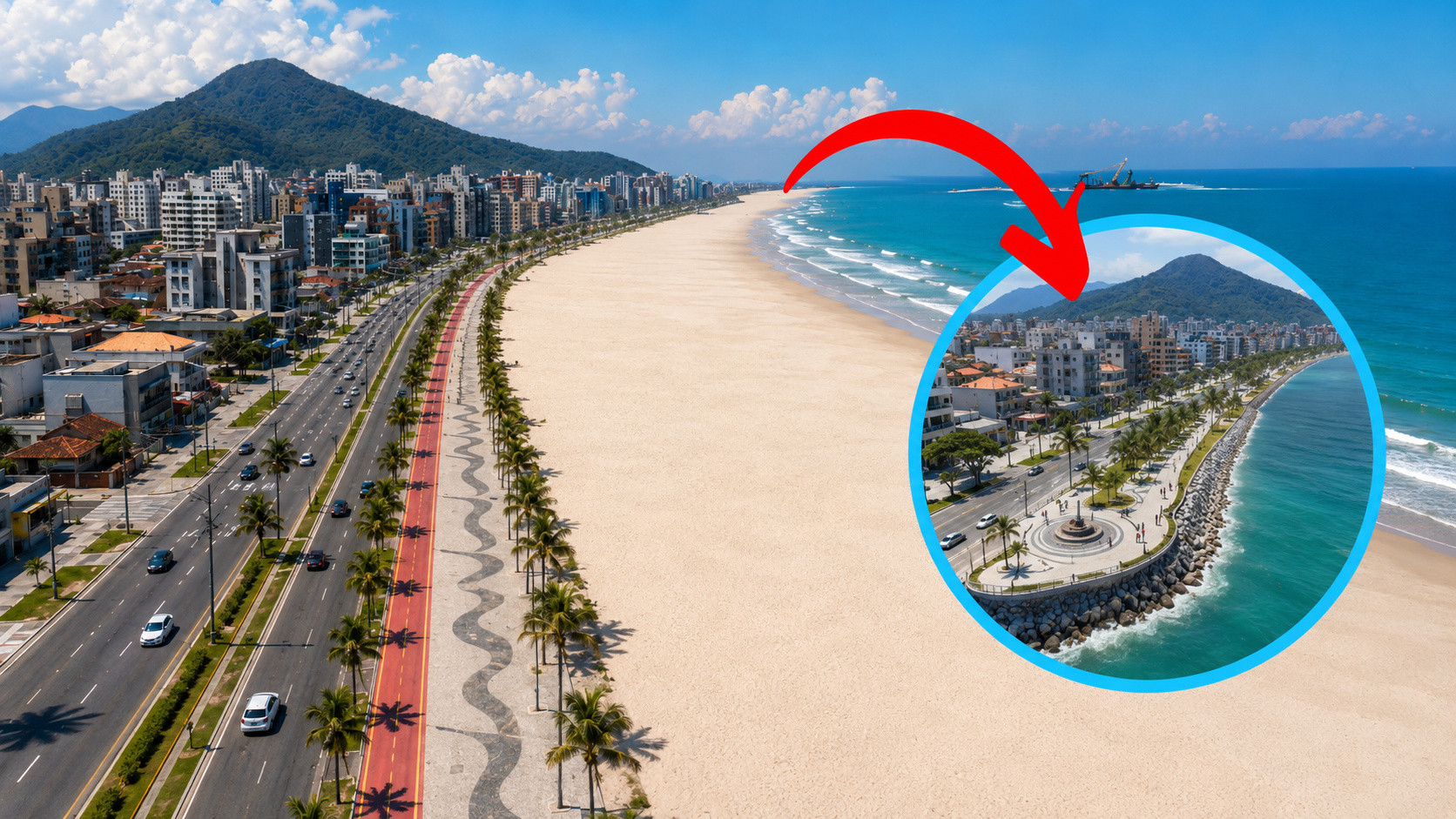

Matinhos launched 3 million m³ of sand on the coast, widened the beach by up to 100 meters and advanced with a new waterfront, drainage, and urbanization.
In 2021, when the tender for the first phase was launched, the Matinhos Waterfront Recovery Project was already considered by the Paraná government as the largest urban intervention in the history of the Paraná coast. The proposal aimed to recover 6.3 kilometers between the Avenida Paraná Canal and Flórida Beach, tackle marine erosion, storms, and flooding, and create a new foundation for drainage, containment, and urbanization works. In October 2022, the beach nourishment phase was completed with the launch of about 3 million cubic meters of sand, expanding the coastal strip by up to 100 meters.
Subsequently, the work advanced to maritime structures, macro-drainage, micro-drainage, and waterfront revitalization. In February 2025, the project already included the delivery of the new walkway over the Matinhos River, while in March 2025 the Water and Land Institute reported that the new waterfront had reached 98.4% completion. What began as a response to the advance of the sea and the loss of sand ended up transforming into a broad urban reconfiguration of the city’s seafront.
How Matinhos reached the largest urban intervention in the history of the Paraná coast
When the project gained institutional strength, the state government already treated it as the main urban intervention in the history of the Paraná Coast.
-
From the Amazon to a sinking island, satellites with 30 cm resolution captured five environmental crimes hidden where no one patrols and turned suspicion into court evidence.

-
2,100 trucks, 36 hours non-stop, and 2.17 million kg of steel: Miami pours a sea of concrete to build the largest residential foundation in Florida under the 218-meter Bentley tower with car elevators to private garages in the sky.

-
A man bought a friend’s house, was warned of a “secret” in the backyard, and dug almost 1 meter until he hit a metal lid: a fiberglass nuclear fallout shelter sealed since 1961, which he restored as an underground refuge at 22 °C year-round.
-
Spanish owner lost an ancient pine tree during a storm, chose a 500-year-old olive tree and mobilized a crane and platform truck to move the 6-ton tree and transform the mountain chalet with living history and monumental landscaping.


In December 2024, the state administration reported that the new waterfront had reached 96.53% completion in November and that the delivery of the first phase was expected in the first quarter of 2025.
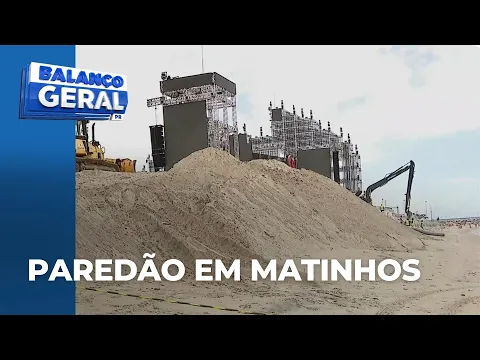

The logic of the work was to reverse a persistent scenario of sediment loss, frequent storms, and vulnerable urban infrastructure.
The goal shifted from merely containing specific damages to reorganizing the entire city’s seafront with a wider and more protected physical base.
In practice, Matinhos stopped treating the beach merely as the natural edge of the city. The coastal strip began to be seen as urban and environmental infrastructure, capable of supporting containment, drainage, pedestrian and cyclist circulation, and leisure facilities.
Beach nourishment launched about 3 million m³ of sand and expanded the coastal strip
The most visible stage of the project was the so-called beach nourishment. In October 2022, the government of Paraná announced the completion of this phase, highlighting that the shoreline had received sand removed from the seabed and was expanded by up to 100 meters over a stretch of 6.3 kilometers.
The technical material presented at II FluHidros describes this replenishment as the main flexible structure of the project.
According to the study, the shoreline recovery was done with about 3 million cubic meters of sand sourced from a deposit on the submarine platform.
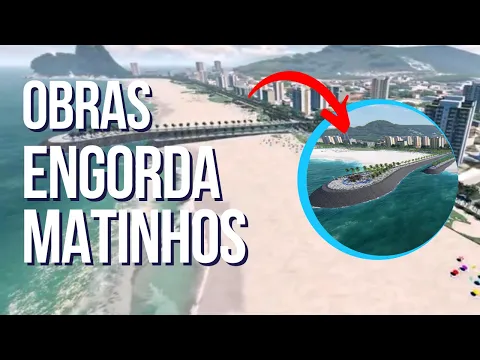
This nourishment was not planned merely as an aesthetic expansion of the beach. It served as a physical base for a broader coastal system, integrated with current guides, groynes, headlands, and drainage works aimed at stabilizing the sand strip and urban protection.
New sand strip paved the way for containment, drainage, and shoreline reconfiguration
After the beach expansion, the work advanced in areas that explain why Matinhos did not just receive more sand.
The first phase included semi-rigid maritime structures, macro-drainage channels, micro-drainage networks, and the urban revitalization of the shoreline.
In March 2025, the IAT reported that the Praia Brava groyne, the current guides of Avenida Paraná and Matinhos, and the headlands of Riviera and Flórida resorts were already completed. The same bulletin indicated 100% of macro-drainage executed.
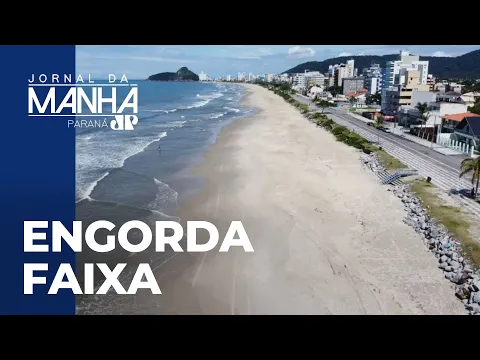
Drainage became one of the central axes of the project because the work was also designed to reduce flooding and surges caused by heavy rains and storm surges.
According to the IAT, the street water passes through the micro-drainage gutters and flows into larger channels, such as those of the Rio Matinhos, Avenida Paraná, and Avenida Juscelino Kubitschek.
Urbanization advanced with bike path, walking track, accessibility, and sidewalks
The urban phase showed that the project went beyond coastal engineering. The state government’s plan included the installation of a bike path, walking and running track, accessibility track, and sidewalk, as well as new urban finishes along the shoreline.
In March 2025, the IAT bulletin recorded 98.5% completion in the urbanization of Caiobá and 94.6% in the other resorts. In the same survey, micro-drainage appeared with 97.6% and restinga planting with 79.4%.
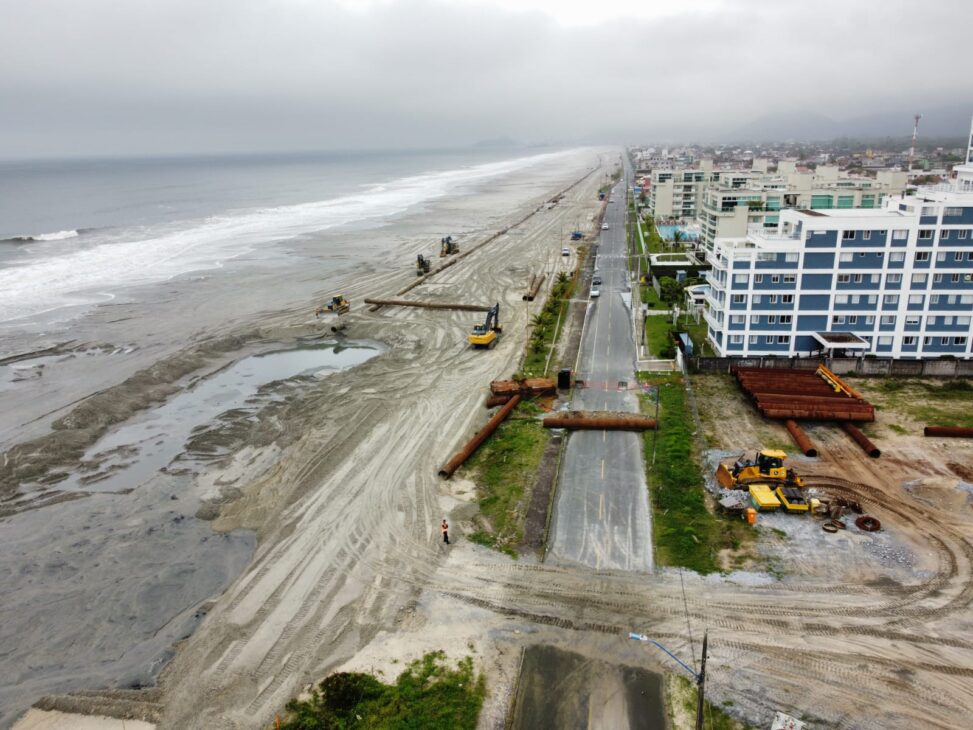
| Credit: Albari Rosa / AEN
These numbers show that the beach recovery ended up transforming into a complete reconfiguration of the seafront. The stretch gained the shape of an urban corridor for leisure, mobility, and permanence, not just an expanded strip of sand.
Footbridge over the Rio Matinhos reinforced the integration of the new shoreline
On February 4, 2025, the state government delivered the new metal footbridge over the Rio Matinhos. The structure is 60 meters long by 4 meters wide and was designed for the exclusive use of pedestrians and cyclists.
According to the official announcement, the footbridge connects Caiobá and Praia Central to the other resorts in the city. It started functioning as an integration piece of the new shoreline, reinforcing the logic of continuous circulation along the revitalized stretch.
With this, the project gained an even more evident urban component. Besides containing erosion and improving drainage, the project began to reorganize movements and expand the daily use of the shoreline by residents and tourists.
Project changed the image of Matinhos even before total completion
Even before the full completion of the first phase, the new waterfront was already changing the perception of the city. In December 2024, the government of Paraná stated that the revitalization had reached 96.53% completion and highlighted the expectation of up to a 40% increase in hotel occupancy for the 2024/2025 season.
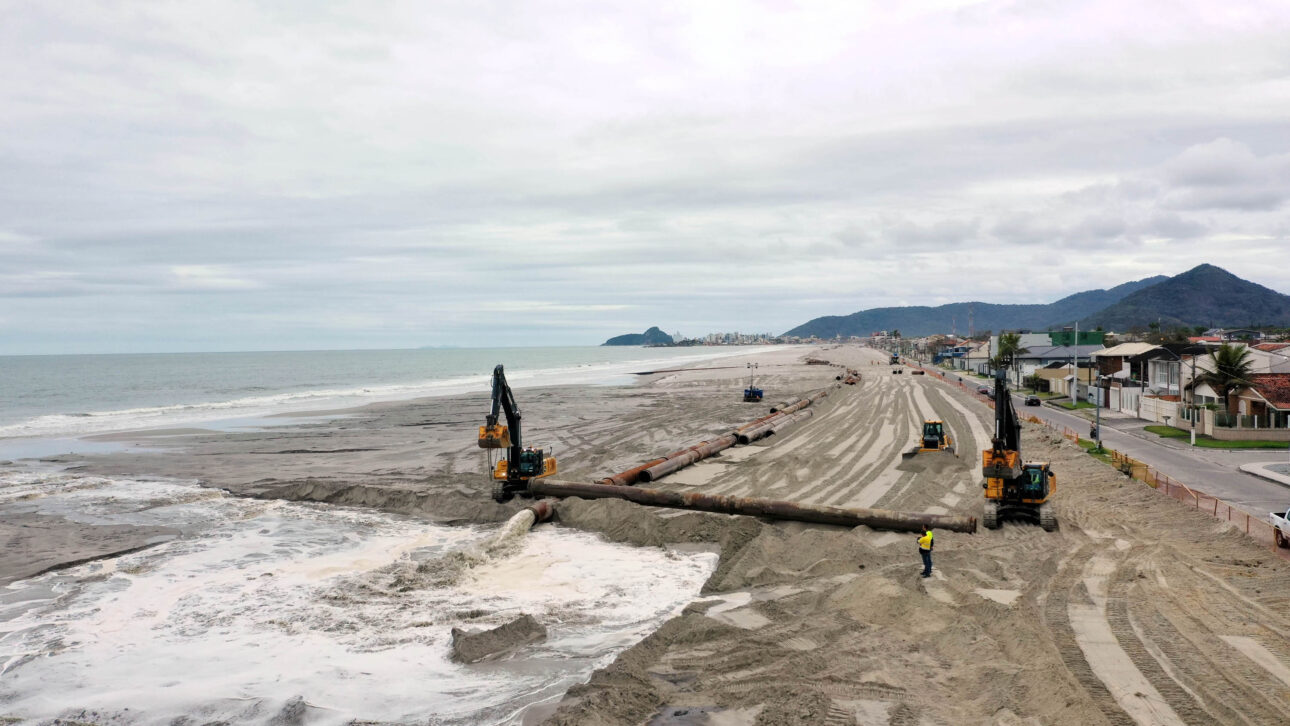
| Credit: Albari Rosa / AEN
This effect helps explain why the intervention went beyond the field of engineering. What began as a response to storm surges, sand loss, and flooding also started to function as a project for mobility, leisure, tourism, and enhancement of the seafront.
Official and technical data show that Matinhos stopped focusing solely on sediment replacement. The city underwent an integrated process of artificial nourishment, coastal containment, urban drainage, urbanization, and landscape recovery.
Throughout the execution, the beach gained a new physical scale and the city began to receive drainage structures, walkways, urbanization, and circulation areas that changed the logic of waterfront use. Instead of an isolated intervention, the municipality created a new public use base by the sea, with effects on coastal protection, mobility, tourism, and leisure.