






 Portuguese
  Spanish


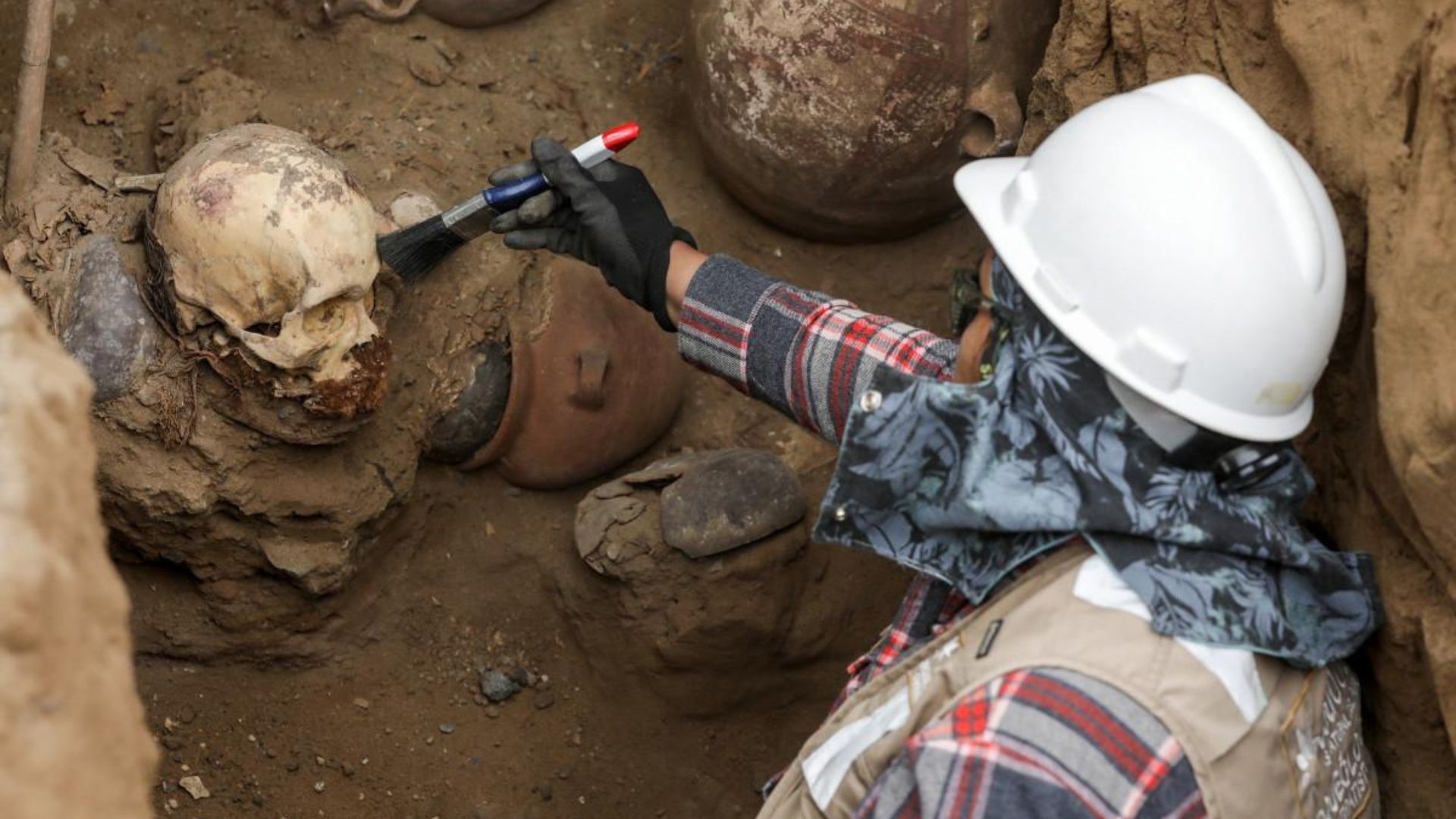

Unexpected discovery during urban construction reveals preserved pre-Inca tombs under a busy Lima street, with human remains and funerary objects approximately a thousand years old, highlighting the overlap between modern infrastructure and archaeological heritage in the Peruvian capital.
Discovery during gas work in Lima
Workers digging trenches to expand the underground natural gas network in Lima, Peru, found two pre-Inca tombs under a street in the Puente Piedra district, on the outskirts of the Peruvian capital, during an infrastructure project carried out in July 2025.
One of the funerary structures was empty, while the other preserved human remains approximately 1,000 years old, accompanied by four clay vessels and three artifacts made from gourd shells, according to information released by the Associated Press.
Find occurred in a common urban area
The discovery occurred at a work front of Cálidda, the company responsible for natural gas distribution in Lima.
-
Australia Plans to Export Desert Solar Energy to Singapore via 4,300 km Undersea Cable in a $35 Billion Project

-
Archaeologists Discover 9,000-Year-Old Stone Hammer with Perfect Hole During Routine Inspection for Norwegian Bike Path

-
New Regulations in Brazil Require Dedicated Circuit and Safety Measures for Electric Car Chargers in Condos, Highlighting Hidden Risks of Overnight Charging

-
Argentinian Students Transform Cigarette Butts into Eco-Friendly Bricks, Cutting Cement Use by Over 50% and Halving Costs




The excavation, which was part of the urban network expansion, revealed archaeological remains in an area normally used by residents, vehicles, and maintenance crews.
Archaeologist José Aliaga, interviewed by AP, linked the burial to the Chancay culture, a pre-Inca society from the central Peruvian coast.
The identification was made based on the iconography of the containers and the black, white, and red colors present in the pieces.
The body was found in a seated position, with legs drawn up to the chest, wrapped in a torn funerary bundle.
This type of burial appears in different archaeological contexts on the Peruvian coast and helps to place the find within funerary practices predating Inca rule.
Lima concentrates hundreds of archaeological sites
The presence of tombs under a busy street is not treated as an isolated case in Lima.
The Peruvian capital, with approximately 10 million inhabitants, gathers more than 400 archaeological sites attributed to the Inca period or earlier eras, according to the Ministry of Culture of Peru.
Over more than two decades of underground works, Cálidda reported having registered more than 2,200 archaeological discoveries.

The number shows how the expansion of basic services frequently crosses historical layers preserved under residential neighborhoods, avenues, and peripheral areas.
Experts interviewed by AP also state that funerary remains are common on the Peruvian coast.
Among the recurring finds are tombs, burials, ritual objects, and human remains preserved by the natural and cultural conditions of the region.
Chancay culture and the vestiges found
The Chancay culture developed on the central coast of Peru before the consolidation of the Inca Empire.
According to the interpretation presented by Aliaga, the vessels and other elements found in Puente Piedra fit into a period estimated between approximately the years 1000 and 1470.
The analysis did not depend on a single object.
The ensemble formed by the ceramics, the gourd shell artifacts, and the position of the body allowed archaeologists to associate the tomb with this pre-Hispanic group.
The find also drew the attention of residents and pedestrians passing by the street at the time of the excavation.
Some people stopped to observe the archaeologists’ work and recorded the scene with their cell phones, according to the agency.
For those living in the region, the discovery exposed an unknown layer of their own neighborhood.
A stretch previously seen only as a circulation space came to be recognized as part of a landscape occupied long before the modern city.
Urban works reveal hidden past


The Peruvian capital was built on areas occupied by different peoples over centuries.
Therefore, civil interventions that reach a certain depth can reveal archaeological materials still preserved underground.
This reality requires the joint action of technical teams and heritage specialists when gas, water, sewage, or other service networks are installed.
In a densely inhabited metropolis, urban routine coexists with vestiges that predate the arrival of the Incas and the Spanish.
In the case of Puente Piedra, the work intended to expand an essential service ended up revealing human remains, vessels, and funerary objects preserved for about a millennium under a common street in the outskirts of Lima.


