






 Portuguese
  Spanish


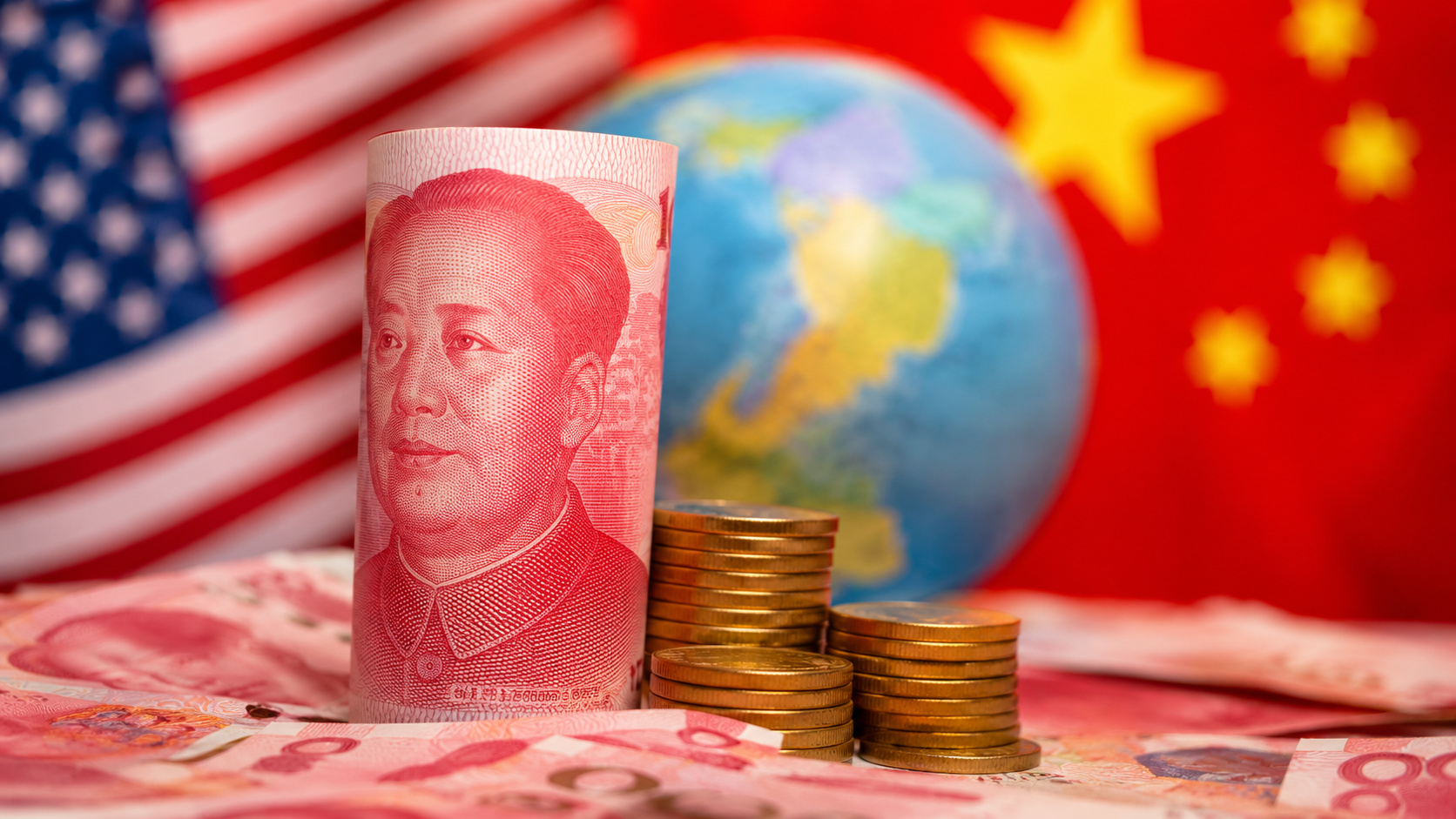
Yuan surges in the global market, increases pressure on the dollar, and strengthens the debate on the economic influence of the United States in 2026.
The Yuan returned to the spotlight in the international market after recording its highest appreciation against the dollar since March 24, 2023. This Monday, May 11, 2026, the rate released by the China Foreign Exchange Trade System reached US$ 1 to 6.847 yuan, a movement that caught the attention of investors, governments, and global economy experts.
The appreciation of the Chinese currency comes at a delicate moment for the United States, marked by doubts about American fiscal sustainability, political pressure in Washington, and questions involving the independence of the Federal Reserve. At the same time, Beijing advances its strategy to expand the international use of the Yuan and reduce global dependence on the dollar.
The topic gained even more relevance on the eve of President Donald Trump’s visit to China. The Republican arrives in Beijing on Wednesday, May 13, for meetings with Xi Jinping, returning to the United States on Friday, May 15. The strength of the Chinese currency and the new financial systems led by Beijing are expected to be part of the discussions between the two leaders.
-
JBS Halts Beef Production for China as Brazil Exceeds 50% of 1.106 Million-Ton Quota; Tariff May Rise from 12% to 67%, Raising Concerns Over Cattle Prices.

-
Brazil’s Social Security Alters Biometric Rules for Pensions and Benefits, Sets 30-Day Deadline, Expands Requirements, and Clarifies Who Is Exempt from Immediate Update

-
Major Brazilian Supermarkets, Including Carrefour and Assaí, May Close Earlier to Prevent Price Increases
-
Coca-Cola Shuts Down 100-Year-Old Factory in the U.S., Impacting 85 Workers and Shaking Local Community with Historic Consequences


Yuan appreciation places China in a strategic position in the global market


The recent advance of the Yuan represents more than just a currency fluctuation. For international analysts, the appreciation of the Chinese currency demonstrates that China is gradually expanding its financial influence in the world.
Data from the Bank for International Settlements (BIS) show that the use of the Yuan in global transactions has grown rapidly in recent years. In 2013, the Chinese currency was used in only 2.2% of international financial operations. By 2025, the share had already risen to 8.6%.
This growth reflects a planned strategy by Beijing to internationalize the Yuan and reduce dependence on the dollar in trade and financial agreements.
Among the main factors driving this movement are:
- Expansion of Chinese trade with emerging countries;
- Creation of alternative payment systems;
- Increasing use of local currencies in bilateral agreements;
- Investors’ search for currency diversification;
- Reduced confidence in dollar-denominated assets.
Behind the scenes, the Chinese government is trying to transform the Yuan into an increasingly relevant currency in global trade. The goal is to reduce China’s vulnerability to economic sanctions and fluctuations caused by the United States’ monetary policy.

Chinese currency gains ground outside Asia and challenges dollar dominance

The international expansion of the Chinese currency is no longer just a regional economic project. In recent years, the Yuan has begun to gain ground in financial operations carried out in Asia, Africa, the Middle East, and Latin America.
In May 2026, China and Indonesia announced a QR Code payment system that allows direct transactions in local currencies. In practice, this reduces the need to use the dollar as an intermediary in commercial operations between the two countries.
Furthermore, the BRICS have also been discussing alternatives to expand the use of national currencies in international negotiations. China leads much of these initiatives, using the Yuan as a central piece of the strategy.
Experts point out that the Chinese currency has been benefiting from a more fragmented global scenario. Many countries have started to seek financial mechanisms less dependent on the United States after recent episodes of international economic sanctions.
Although the dollar is still dominant, the growing presence of the Yuan is already causing significant changes in the global financial market.
United States faces fiscal pressure and doubts about the future of the dollar
While the Yuan rises, the dollar faces a moment of greater instability. International investors are cautiously watching the political and economic scenario in the United States, especially in light of the increase in public debt and internal conflicts in Washington.
Another point that concerns the market involves the Federal Reserve. Some investors fear that political disputes could affect the independence of the U.S. central bank, reducing global confidence in the dollar.
In recent months, the market has also begun to question the long-term fiscal sustainability of the United States. The continuous increase in public spending and discussions involving the debt ceiling have heightened economic uncertainties.
Among the factors currently pressuring the dollar are:
- Accelerated growth of U.S. public debt;
- Political uncertainties in Washington;
- Debates about FED independence;
- Greater international currency diversification;
- Expansion of alternative financial systems led by China.
Even so, experts emphasize that the dollar remains the main global reserve currency. The U.S. currency still dominates a large portion of the international reserves held by central banks around the world.
Valued Yuan may create challenges for Chinese exporters
Although the appreciation is seen as a sign of economic strength, the rise of the Yuan also creates difficulties for some sectors of the Chinese economy.
When the Chinese currency rises against the dollar, products manufactured in China become more expensive for foreign buyers. This can reduce the competitiveness of Chinese exports, especially in industrial segments that rely on low prices to compete in the market.
China’s economy has strong ties to foreign trade. Therefore, the government usually closely monitors Yuan fluctuations to avoid negative impacts on exporting companies.
Economists believe that Beijing will try to find a balance between two objectives:
- Strengthening the Yuan in the international arena;
- Preserving the competitiveness of the Chinese industry.
At the same time, a valued Yuan also brings advantages. A stronger Chinese currency reduces import costs, increases international purchasing power, and strengthens foreign investors’ confidence in Chinese assets.
The current movement shows that China seeks to consolidate an image of financial stability, even amid global economic disputes.
Trump and Xi Jinping are expected to discuss the rise of the Chinese currency
The recent appreciation of the Yuan occurs just days before the meeting between Donald Trump and Xi Jinping in Beijing. The currency issue is expected to occupy an important space in the conversations between the two presidents.
The United States is closely monitoring the growth of Chinese financial influence. The strengthening of the Yuan is seen by part of the U.S. government as a strategic challenge to the global dominance of the dollar.
In recent years, tensions between Washington and Beijing have moved beyond just trade tariffs. Today, the dispute also reaches technology, artificial intelligence, industrial production, and international financial influence.
Experts assess that China uses the advancement of the Chinese currency as a tool for geopolitical strengthening. The greater the presence of the Yuan in global transactions, the less international dependence tends to be on the financial system controlled by the United States.
Even so, economists remind us that the two powers remain deeply connected. China and the United States move trillions of dollars in bilateral trade every year, making an abrupt rupture between the economies unlikely.
What the appreciation of the Yuan reveals about the new world economy
The growth of the Yuan against the dollar symbolizes an important transformation in the global economic balance. Although the financial dominance of the United States remains strong, the advancement of the Chinese currency shows that new economic poles are gaining ground.
China has been expanding its presence in strategic sectors, strengthening trade agreements, and investing in alternative financial systems. The increased use of the Yuan is part of this broader strategy of international expansion.
At the same time, the dollar remains the main global reference for foreign exchange reserves, international trade, and global investments. This means that any significant change in this scenario tends to occur gradually.
The current movement of the Yuan does not necessarily represent the end of American leadership, but it shows that the international financial system is undergoing important changes.
In the coming years, investors, governments, and companies should closely monitor the relationship between Yuan, dollar, China, and the United States. After all, the decisions made by the two largest economies on the planet will continue to directly influence trade, investments, and the future of the global economy.
With information from Poder 360








Be the first to react!