






 Portuguese
  Spanish
  4 min of reading
  22 comments





Symbol Of Durability, The Zetec Rocam Marked The History Of Ford In Brazil With More Than Three Million Units Produced. Known For Simple Maintenance And Strength At Low RPMs, It Became A Reference Before Giving Place To More Modern Engines.
The Zetec Rocam engine consolidated its reputation for robustness and performance in Brazil over a trajectory that exceeded three million units produced between 1999 and 2014.
Considered a turning point for Ford in the national market, the 1.0 eight-valve engine was announced as the most powerful in its category upon its launch.
It won consumers over and became a symbol of durability for different generations of drivers.
-
Uber Faces Shareholder Scrutiny as Board Accused of Ignoring Safety, Compliance, and Harassment Warnings Amid Over 3,500 U.S. Lawsuits

-
Ferrari’s First Electric Car Divides Fans, Priced at $630,000, Amid Concerns Over Limited Editions; Brand Clarifies It’s Not Just for Future Perks
-
BYD Dolphin Mini: The Electric Car That Defies Depreciation, Losing Only 3.58% in a Year and Becoming the Best-Selling Retail Model Under $22,000

-
Electric Car JAC E-JS4 Loses $19,000 in Value in One Year, Leading Record Depreciation of Used Cars in Brazil Due to Expensive Battery and New Models


First Years And Launch Of The Zetec Rocam
When introduced at the end of 1999 in the Ford Ka and Fiesta models, the Zetec Rocam 1.0 delivered 65 hp, surpassing competitors like the Volkswagen EA111, which offered 54 hp.
Ford’s strategy was to combine simple solutions, such as the use of eight valves, roller rocker arms, and chain-driven camshaft.
The cast iron block favored lower maintenance costs and high mechanical reliability.
The result was an engine capable of achieving high mileage without the need for deep interventions, as long as the recommended oil change intervals were followed.
Production In Taubaté And Line Expansion
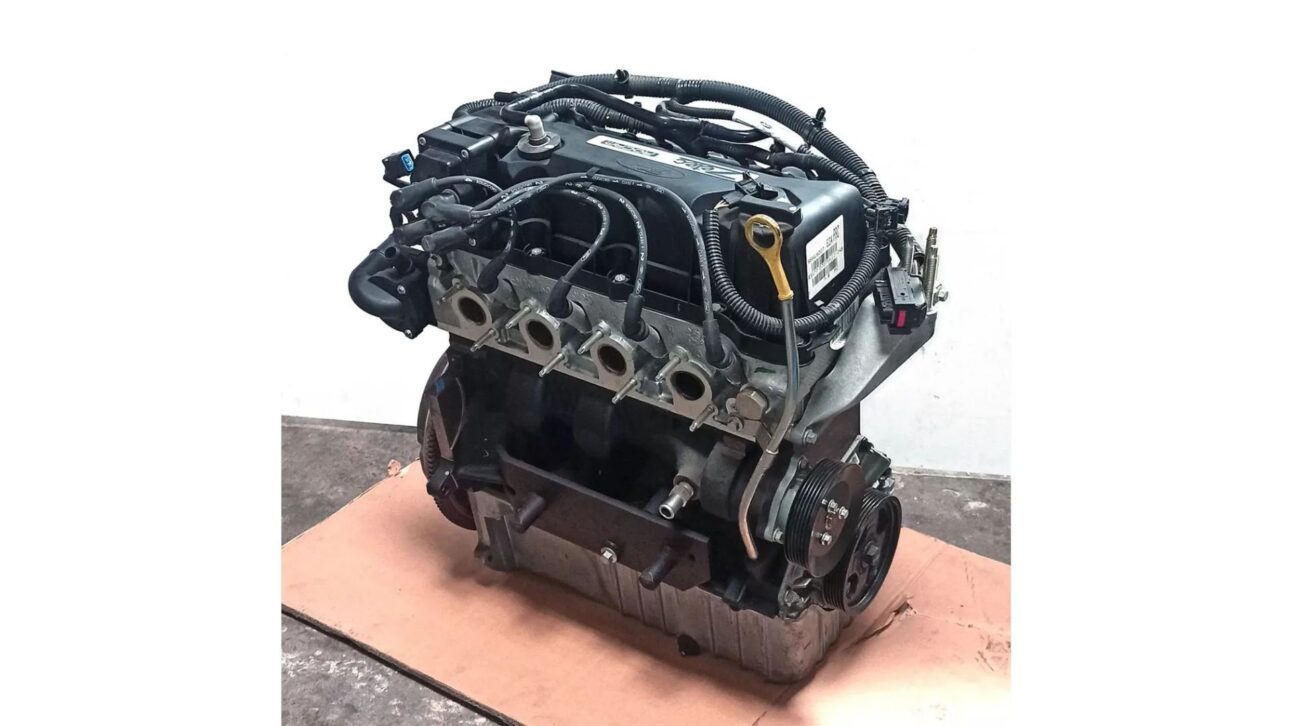
In the early years, the performance of the Zetec Rocam gained traction among consumers interested in entry-level vehicles with good torque and easy maintenance.
Ford’s factory in Taubaté, in the interior of São Paulo, was the production center responsible for supplying both the national and export markets.
In October 2012, the unit celebrated the milestone of three million engines produced.
At this stage, the line had already expanded to include 1.0 and 1.6 flex versions, present in Ka, Fiesta, Courier, and EcoSport.
These versions reached up to 107 hp in ethanol-powered configurations.
Recognition For Durability
Reports from owners confirm that engines from this line often exceeded 300,000 km without the need to open the block, provided basic maintenance was followed.
This aspect reinforced the engine’s image of resilience, making it especially attractive for those who depended on the vehicle daily.
The Rocam was also recognized for its agility at low RPMs, thanks to its maximum torque of 9 kgfm (in the 1.0 version) delivered at 4,400 rpm.
Even without technologies such as dual overhead cam or 16 valves, it offered immediate throttle response.
Models Equipped With The Engine
The Zetec Rocam equipped several highlighted vehicles throughout its trajectory.
It debuted in the Ford Ka in 1999, followed by the Fiesta hatch and sedan in 2000.
The Courier pickup received the engine in 2001 and, later, the EcoSport, launched in 2003.
The Focus produced in Argentina also used the Rocam 1.6 gasoline engine in versions intended for Mercosur.
New Regulations And End Of Production
Despite its success, the Brazilian automotive landscape underwent significant transformations from the second half of the 2000s onwards.
The intensification of environmental standards, especially the L-6 phase of PROCONVE, required reductions in carbon monoxide and nitrogen oxides emission limits.
These rules, implemented between 2013 and 2015, made it difficult for older projects to remain in the market.
With the arrival of 1-liter three-cylinder engines, equipped with dual overhead cam and 12 valves, the Zetec Rocam lost competitiveness.
Ford assessed that adapting the project to meet environmental requirements would be more costly than investing in a brand-new platform.
The end of production was officially announced for March 10, 2014.
This date also marked the implementation of a Voluntary Dismissal Program, which involved 288 workers from the Taubaté plant.
During this period, only the Fiesta Street and first-generation Ka still used the engine.

Technical Legacy Of The Zetec Rocam
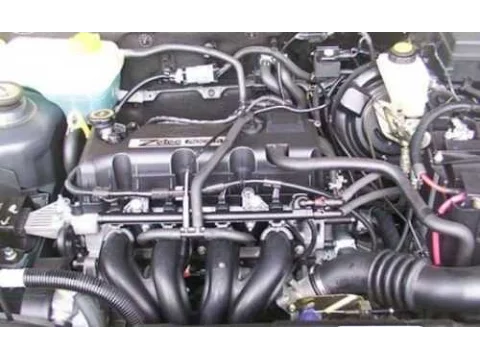
Among the main valued characteristics was its constructive simplicity, featuring a metal chain instead of a timing belt.
From 2009 onwards, the Rocam received an electronic throttle body.
The ease of finding parts and the uncomplicated maintenance keep models equipped with the Rocam in high demand in the used car market.
This popularity is even greater among beginner drivers or those working for transportation apps.
Replacement And New Ford Engines
Immediately after the end of the Rocam line, Ford opened a factory in Camaçari, Bahia, dedicated to the 1.0 3C Ti-VCT engine.
This three-cylinder engine, with dual overhead cam and 12 valves, began equipping the new Ka launched in August 2014.
It later became available in the Ka+, Fiesta Rocam for export, and second-generation EcoSport.
With a power output of up to 85 hp, the engine brought improved energy efficiency and a lower environmental impact.
Nostalgia And Impact On The Current Market
Interest in the Zetec Rocam persists even years after its retirement.
For many, the experience of driving vehicles with this engine brings nostalgic memories, as the Ka, Fiesta, and EcoSport marked an era in Brazil.
In addition to nostalgia, comparisons with more modern engines illustrate the technological evolution of the last few decades.
The Zetec Rocam helped consolidate Ford’s presence in strategic segments and contributed to popularizing the flex engine in Brazil.
Like other historic families, such as the VW AP and Fiat Fire, the Rocam remains a reference for reliability and simple maintenance.
The ongoing interest in these models in the used market highlights the space that the “unbreakable” occupies in the collective memory of consumers. What other automotive technologies, besides the Zetec Rocam, do you believe have left a lasting mark on the Brazilian market?






Tenho um Ford Ka 2008 Zetec Rocam com 185mil km. É muito simples, cuida do arrefecimento, use aditivo diluído ou água desmineralizada com aditivo concentrado, respeite o prazo de troca de óleo, faça manutenção básica que você não vai ter dor de cabeça.
O motor Zetec Rocan , é um excelente motor,um verdadeiro tanque de guera. Ágora, para aqueles que não fazem as manutenções, ai , é fácil, colocar a culpa no motor, pois , sao uns verdadeiros cupins de ferro, negligentes ao extremo.
Colocam água de torneira, não fazem revisões no sistema de arrefecimento, e isto, é somente uma manutenção basica, imagina os outros itens.?
Esse que fez está matéria é fã da ford, ou nunca visitou as oficinas brasil a fora , quantos com cabeçote trincado, problema crônico arrefecimento,, a lista é grande
Tive três como motor Zetec Rocam, tenho nada que reclamar, só a questão da válvula termostática, fora isso um baita motor
Se cuidar da válvula termostática e do arrefecimento, não tem dor de cabeça. Esse motor é uma armadura de ferro. Tenho um Ford Ka 2008 Zetec Rocam e o bichão ainda entrega uma ótima performance.
****ál es el tema de la válvula termostática?